


















Bangladesh’s garment wage crisis highlights supply chain inequalities
By Subhana Selim, Student at the University of Dhaka
Bangladesh’s decision to raise the minimum monthly wage for garment workers to Tk 17,000 has renewed debate over a fundamental challenge facing the global apparel industry: how to ensure decent wages for workers while maintaining the competitiveness of manufacturing economies in an increasingly cost-sensitive international market.
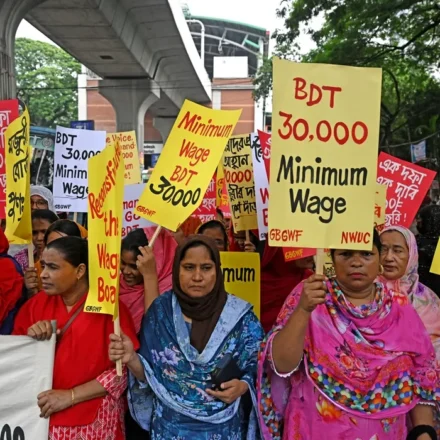
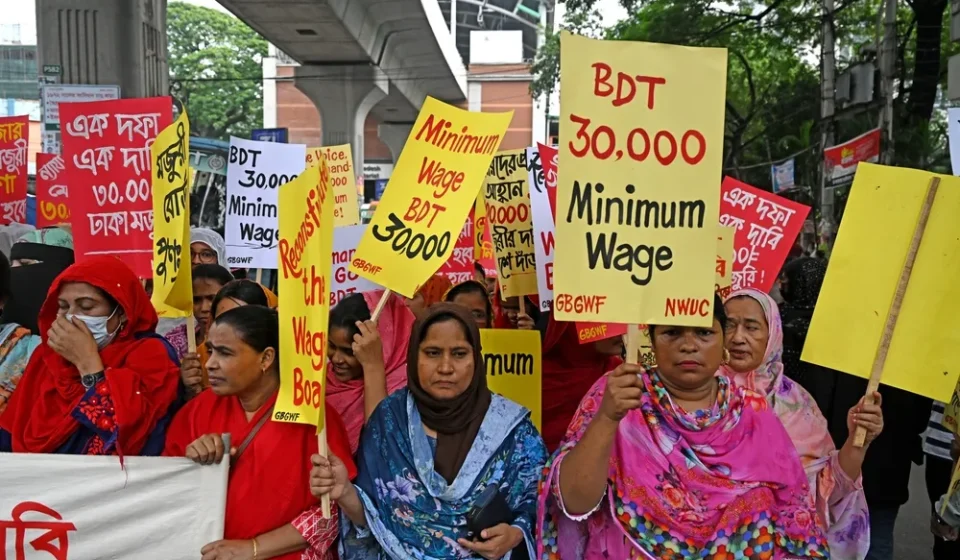
The 36 per cent increase, from Tk 12,500, comes after weeks of labour protests over rising living costs and declining purchasing power. However, the revised wage has also raised questions about whether manufacturers, particularly smaller factories, can absorb higher labour expenses without additional support from international buyers and the government.
The issue extends beyond domestic employer-worker relations. It reflects structural inequalities in global apparel supply chains, where manufacturers face pressure to maintain competitive prices while workers bear the consequences of inflation, inadequate wages and rising household expenditure.
The new wage structure was approved by a government-appointed wage board on November 25 following negotiations between employer and worker representatives. Under the four-grade structure, monthly minimum wages range from Tk 17,000 to Tk 21,500, with the revised rates taking effect from December 1 and workers expected to receive them in January 2027. Bangladesh’s garment industry employs more than four million people and accounts for over 80 per cent of the country’s export earnings.
The debate was also central to a policy dialogue titled “Garment Workers’ Wages and Industrial Sustainability: Where Is the Balance and What Are the Solutions?”, organised by the reform-oriented civic platform Voice for Reform at the BDBL Building in Karwan Bazar, Dhaka, on Wednesday.
Workers’ purchasing power: The human cost of low wages
Behind the debate over industrial competitiveness lies the everyday economic reality of millions of garment workers whose earnings are increasingly insufficient to meet basic household needs.
Reporting by Al Jazeera on November 3 documented the experiences of workers struggling to afford food, housing, healthcare, and education despite working long hours.
Laili Begum, a 37-year-old sewing operator at Virtual Bottoms Limited near Dhaka, earned approximately Tk 15,000 per month, rising to Tk 18,000–20,000 with overtime. Her two children had dropped out of school because she could no longer afford their education.
“We can barely afford one proper meal a day,” Begum told Al Jazeera, describing how her family sometimes survived on limited food.
‘Rasel Khan, a 30-year-old garment worker in Ashulia, earned Tk 18,000–20,000 monthly, including overtime, but struggled to support his family. He accumulated approximately Tk 100,000 in debt to meet household expenses.’
“It’s impossible to support a family on this income anymore,” he said, citing rising prices and the need to borrow money.
These individual experiences are reinforced by a 2026 household consumption survey conducted by the Asia Floor Wage Alliance (AFWA) Bangladesh with trade union organisations. The survey covered 298 workers from 30 factories in Mirpur, Savar, Ashulia, Gazipur and Chattogram.
According to the survey, average monthly individual worker earnings stood at Tk 15,300, while average household expenditure reached Tk 45,202. Average family income was Tk 31,800, leaving a monthly gap of approximately Tk 13,400 between household income and expenditure. Furthermore, 62 per cent of surveyed households reported having debt.
The findings suggest that wage inadequacy is not simply a question of nominal salary increases. It is also a matter of real income, household purchasing power and access to essential services.
The Centre for Policy Dialogue (CPD) separately estimated that a monthly living wage of Tk 24,204 would be required for a four-member household with 1.58 income earners to cover food, housing and other essential needs while maintaining a modest reserve.
Together, these findings demonstrate the gap between the newly approved minimum wage and the estimated resources required for an adequate standard of living.
Bangladesh’s wage position in the global apparel market
Bangladesh’s new minimum wage has changed its relative position among several competing apparel-producing economies. However, international comparisons require caution because minimum wage systems, geographical coverage, skill categories and living costs differ across countries.
Available figures reported in November 2026 provide the following indicative comparison:
Apparel-producing economy Monthly minimum wage (US dollars)
Bangladesh—Approximately $138; India—Approximately $124; Pakistan—Approximately $135; Cambodia—Approximately $210; Vietnam—Approximately 140–210; China (Guangdong manufacturing region)— Approximately $378.
Cambodia, Vietnam and Guangdong figures are reported by Al Jazeera. These figures represent different national or regional wage systems and should not be interpreted as a fully standardised comparison of equivalent occupations or living standards.
The comparison indicates that Bangladesh’s revised minimum wage is now broadly comparable to the lower end of the Vietnamese range and exceeds the reported figures for India and Pakistan. However, it remains below Cambodia’s minimum and the reported wage levels in China’s Guangdong manufacturing region.
This development raises an important question about Bangladesh’s traditional competitiveness. If the country’s advantage has historically depended heavily on relatively inexpensive labour, increasing wages may require a shift towards productivity, technological upgrading, product diversification and higher-value manufacturing.
In a November 25 report, Reuters quoted Mohiuddin Rubel, Additional Managing Director of Denim Expert Ltd, as saying that the industry must increasingly compete through production capabilities rather than labour costs alone.
He argued that affordable long-term financing, automation, skills development and faster port and customs clearance would be essential for maintaining export competitiveness.
International buyers and fashion brands: Who should bear the additional costs?
Bangladesh’s position in global apparel supply chains is closely connected to the purchasing decisions of international retailers and fashion brands, including H&M, Zara, Walmart, Target and Gap.
These companies are important buyers of Bangladeshi garments, making their purchasing practices relevant to discussions about wage improvements and the distribution of production costs.
One of the central concerns raised by manufacturers and labour advocates is whether international buyers are willing to adjust purchasing prices when suppliers face higher labour expenses.
According to Reuters, the Clean Clothes Campaign criticised international brands for failing to explicitly support a higher wage or make sufficiently clear commitments to absorb additional labour costs through purchasing prices.
However, some international initiatives and companies have expressed support for improving workers’ wages.
The Action, Collaboration, Transformation (ACT) initiative, which brings together fashion brands and trade unions, called for respect for workers’ rights and wages closer to living-wage levels. Its participating brands, including Inditex, H&M and Primark, indicated that wage increases should be reflected in supplier purchasing prices.
H&M also defended its purchasing approach. A company spokesperson told Reuters: “We take our responsibility to ensure that our purchasing practices support improved wage levels very seriously.”
The company stated that workers’ wages are ring-fenced and excluded from its price negotiations. Reuters reported that Inditex had not immediately responded to a request for comment.
These positions illustrate an important distinction between corporate commitments and their practical implementation. While international brands may express support for better wages, the effectiveness of such commitments depends on whether suppliers receive sufficient prices and stable purchasing arrangements to meet additional labour costs.
For Bangladesh, the challenge is therefore not simply to increase wages but also to establish a more equitable relationship between manufacturers, workers and international buyers.
Economic pressures and industrial sustainability
At the Voice for Reform dialogue, participants highlighted the relationship between domestic economic management and the garment industry’s ability to absorb higher labour costs.
Presenting the background, Fahim Mashroor identified four major pressures: international market demand, declining product unit prices, rising production costs and increasing workers’ living expenses.
He argued that the 2023 wage increase was accompanied by a substantial exchange-rate adjustment, which helped exporters manage higher expenses through increased local-currency export earnings. By contrast, he stated that the taka had adjusted by only approximately 1.7 per cent against the US dollar over the preceding 12 months.
CPD Executive Director Dr Nazneen Ahmed criticised the existing wage determination process, arguing that it lacked reliable information about workers’ living standards and household expenditure. She advocated an annual wage review mechanism and stressed that workers should not bear the costs of bureaucratic inefficiency, corruption and extortion.
Former BGMEA President Dr Rubana Huq expressed concern that the prevailing cost structure had made operations increasingly difficult, particularly for small and medium-sized manufacturers. She warned that further factory closures could increase unemployment.
BGMEA Vice-President Md Shihab Uddoja Chowdhury similarly questioned whether most factories could implement the revised wage structure without additional financial support. He cited higher energy and financing costs and called for a legal exit policy allowing financially unviable factories to close in an orderly manner.
From a broader economic perspective, RAPID Chairman Dr Mohammad Abdur Razzaque emphasised that Bangladesh should diversify its export base rather than remain excessively dependent on garments. He also highlighted the importance of controlling inflation to preserve international competitiveness.
Meanwhile, labour rights activist Firoz Ahmed argued that wage improvements should be considered a matter of social and political justice, not merely a question of production expenses. He highlighted the absence of adequate worker housing and the social consequences of low wages for workers’ families.
In contrast, Md Rubaiyat Sarwar, Managing Director of Innovision Consulting and Trustee of Panam Institute, viewed the Tk 17,000 wage as a positive development, arguing that it brings Bangladesh closer to some regional competitors.
These statements represent the perspectives of individual dialogue participants rather than independently established findings. Nevertheless, they demonstrate the competing priorities involved in determining a sustainable wage policy.
Seven policy priorities for a sustainable garment industry
Concluding the dialogue, Voice for Reform proposed seven measures to address the wage crisis and improve the industry’s economic position:
Gradual exchange-rate adjustment: Introduce managed exchange-rate adjustments to help exporters manage rising production and wage expenses, while considering the potential inflationary effects.
Lower raw material costs: Facilitate yarn imports through land ports and reconsider restrictions that increase manufacturers’ input costs.
Reliable energy infrastructure: Ensure uninterrupted gas and electricity supplies to industrial areas and reduce dependence on expensive diesel-generated power.
Banking sector reform: Introduce special loan restructuring arrangements to facilitate factory sales, mergers and business consolidation.
Eliminate extortion and formalise garment waste trading: Address political and administrative extortion and improve the formal management of garment waste to generate additional revenue and potential energy savings.
Institutionalise annual wage reviews: Establish a transparent wage adjustment mechanism based on inflation, workers’ living costs and changes in economic conditions.
Introduce a structured factory exit policy: Allow financially unviable small factories to close their operations through a transparent and legally regulated process while protecting workers’ outstanding wages and employment-related entitlements.
Beyond low-cost manufacturing: Rethinking Bangladesh’s position in global supply chains.
Bangladesh’s garment wage debate highlights the limits of a development model that relies heavily on low labour costs to access international markets.
As wages rise and production costs increase, the country will need to boost productivity, improve industrial infrastructure, expand technological capabilities, and shift toward higher-value apparel production.
At the same time, international fashion brands must translate their commitments to responsible sourcing and workers’ rights into purchasing practices that allow suppliers to pay decent wages without compromising employment security.
The responsibility for a sustainable garment industry cannot rest exclusively on workers or manufacturers. It requires coordinated action by the government, factory owners, international buyers, financial institutions and labour organisations.
Ultimately, Bangladesh’s long-term competitiveness should not be measured solely by how cheaply it can manufacture clothing. It should also be measured by its ability to provide decent working conditions, protect household purchasing power and distribute the economic benefits of global trade more equitably.
The central challenge is to build a garment industry in which workers’ economic security and international competitiveness reinforce rather than undermine each other.