






Syria appoints Kurdish leader Elham Ahmad to parliament after landmark integration deal
The appointment gives a prominent advocate of Kurdish rights a seat in Syria’s transitional legislature, signalling a new phase in Damascus’s efforts to bring Kurdish political institutions into the central state.
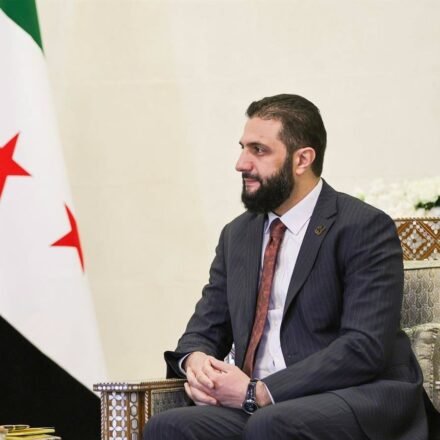
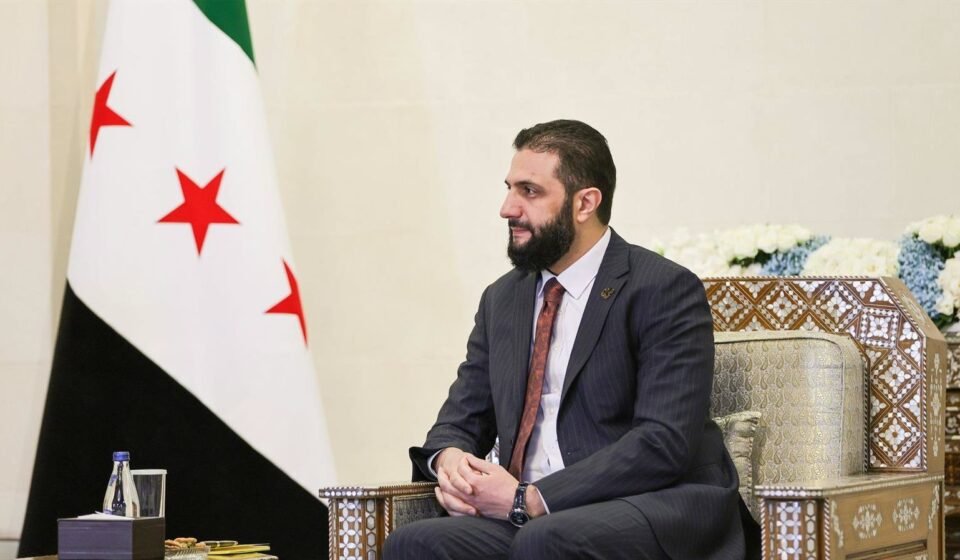
Syrian President Ahmed al-Sharaa has appointed prominent Kurdish politician Elham Ahmad to the country’s People’s Assembly, months after an agreement ended the Kurdish-led administration’s separate military and institutional structures, marking a significant development in Syria’s political transition.
The appointment, announced on Thursday, 26 November, fills a vacant seat reserved for an independent member and increases the assembly’s membership from 205 to 206. Presidential Decree No. 200 of 2026 formalised the decision, according to the Syrian Arab News Agency (SANA).
Ahmad’s entry into parliament carries significance beyond filling an empty seat. For years, she was among the most prominent representatives of the Kurdish-led Autonomous Administration of North and East Syria, advocating political decentralisation, minority rights and greater participation for women. She also played a central role in negotiations with Damascus over the future of Kurdish-controlled institutions.
Her appointment comes against the backdrop of a major shift in the balance of power in northern and eastern Syria. Following the collapse of Bashar al-Assad’s government in December 2024, the new authorities under al-Sharaa sought to establish central control over territories administered by Kurdish-led institutions. Disagreements over autonomy, military command and the distribution of administrative powers eventually escalated into armed confrontations in January 2026.
An agreement announced on 18 January sought to end the fighting through a 14-point framework for integrating Kurdish military and civilian institutions into the Syrian state. A subsequent agreement on 30 January established arrangements for a ceasefire and phased integration. The framework required Kurdish forces to come under central military authority, while strategic assets, including border crossings and oil and gas facilities, were transferred to state control.
The agreement represented a substantial political victory for al-Sharaa, whose government has prioritised restoring a unified Syrian state. For Kurdish leaders, however, it required significant concessions. The Syrian Democratic Forces (SDF), which had controlled large areas of the north-east during the war against Islamic State, agreed to dissolve as an independent military force and integrate its structures into state institutions.
In August, SDF commander Mazloum Abdi announced the dissolution of the organisation following the integration process and was subsequently appointed as an adviser to al-Sharaa. Ahmad, who was among the principal negotiators alongside Abdi, became part of the political process through which the Kurdish administration sought to preserve some of its institutional achievements within the new state structure.
The transition nevertheless leaves important questions about Kurdish political representation and regional authority unresolved. Kurdish leaders had long sought formal recognition of their self-administration and a decentralised political system that would allow local institutions greater control over security, education and public services. Damascus, by contrast, has consistently favoured a centralised state structure.
Ahmad’s appointment therefore represents both an opportunity and a political compromise. Her presence in parliament could provide Kurdish communities with a prominent voice in national policymaking, but a parliamentary position does not necessarily translate into the regional autonomy that Kurdish leaders had previously demanded.
The transitional legislature itself operates under a system established after Assad’s removal. The People’s Assembly has 210 seats, with two-thirds selected through electoral bodies and the remaining third appointed by the president. Its composition and authority form part of a wider effort to rebuild Syria’s political institutions following years of authoritarian rule and civil conflict.
Al-Sharaa has also taken steps to address longstanding Kurdish grievances. In January 2026, he issued Decree No. 13, recognising Kurdish identity and language as part of Syria’s national framework. The measure provided for Kurdish-language education, recognised Nowruz as an official holiday and addressed citizenship issues affecting Kurds previously left undocumented following the 1962 census in Hasakah. However, implementing these rights and securing their lasting constitutional protection remain important challenges.
For Ahmad, the appointment marks a shift from negotiating on behalf of a semi-autonomous administration to participating directly in the country’s national legislative process. Born in Afrin in 1972, she became politically active while studying Arabic literature at the University of Aleppo, initially focusing on women’s rights. She later helped establish the Kurdish-led administration in north and east Syria and served as co-chair of its foreign relations department.
Her political career has been closely associated with efforts to secure recognition for Kurdish rights and women’s participation in public life. Despite advocating decentralisation, a position that frequently placed her at odds with Damascus, she became one of the central figures in negotiations over institutional integration.
In May 2026, Ahmad returned to her hometown of Afrin for the first time in nine years, following arrangements that allowed displaced Kurdish residents to return. The visit carried personal and political significance, reflecting the changes brought about by the agreement and the gradual reopening of areas affected by years of conflict.
Syria’s Kurdish population is estimated at around two million, although reliable demographic figures remain difficult to establish after years of displacement and conflict. Their position within the country’s emerging political system will be an important test of whether the transitional government can move beyond military integration towards meaningful political inclusion. Ahmad’s appointment is a notable step in that direction, but its significance will ultimately depend on whether parliamentary representation translates into enforceable rights, local participation and lasting guarantees for Kurdish communities.
Sources: Syrian Arab News Agency (SANA) – Official announcement of Elham Ahmad’s appointment; Reuters – Syrian government and Kurdish forces agree sweeping integration framework; UK Home Office – Country Policy and Information Note: Kurds and Kurdish Areas, Syria, November 2026; UK House of Commons Library – Syria in 2026: Interim government and Kurdish integration; Asharq Al-Awsat – Syrian President Appoints Ilham Ahmad to People’s Assembly; Shafaq News – Al-Sharaa appoints Kurdish politician to Syrian parliament.