














Iran’s economic survival strategy faces its hardest test
Iran is beginning to fight an economic battle on a different front.
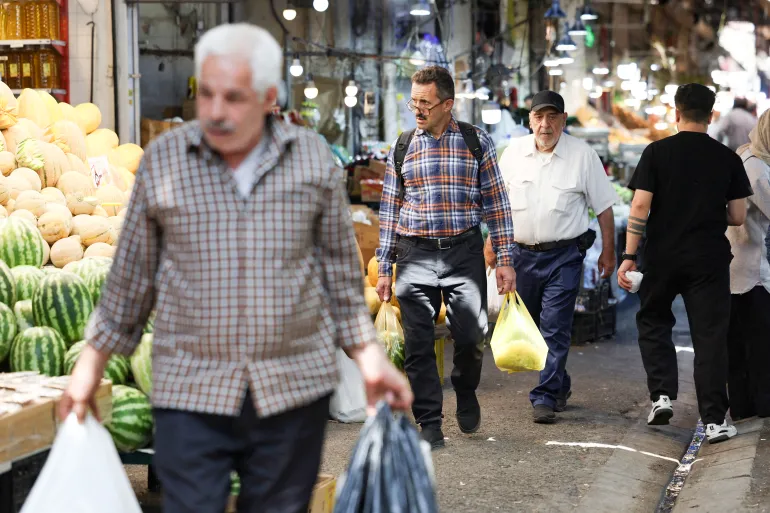
After years of living under sanctions, Tehran has developed mechanisms for keeping trade moving, selling oil through alternative channels and maintaining access to essential goods. But the economic pressure facing the country in October 2026 is qualitatively different. The disruption of oil exports, restrictions on maritime trade, a collapsing rial and rising import costs are now converging into a direct cost-of-living crisis.
President Masoud Pezeshkian’s government has responded with a new package of economic measures aimed at stabilising prices, protecting vulnerable households and keeping energy supplies flowing to producers. But the measures also reveal the depth of the problem: Iran is increasingly trying to preserve domestic economic activity while the channels through which it earns foreign currency are being squeezed.
Al Jazeera reported this week that Iran’s Plan and Budget Organisation had presented a seven-point package to deal with the crisis, although the full details have not been made public. Pezeshkian subsequently ordered a committee involving Central Bank Governor Abdolnaser Hemmati, Interior Minister Eskandar Momeni and Tehran Mayor Alireza Zakani to coordinate the new economic arrangements, with price stability among its principal objectives.
The government has also shifted attention towards energy conservation. Pezeshkian has called for “car-free Tuesdays” and urged state employees to participate, while insisting that electricity and energy supplies to producers and businesses should not be cut.
On paper, these are domestic economic-management measures. In reality, they are responses to a much larger external shock.
The rial has become the clearest warning
The most visible sign of Iran’s economic deterioration is the rial.
Reuters reported on October 3 that the currency had fallen to about 2.688 million rials against the US dollar on the free market, compared with 2.632 million a day earlier. The rial had lost more than half of its value over the preceding year, while inflation had risen above 70 per cent. The Central Bank responded by authorising state banks to sell up to $2 billion to support the currency.
Other recent market reporting has put the informal exchange rate even higher, illustrating how rapidly expectations are changing.
This matters because currency depreciation is not simply a financial-market statistic in Iran. A weaker rial immediately raises the domestic price of imported food, medicine, machinery, industrial inputs and other essentials.
The result is a vicious cycle: sanctions restrict foreign-currency earnings; weaker foreign-currency earnings undermine the rial; the weaker rial raises import costs; higher import costs push up prices; and higher prices increase public demand for dollars and gold as stores of value.
That makes currency stabilisation extremely difficult without a sustained supply of foreign exchange.
Oil is the missing piece
This is where Iran’s current crisis differs from previous rounds of sanctions.
For years, sanctions reduced Iran’s oil revenues without completely eliminating the country’s ability to export crude. Iranian oil continued to reach China through complex trading arrangements, discounts and so-called shadow-fleet networks.
The current disruption has been much more severe.
Reuters reported on October 6 that Iranian oil exports to China had fallen to about 590,000 barrels per day in September, the lowest level since January 2023. Kpler data cited by Reuters indicated that Iran did not export crude in September, while the amount of Iranian crude stored on vessels outside the blockade zone had fallen to about 45 million barrels from roughly 100 million barrels in late July.
That development has another important consequence: even Iran’s traditional Asian buyers are adjusting.
Chinese independent refiners have recently purchased between 15 million and 20 million barrels of Iraqi and Qatari crude for October and November deliveries as Iranian supplies have diminished. Reuters reported that some of those purchases carried premiums of $12-$20 a barrel over Brent.
This is strategically important for Tehran.
The more Chinese refiners diversify away from Iranian crude, the harder it becomes for Iran to rely on its traditional sanctions-evasion model. And once buyers establish alternative supply relationships, restoring Iranian market share may become more difficult even if restrictions are later eased.
Iran is trying to move its economy north
Tehran therefore has another strategy: geography.
With the southern maritime route under pressure, Iran has increasingly turned towards the Caspian Sea, Russia, Türkiye and overland corridors.
The shift is already visible in shipping data. Lloyd’s List reported that Iranian- and Russian-flagged vessel activity in the Caspian increased 21 per cent year on year in August, while general cargo capacity along the Russia-Iran Caspian corridor rose 36 per cent.
Iran has also been exploring the wider International North-South Transport Corridor, linking Russia and northern Iran and providing connections towards the Persian Gulf and India. The Caspian route has consequently become more important to Tehran’s economic resilience.
But there is a fundamental limitation.
A northern trade corridor cannot simply replace the Strait of Hormuz.
The scale is different. Al Jazeera’s reporting found that large bulk carriers serving Iran’s southern ports can transport more than 80,000 tonnes of agricultural commodities, whereas vessels using some Caspian alternatives carry around 7,200 tonnes. Trucks moving goods overland are constrained to roughly 20 tonnes per vehicle.
So Iran can diversify its trade routes, but diversification is not the same as substitution.
It can keep goods moving. It cannot easily reproduce the volume, cost and efficiency of the southern maritime system.
The regional cost is becoming visible
Iran is not the only economy paying for the disruption.
The World Bank said this week that the wider MENAAP region is projected to contract by 2.1 per cent in 2026, compared with growth of 3.3 per cent in 2025. GCC economies are projected to contract by an average of 4.3 per cent, while higher shipping and food costs are spreading inflationary pressure across the region.
That is an important reminder that the economic confrontation around Iran has consequences well beyond Iran.
The Strait of Hormuz is not merely an Iranian strategic asset. It is a critical artery for the global energy system. When shipping through the strait is disrupted, the shock moves through oil prices, insurance premiums, freight costs, food imports, industrial production and inflation.
The World Bank says the closure has been unusually damaging even to Gulf oil exporters, because the conflict is simultaneously restricting the very export routes on which those economies depend.
Can Tehran’s new measures work?
This is where my assessment differs from simply describing the government’s new package.
The measures are necessary, but they cannot by themselves solve Iran’s central economic problem.
“Car-free Tuesdays” can reduce fuel consumption. Protecting electricity supplies to factories can prevent further disruption to production. A committee for price stabilisation can improve coordination. Support for vulnerable households can soften the social impact.
But none of these measures generates the foreign currency Iran needs to stabilise the rial.
And without foreign currency, the government faces a difficult choice: spend scarce reserves defending the rial, subsidise essential imports, finance domestic production or preserve fiscal resources for the state.
It cannot do all of these indefinitely.
The $2 billion currency intervention reported by Reuters may provide temporary breathing space, but it is not a structural solution if oil revenues remain severely constrained.
The deeper problem is therefore external rather than administrative.
Iran needs functioning export channels, access to foreign exchange and reliable import routes. Domestic austerity and conservation can reduce pressure, but they cannot replace lost export earnings.
The China factor may become decisive
Iran’s economic survival strategy also depends heavily on whether China remains willing and able to absorb Iranian oil.
That relationship has already become more complicated.
China remains the principal market for Iranian crude, but the latest decline in Iranian shipments and the simultaneous rise in Chinese purchases of Iraqi and Qatari crude show that Chinese refiners can adapt when Iranian supply becomes unreliable.
This does not necessarily mean China is abandoning Iran.
It means commercial actors are behaving according to supply, risk and price.
That distinction is crucial. Strategic relations between governments can survive geopolitical pressure, but private refiners still have to secure crude, manage margins and keep their plants operating.
Iran therefore faces a challenge beyond sanctions: reliability.
If buyers begin to view Iranian crude as too difficult or unpredictable to obtain, the economic cost of sanctions becomes larger than the formal restrictions themselves.
Iran is being pushed towards a different economic model
The most significant development may therefore be happening beneath the headlines.
Iran is being pushed towards a more regionalised, corridor-based and state-managed economy.
Trade through Russia and the Caspian, overland links through Türkiye and neighbouring countries, closer reliance on China and attempts to conserve domestic energy are all parts of the same emerging strategy: reduce dependence on the maritime and financial channels controlled or influenced by Western powers.
This strategy has logic.
Iran has geography on its side. It has long land borders, access to the Caspian, established relationships with Russia and China, and decades of experience operating under sanctions.
But geography cannot completely overcome economics.
Land transport is more expensive than large-scale maritime shipping. Alternative ports have limited capacity. Sanctions raise insurance and transaction costs. And foreign partners have their own commercial interests.
My view: resilience is not the same as recovery
My reading of Iran’s new economic strategy is therefore mixed.
Tehran is not simply waiting for sanctions to disappear. It is actively attempting to redesign the mechanisms through which its economy survives external pressure. The move towards the Caspian, the emphasis on China and Russia, energy conservation, protection of domestic production and targeted support for vulnerable households all point towards a more defensive form of economic resilience.
But resilience should not be confused with recovery.
Iran can probably keep parts of its economy functioning under considerable pressure. Its experience with sanctions gives it institutional knowledge and alternative networks that many countries do not possess.
The harder question is whether it can restore growth and currency stability while its oil revenues remain constrained.
At present, the evidence suggests that the pressure is moving faster than the government’s stabilisation measures. The rial’s record lows, the sharp reduction in Iranian oil flows to China and the emergence of substitute crude supplies for Chinese refiners all point in the same direction.
The strategic irony is that Iran’s greatest economic asset — its position around the Strait of Hormuz — is also at the centre of the pressure now constraining its economy.
Tehran can turn north. It can deepen ties with China and Russia. It can conserve fuel and ration energy. It can support basic commodities and intervene in the currency market.
But none of these can fully replace the economic scale of normal access to global trade.
That is why the next stage of Iran’s economic crisis may be decided less by another domestic price-control package than by one question: can Tehran restore a dependable channel for earning and receiving foreign currency without surrendering the strategic conditions it considers essential?
Until that equation changes, Iran’s economic policy will remain less a programme for expansion than a strategy for buying time.
