


















Gold edges higher as dollar weakens, precious-metals outlook
The metal is trading near $4,200 an ounce as investors weigh US inflation data, Federal Reserve policy and shifting geopolitical risks; silver and copper are also attracting attention.
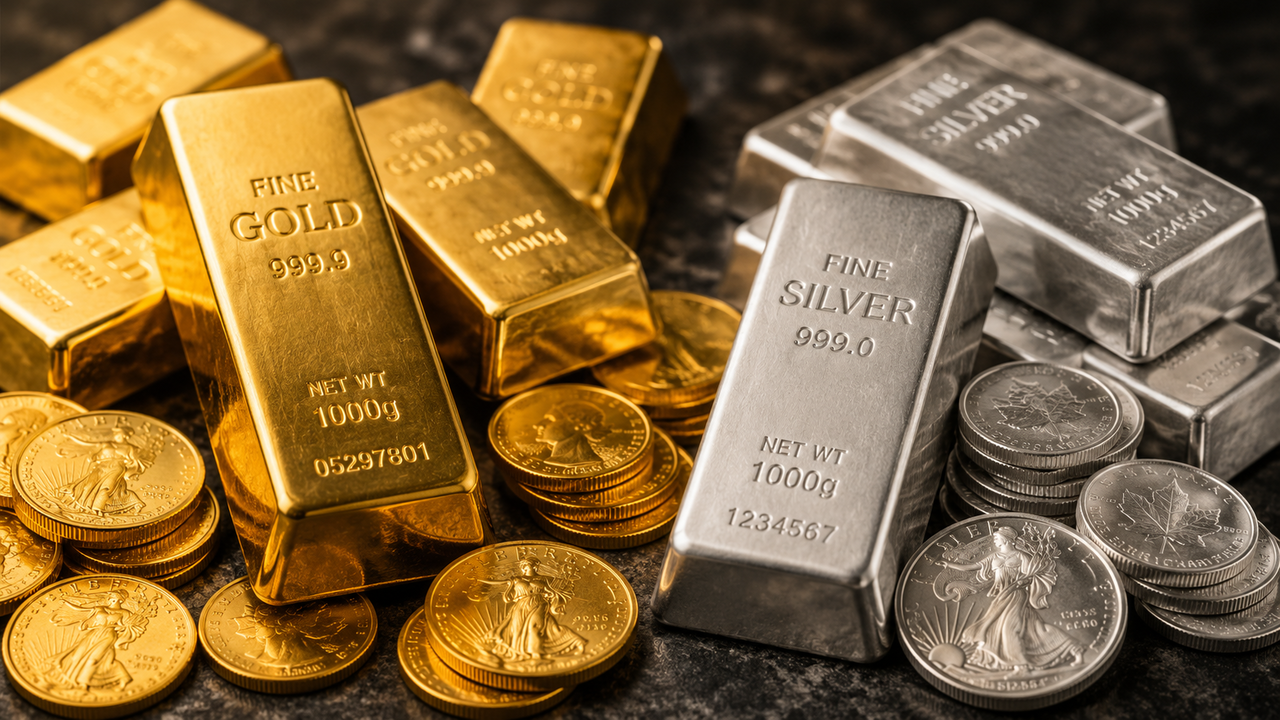
Gold edged higher in Monday trading as a softer US dollar and easing oil prices offered support, but uncertainty over US interest rates continued to limit the outlook for the precious metal. With key inflation figures due in the United States this week, investors are reassessing the balance between gold’s role as a store of value and the opportunity cost of holding an asset that pays no interest.
Spot gold rose 0.1 per cent to $4,198.19 an ounce by 0432 GMT on 12 October, while US gold futures for December delivery gained 0.1 per cent to $4,221.80, according to Reuters. The modest gains followed a volatile period in which the metal had retreated earlier in the week before recovering on bargain-hunting and a weaker dollar.
The immediate focus is on US consumer price inflation data due on Wednesday, followed by producer prices and retail sales figures on Thursday. These releases could influence expectations for the Federal Reserve’s next policy decision. Higher interest rates generally make interest-bearing assets more attractive relative to gold, while lower rates can reduce the opportunity cost of holding bullion.
Gold’s latest movement reflects the interaction of several forces rather than a single driver. A weaker dollar makes bullion less expensive for buyers using other currencies, potentially supporting demand. Lower oil prices can also ease concerns about energy-driven inflation and the possibility that central banks will need to maintain tighter monetary policies.
Reuters reported that gold gained as oil prices fell following an announcement by US President Donald Trump of an immediate energy ceasefire between Russia and Ukraine. The details and implementation of that announcement remained relevant to market expectations, while the wider Middle East conflict continued to contribute to uncertainty in energy and currency markets.
The relationship is not automatic. If inflation proves persistent, bond yields and expectations of higher interest rates could rise, placing pressure on gold. Conversely, weaker inflation or a more accommodative outlook from the Federal Reserve could improve its appeal. Investors are therefore watching economic data alongside geopolitical developments rather than treating gold as a straightforward hedge against every form of uncertainty.
The growing attention paid to silver and copper reflects their different roles in global markets. Gold is commonly held as a reserve asset and a store of value, while silver combines investment demand with industrial uses. Copper is more directly exposed to economic activity, infrastructure spending, power networks and industrial demand.
Silver can outperform gold during periods of strong speculative interest or rising industrial demand, but its smaller market and sensitivity to investor positioning can also produce sharper price swings. Copper’s outlook, meanwhile, depends more heavily on the balance between industrial consumption, mine supply and investment in infrastructure and electrification.
The headlines aggregated by MarketViews highlight growing interest in all three metals, including reports of silver reaching record levels and copper attracting investors concerned about supply. However, the headlines cover different reporting periods and do not, by themselves, establish that silver and copper are currently outperforming gold on a consistent, like-for-like basis.
For investors, the distinction matters. A rally in gold may be driven by monetary uncertainty and demand for defensive assets; a rise in copper may signal expectations of stronger industrial demand or tighter supply. Treating the metals as interchangeable investments risks overlooking the economic forces that determine their prices.
The debate over whether gold has become overvalued has intensified after its substantial gains in 2025 and the sharp swings that followed. In December 2025, the Bank for International Settlements highlighted statistical signs of potentially explosive price behaviour in both gold and US equities, while cautioning that identifying a bubble—and predicting when it might burst—remains difficult.
The BIS’s subsequent research also examined the role of leveraged retail investors and exchange-traded funds in amplifying the precious-metals rally and its reversal. Its analysis described how margin calls, forced selling and leveraged products can magnify price movements, particularly in silver.
These findings provide reasons for caution, but they do not prove that gold’s current price must fall. Strong demand from central banks, portfolio diversification and concerns about policy uncertainty can support prices even when valuations appear stretched. Equally, a market with substantial speculative participation can experience abrupt corrections when expectations change.
The more useful question is whether current prices are supported by durable demand or increasingly depend on investors expecting further gains. That distinction is difficult to establish from price movements alone and requires analysis of investment flows, central-bank purchases, interest-rate expectations and physical demand.
Three factors are likely to shape the near-term outlook. First, US inflation data could alter expectations for Federal Reserve policy and move bond yields and the dollar. Second, changes in oil prices may influence inflation concerns and demand for defensive assets. Third, geopolitical developments could shift investor demand between gold, currencies, bonds and other commodities.
Gold’s modest advance on 12 October shows that demand has not disappeared, but it is not evidence of a sustained upward trend. The metal remains exposed to the same forces that have recently produced sharp reversals: changing rate expectations, currency movements and shifts in investor positioning.
Silver and copper offer different ways to gain exposure to precious-metals investment demand and industrial growth, but neither provides a simple substitute for gold. Their performance will depend on distinct market fundamentals as well as broader investor sentiment.
For now, the outlook is being shaped less by a single bullish or bearish narrative than by competing forces. Gold retains its appeal amid uncertainty, yet the next US inflation readings may determine whether its latest recovery develops into a stronger rally or loses momentum.
Sources: Reuters; Bank for International Settlements; MarketViews headline aggregation.
