















Public money, federal power and political accountability in the US midterm campaign
The continued use of taxpayer funds for advertisements promoting Donald Trump and the FBI-style federal search of Democratic Representative Ilhan Omar’s Washington home have brought two separate controversies into focus as the United States approaches its November 2026 midterm elections. Both raise questions about the boundaries of executive power, the independence of public institutions and the standards of accountability expected of government.
The cases are distinct, and there is no established evidence that they are connected. Their political significance, however, lies in the scrutiny they place on how government resources and law-enforcement powers are exercised during a highly contested electoral period.
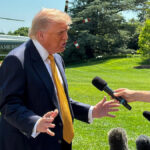
An NPR analysis of advertising data from AdImpact found that nearly $22 million in public funds had been spent on advertisements promoting Trump and his policies since the campaign began in late September. Almost $10 million was spent after the president said on 5 October that his MAGA Inc. political operation would fund the advertisements privately.
The dispute is not simply about the cost of political advertising. It concerns whether public money appropriated for government communications can legitimately be used for material that promotes a sitting president and his political message.
The White House has described the advertisements as public-service announcements intended to promote the United States and its policies. Critics, including government watchdog Common Cause and other plaintiffs, argue that the campaign amounts to taxpayer-funded political publicity and may violate restrictions on the use of federal funds. Those arguments are allegations in litigation, rather than a final judicial determination of liability.
The controversy intensified after a federal judge issued a temporary restraining order on 11 October, directing the administration to halt the challenged advertising and cancel the remaining portion of a reported $20 million advertising purchase. NPR reported that advertisements continued to air for several hours after the order. A White House official subsequently told NPR that the government-funded advertisements had ended, attributing the delay to the administration not receiving notice of the court order in time to cancel the bookings.
That sequence raises an important governance question: how quickly can judicial restrictions be implemented when federal agencies, contractors and broadcasters are involved? The administration’s explanation points to a possible operational delay; critics may see the continued broadcasts as evidence that stronger compliance safeguards are needed. Establishing whether the order was knowingly disregarded would require evidence beyond the fact that advertisements aired after it was issued.
Public opinion adds another dimension. NPR reported that a Reuters/Ipsos poll found 86% of respondents considered it inappropriate to use taxpayer money for election-related television advertisements featuring the president or members of his cabinet. The reported figure suggests that opposition to the practice extended beyond one party, although a survey response does not itself determine whether the advertising was unlawful.
In a separate development, federal agents searched the Washington home of Representative Ilhan Omar, a Minnesota Democrat, on 12 October. The Justice Department confirmed that Homeland Security Investigations agents executed a judicially authorised search warrant as part of an ongoing federal investigation. NPR, citing current and former officials familiar with the matter, reported that the multi-year inquiry involved whistleblower complaints and allegations of immigration fraud. The full scope of the investigation had not been made public.
Omar said the search was politically motivated and accused the Trump administration of targeting its opponents. She has denied the immigration-fraud allegations previously directed at her. Trump denied involvement in the investigation, according to NPR’s reporting. The Justice Department’s confirmation of a judicially authorised warrant establishes the stated legal basis for the search; it does not establish the truth of the allegations under investigation.
The timing has become a major point of contention. The search took place only weeks before the 3 November midterm elections, in which control of Congress will be contested. Associated Press reported that Democratic lawmakers questioned the timing, pointing to Justice Department practices intended to avoid investigative actions that could improperly affect political campaigns close to an election. Those criticisms do not, on their own, demonstrate that the search was politically directed.
The central issue is therefore one of transparency and due process. Authorities should be able to investigate credible allegations, including those involving elected officials, but the public also has a legitimate interest in understanding the legal basis and scope of actions that attract substantial political attention. Because the investigation remains ongoing, the absence of publicly disclosed evidence should not be treated as proof of guilt—or as proof that the investigation is illegitimate.
The advertising dispute and the search of Omar’s home illustrate different ways in which public institutions can become the subject of political controversy. In the first case, the question is whether executive agencies used public funds within the limits set by Congress and the courts. In the second, the question is whether law-enforcement powers are exercised according to legal procedures and without improper political influence.
Both cases underline the importance of independent scrutiny. Courts can examine the legality of government spending and search warrants; journalists can compare official explanations with documentary evidence; and legislators and watchdog organisations can investigate whether public resources and institutional powers are being used appropriately.
But analysis must also preserve the distinction between allegations and findings. A temporary court order is not necessarily a final ruling on every legal issue in a case. A judicially authorised search warrant does not find that the person searched committed a crime. And the proximity of two controversial events to an election does not establish that they share a political purpose.
The midterm campaign makes these questions especially consequential because public confidence depends not only on the outcome of political competition but also on whether institutions are seen to apply rules consistently. The strongest test will be the evidence produced through legal proceedings, the transparency of official explanations and the willingness of public authorities to comply with judicial decisions.
For now, the two controversies remain unresolved in important respects. Their significance lies less in any assumed connection than in the separate accountability questions they pose: who controls the use of public money, what limits govern executive action, and how can the public distinguish lawful government activity from conduct that serves a partisan interest?
Sources
- NPR — Government spent millions on Trump ads. And, federal agents raid Ilhan Omar’s home, 13 October 2026.
- NPR — Government spent $10 million on pro-Trump ads after president said super PAC would fund, 12 October 2026.
- Associated Press — Agents search Rep. Omar’s Washington home in criminal probe as she vows she won’t be silenced, 12 October 2026.
- Associated Press — The latest on the search of Ilhan Omar’s home, 12 October 2026.
- The Guardian — Federal judge orders temporary halt to taxpayer-funded pro-Trump TV ads, 12 October 2026.
