


















France protests turn violent as over 5 lakh rally over living costs, inequality
Police make around 400 arrests as demonstrations spread across major cities, with fires, looting and clashes adding pressure on Macron’s government
France witnessed widespread unrest on Saturday as students, trade unionists and Yellow Vest activists took to the streets over the cost of living, economic inequality and concerns about the country’s public education system. The French Interior Ministry estimated that around 550,000 people participated in demonstrations nationwide, while approximately 400 arrests followed violent incidents.
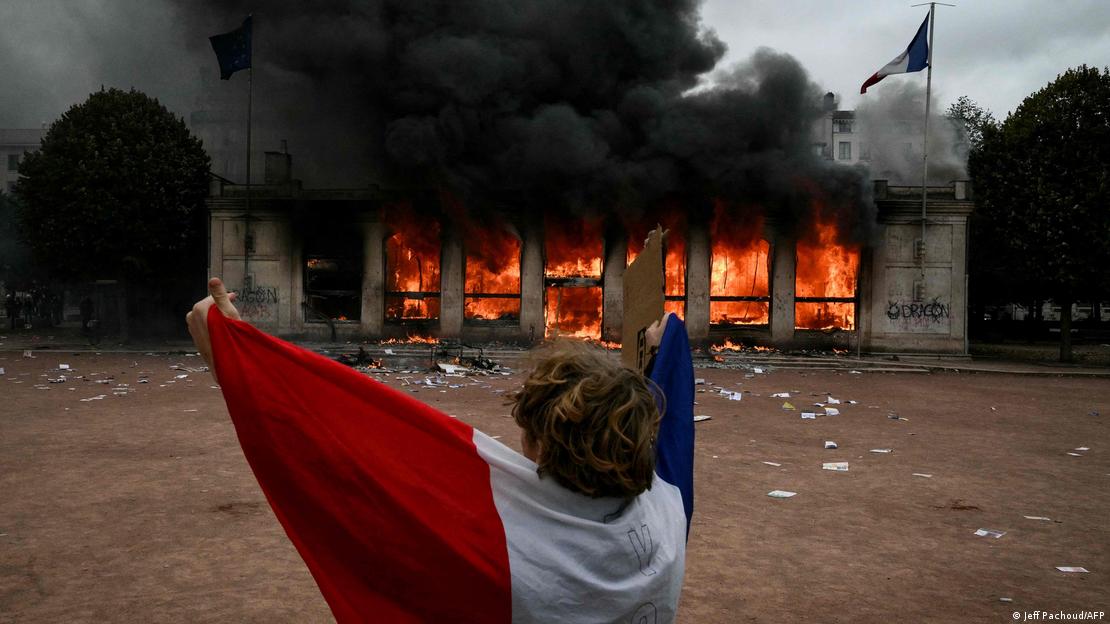
Clashes erupted in several cities, including Paris, Marseille, Rennes, Toulouse and Angers. Police used tear gas in Paris and Marseille, while reports from Agence France-Presse described shops being looted in Paris, Marseille, Nice, Bordeaux and Lille. Protesters also set fire to public buildings, including the tourism office in Lyon and the town hall in Limoges.
In Lille, demonstrators forced their way into the town hall and vandalised parts of the premises, according to an AFP photographer cited by Deutsche Welle (DW). The offices of broadcasters CNews and Europe 1 in western Paris also suffered broken windows, while several parked cars were reportedly set alight.
The Interior Ministry blamed what it called the “hard-left” for the violence, citing attempted looting, confrontations with police and attacks on public institutions and media organisations. The characterisation reflects the government’s assessment; it does not establish that all demonstrators participated in, or supported, the violence.
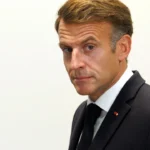
President Emmanuel Macron condemned attacks on public buildings and businesses, warning that those responsible would face prosecution. Before the demonstrations, he had urged protesters to remain calm and respect people and property.
Saturday’s mobilisation grew out of student demonstrations that began in September over conditions in schools, including teacher absences and deteriorating facilities. Trade unionists and members of the Yellow Vest movement subsequently joined the protests, linking education concerns with broader grievances about prices, fuel costs and inequality.
The Yellow Vest movement emerged in 2018, initially opposing rising fuel costs before expanding into a wider campaign against economic hardship and perceived inequality. Its renewed participation could broaden the current protests beyond the education sector, although the durability of this coalition remains uncertain.
The demonstrations also carry political significance ahead of France’s 2027 presidential election. The government has accused the left-wing France Unbowed party, led by Jean-Luc Mélenchon, of aggravating public discontent, an allegation the party has denied. Marine Le Pen’s National Rally, meanwhile, has emphasised support for the police and public order.
The unrest places further pressure on Prime Minister Sébastien Lecornu as his government seeks parliamentary backing for a cost-cutting budget. Protesters are demanding stronger protection against rising living costs and greater investment in public services, particularly education.
The scale of Saturday’s turnout demonstrates the breadth of mobilisation, but it does not mean that every participant shares the same political objectives. The immediate challenge for authorities is to restore order while addressing the economic and public-service concerns driving the demonstrations.
Source: Deutsche Welle, reporting with AFP, Reuters and AP; French Interior Ministry statements as quoted by DW.
