



















Saudi Aramco evacuation raises concerns over gulf energy security
RMRN Regional Media Monitoring Report
The reported evacuation of essential staff from Saudi Aramco’s headquarters in Dhahran has raised fresh concerns over the security of critical energy infrastructure in the Gulf, with potential implications for international oil markets and energy-importing economies across South Asia.
Bangladesh Sangbad Sangstha (BSS), citing Agence France-Presse (AFP), reported on 22 October that essential personnel at the headquarters had been instructed to leave the premises and work remotely until further notice. Reuters separately reported the evacuation, citing people familiar with the matter. The precise reason for the latest instruction had not been publicly established in the reports reviewed.
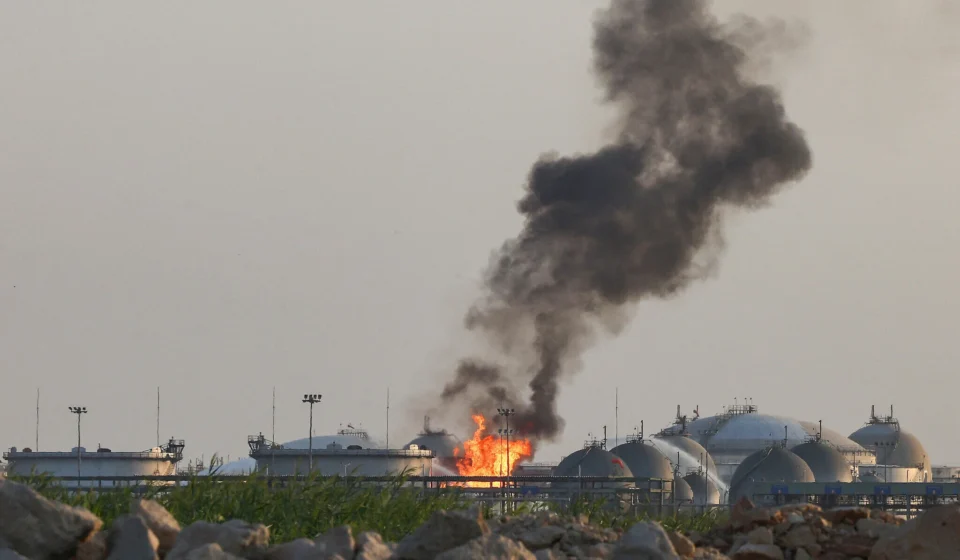
The development follows an attack on the Dhahran complex on 13 October. Reuters subsequently reported extensive damage to an office tower, including a fire that spread across several floors. Non-essential employees had already been working remotely following the earlier incident. The latest evacuation therefore comes amid continuing security concerns surrounding the Saudi oil giant’s facilities.
Aramco occupies a central position in Saudi Arabia’s energy sector and international petroleum markets. Its Dhahran headquarters hosts operational functions connected with oil rigs, refineries, export terminals and pipelines. Although the evacuation has raised questions about business continuity, there is no confirmed evidence in the reports reviewed that the latest move itself caused a shutdown of oil production or exports. The distinction is important because the relocation of personnel does not necessarily mean that physical energy supplies have been interrupted.
The wider security situation has added to market uncertainty. Reuters reported that two people were killed and eight injured in an attack at King Fahd International Airport in Dammam on 21 October. It also reported that two people were killed after Saudi air defences intercepted a drone targeting a facility at Aramco’s Shaybah oilfield. These incidents, reported separately from the headquarters evacuation, illustrate the growing exposure of Saudi infrastructure to regional security risks.
International oil prices also came under pressure from concerns about potential supply disruptions. The Guardian reported on 22 October that Brent crude, the global benchmark, rose by 3 per cent to $112 a barrel, its highest level since 18 May. The increase reflected market anxiety over regional hostilities and threats to energy supplies and shipping routes. However, higher prices do not necessarily indicate an immediate reduction in physical oil availability.
Indeed, the same report cited data from energy-data provider Kpler indicating that Persian Gulf oil exports had risen above pre-war levels, partly because of increased use of overland pipelines towards the Red Sea and the Gulf of Oman. This suggests that, despite heightened security risks, alternative transport arrangements and existing export capacity may help maintain supply flows. The situation nevertheless remains vulnerable to further escalation.
The developments have particular significance for Bangladesh and other South Asian economies, which depend substantially on imported energy to support electricity generation, transport and industrial production. A sustained rise in international crude prices could increase fuel-import bills, place additional pressure on foreign-exchange reserves and raise operating costs for energy-intensive businesses. Higher procurement and shipping costs could also complicate economic planning for governments and private-sector investors.
These consequences remain potential risks rather than confirmed outcomes of the Aramco evacuation. The effect on Bangladesh would depend on the duration of the price increase, the cost of future imports, exchange-rate movements, shipping and insurance charges, and domestic fuel-pricing decisions. No direct change in Bangladesh’s fuel prices or import volumes can be established from the evacuation reports alone.
From a regional media-monitoring perspective, the incident highlights the importance of distinguishing security developments from their economic consequences. Reports of attacks, evacuations and rising oil prices may be closely connected, but they do not independently establish that production has stopped or that a supply crisis has begun. Reliable assessment requires confirmation from energy companies and government authorities, alongside data on production, exports, shipping movements and international benchmark prices.
The episode also raises a broader question about energy security in an increasingly volatile region: how resilient are global supply chains when major energy-producing countries face repeated threats to critical infrastructure? For import-dependent economies, the challenge extends beyond securing immediate fuel supplies to managing price volatility, diversifying energy sources and improving the resilience of domestic energy systems.
For Bangladesh, continued monitoring of Brent crude prices, Gulf shipping routes, Saudi energy-sector announcements and official fuel-import data will be essential to determine whether the latest developments translate into measurable economic pressure. Until further evidence emerges, the Aramco evacuation should be treated as a significant security warning rather than proof of a disruption to Saudi oil production.
The central finding is that the Gulf’s heightened security risks are already influencing market expectations, but the extent of any lasting impact on global energy supplies and South Asian economies will depend on whether the situation escalates into a measurable disruption of production or exports.
Sources:
1. AFP — Original report, 22 October 2026: Saudi Aramco HQ staff told to evacuate: two sources briefed on matter. Read the AFP report
2. Reuters — Evacuation of Aramco’s Dhahran headquarters, 22 October 2026. Reports the evacuation, nearby security incidents and the uncertainty surrounding its immediate cause.
3. Reuters via ThePrint — Earlier attack on Aramco’s headquarters, 14 October 2026. Provides background on the reported damage to the Dhahran complex.
Read the report on the earlier attack
4. Financial Times — Global markets and oil prices, 22 October 2026. Covers the rise in Brent crude and the wider financial-market response to escalating regional tensions.
