



















Europe’s summer heat killed 50,000, study estimates
Climate change linked to nearly two-thirds of heat-related deaths across 854 cities, highlighting the growing public-health cost of global warming.
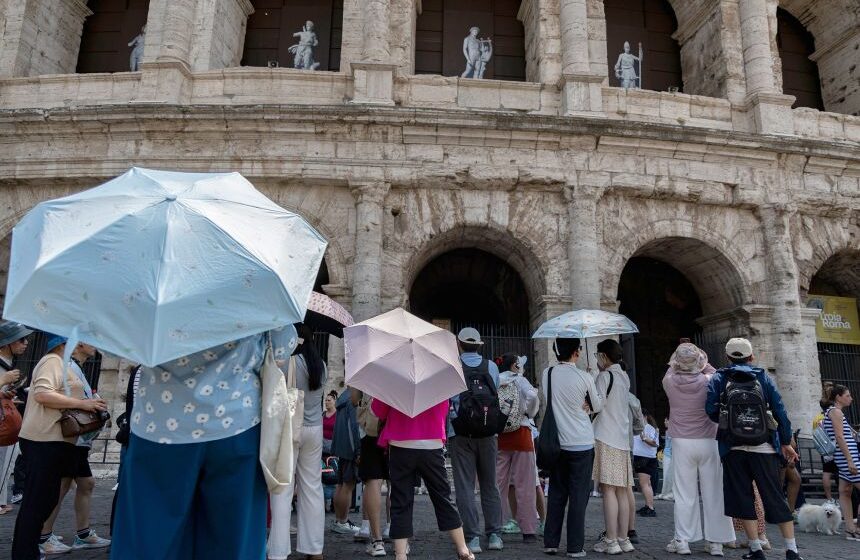
Europe’s record-breaking summer heat is estimated to have caused 50,391 deaths across 854 cities in 30 countries, with human-induced climate change responsible for around 32,619 of them, according to new research. The findings underline the growing threat extreme heat poses to public health as global temperatures rise.
The study, led by researchers associated with Imperial College London and the London School of Hygiene & Tropical Medicine, examined heat-related mortality between June and August 2026. Scientists compared actual temperatures with conditions estimated for a world without human-caused climate change, then applied established models linking temperature exposure to mortality.
The estimated death toll was around 71% higher than the previous peak of 29,480 recorded in the same cities during the summer of 2022. Researchers found that roughly 65% of the deaths in 2026 were attributable to human-induced warming, illustrating how fossil-fuel emissions are intensifying the health risks associated with hot weather.
Western and southern Europe were among the worst-affected regions. Italy recorded an estimated 13,303 heat-related deaths, followed by France with 7,268 and Spain with 6,824, according to reporting on the study. But the effects were not confined to traditionally hot countries: the United Kingdom and other parts of northern Europe also experienced substantial mortality.
Older people faced the greatest risk. More than half of the estimated deaths occurred among people aged 85 and above, although the researchers also identified more than 800 deaths among adults aged 20 to 44. The findings demonstrate that extreme heat is not simply a seasonal discomfort; it can become a serious health emergency, particularly for people with existing vulnerabilities and those without access to safe, cool environments.
The estimates nevertheless require careful interpretation. They are modelled figures, not a count of individually confirmed deaths, and cover cities representing about 40% of the populations in the countries studied. The researchers have also warned that the figures do not include a deadly heatwave in May, meaning the full toll may be higher. Heat-related deaths can be difficult to identify because extreme temperatures may aggravate underlying conditions rather than appear as the direct cause on death certificates.
The results point to two parallel challenges for governments. Cities need stronger heat-warning systems, public-health preparedness, accessible cooling, more shade and green spaces, and targeted support for older people and other high-risk groups. At the same time, adaptation alone cannot remove the underlying driver: reducing greenhouse-gas emissions, particularly those from fossil fuels, remains central to limiting future warming and the associated risks.
For policymakers, the lesson is that heatwaves must be treated as a recurring public-health threat rather than isolated weather events. As hot summers become more dangerous, the ability of cities to protect residents will depend on both immediate preparedness and sustained climate action.
Sources: London School of Hygiene & Tropical Medicine: European heat deaths in summer 2026, Imperial College London: Heat-related mortality study, Associated Press: Europe’s killer heat this summer claims 50,000 lives, Nature Health: Research on heat-related mortality from 2000 to 2025, The Indian Express: Europe’s record heat and estimated deaths.
