













Xi Jinping’s party discipline drive deepens
China’s fifth plenum places political discipline and institutional control at the centre of the Communist Party’s agenda, as sweeping military purges raise questions about leadership stability, governance and the readiness of the armed forces.
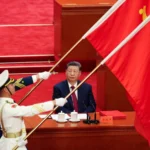
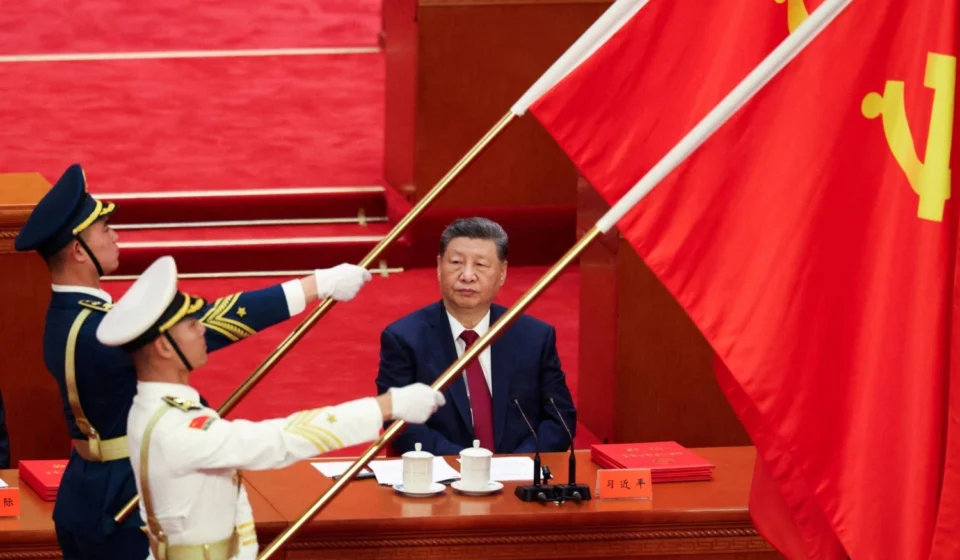
China’s ruling Communist Party has begun a four-day leadership meeting focused on strengthening internal discipline, reinforcing compliance with central directives and extending President Xi Jinping’s anti-corruption campaign. The fifth plenum of the 20th Central Committee, which opened in Beijing on 26 October and is scheduled to conclude on 29 October, comes roughly a year before the next Communist Party Congress, when the party is expected to determine its leadership for the following five-year period. The gathering is therefore significant not only for its formal governance agenda but also for the way it may shape political authority ahead of the 2027 leadership transition.
According to China’s state news agency Xinhua, Xi delivered a work report on behalf of the Politburo and presented a draft decision on persistently advancing what the party calls “full and rigorous Party self-governance”. The document reviews the party’s experience with internal discipline and proposes measures for addressing challenges in party-building. The official framing emphasises integrity, accountability and the capacity of party institutions to implement central policy. Independent analysts, however, see the meeting as part of a broader effort to make the party hierarchy more responsive to Xi’s priorities and reduce the space for officials to deviate from leadership directives.
The meeting’s immediate focus is not a new economic development blueprint but the machinery of political governance. Reuters reported before the plenum that senior officials were expected to discuss stronger discipline, ideological conformity and institutional controls over the exercise of official power. The Associated Press also reported that the campaign increasingly targets officials accused of underperformance, bureaucratic inaction and failure to carry out policy instructions, extending its reach beyond conventional corruption investigations. This shift suggests that discipline is being treated not simply as an anti-graft measure but as an instrument for improving compliance across the governing system.
Xi launched his sustained anti-corruption campaign after taking power in 2012, presenting graft as a threat to the Communist Party’s legitimacy and effectiveness. The drive has led to investigations involving large numbers of officials and the removal of senior figures across civilian administration, state institutions and the military. Beijing maintains that such measures are necessary to combat corruption, improve governance and protect the party from internal decay. Critics and some outside analysts argue that the campaign has also helped Xi consolidate authority by removing officials who could challenge his policies or occupy positions of independent influence.
The distinction between these explanations is important. The existence of corruption investigations does not, on its own, establish that a particular case is politically motivated. Nor does the scale of a purge prove that every official removed was targeted for disloyalty. Nevertheless, the campaign’s reach into the highest levels of the party and military, combined with the leadership’s emphasis on political conformity, has made the relationship between anti-corruption enforcement and centralised power a major issue in assessments of Xi’s rule.
The language surrounding the current plenum reinforces that emphasis. Xi has criticised officials who publicly profess loyalty but privately fail to implement leadership decisions, describing such figures as “two-faced”. In the party’s official account, the problem includes failures of execution, improper conduct and the misuse of authority. In political terms, the campaign places increasing weight on whether cadres demonstrate reliability through their actions, rather than merely expressing agreement with the leadership.
That approach could improve the consistency of policy implementation in a bureaucracy as large as China’s. Central authorities often depend on provincial and local officials to translate national objectives into practical decisions, and gaps between announced policies and local execution can weaken results. Stronger oversight may help expose misuse of public funds, discourage bureaucratic obstruction and make officials more accountable for delivery. Yet a system in which career advancement depends heavily on demonstrating political reliability may also encourage excessive caution, reduce the willingness to report unwelcome information and reward visible compliance over independent problem-solving. The extent to which the new measures address these risks will depend on their implementation, not simply their formal wording.
The most striking dimension of the current disciplinary drive is the scale of disruption within the People’s Liberation Army. Research by the Asia Society Policy Institute, cited by the Associated Press and Reuters, indicates that 42 of the 44 military-affiliated officials elected as full members of the Central Committee in 2022 have since been purged or have disappeared from public view. The estimate highlights the exceptional degree of turnover affecting the senior military leadership, although the status of individual officers is not necessarily identical in every case.
The Central Military Commission, the party body responsible for directing China’s armed forces, has also been severely affected. A series of investigations and removals has left Xi and one other senior officer on the commission, according to reporting and analysis by international media and research institutions. The departures have affected senior command, military administration and officials connected with procurement and political work. The plenum provides an opportunity to observe how the party manages the consequences of these removals, although analysts have cautioned that major personnel decisions may be deferred until the next Party Congress.
The purge raises a difficult institutional question. Removing officials suspected of corruption can strengthen military accountability, particularly where procurement, promotion and weapons acquisition are vulnerable to abuse. But sustained turnover at the top can also disrupt command relationships, weaken continuity in planning and leave gaps in operational experience. A February 2026 assessment by the International Institute for Strategic Studies, reported by Reuters, warned that vacancies in the command structure could create serious organisational deficiencies. Subsequent removals have intensified the questions surrounding how quickly the military can rebuild its leadership and maintain operational effectiveness.
These concerns are particularly relevant as China continues modernising its armed forces and increasing military activity around Taiwan and disputed areas of the South and East China Seas. The purges do not by themselves establish that China’s military is incapable of carrying out operations, nor do they prove that Beijing’s strategic objectives have changed. They do, however, complicate outside assessments of command cohesion, readiness and the relationship between political supervision and professional military judgement.
Xi’s position within this system is central. The removal of senior commanders may reinforce the authority of the party leadership over the armed forces, consistent with the Communist Party’s principle that the military must remain under its control. At the same time, the concentration of decision-making authority can increase the importance of the information reaching the top leadership. If officials fear punishment for reporting failures or disagreeing with preferred assessments, centralised control may make it harder to identify operational weaknesses before they become consequential.
The timing of the fifth plenum gives its internal governance agenda a wider political significance. The next Party Congress is expected in 2027, when a new Central Committee will be selected and the party’s senior leadership arrangements will be determined. Xi has already broken with the precedent of a two-term limit for the party’s top leadership, and analysts widely expect him to seek another term as general secretary. However, the plenum itself should not be treated as formal confirmation of future appointments or as evidence that a specific succession arrangement has been decided.
Reuters reported that analysts did not expect the gathering to produce major immediate personnel changes or clear signals about a successor. Instead, its importance may lie in setting standards for the officials who will remain in senior positions and those who may rise through the party hierarchy. With a significant number of members of the 2022 Central Committee removed or absent, the next leadership formation will emerge from a substantially altered institutional landscape.
The process could help Xi ensure that the next generation of officials shares his approach to political discipline and policy execution. It may also reduce the influence of personal networks that previously shaped appointments and internal relationships. Yet repeated purges can make the party’s personnel system more difficult to interpret from outside China, particularly when the reasons for removals are not fully explained and the status of officials becomes unclear before formal announcements.
The lack of transparency is itself consequential. Plenums are closed-door meetings, and observers typically rely on official communiqués, personnel announcements and subsequent policy documents to understand the leadership’s decisions. The absence of public debate does not establish that internal disagreement is absent; it means that the extent and character of such disagreement are difficult to assess independently. As a result, interpretations of the plenum’s political implications should be distinguished from the decisions that the party formally announces.
Although the fifth plenum centres on party governance rather than a new economic plan, its outcome may affect the environment in which economic policy is implemented. China’s central leadership has sought to strengthen oversight of public spending, improve administrative performance and prevent corruption from undermining major projects. Stronger enforcement could reduce waste and discourage officials from exploiting public resources for private gain.
There are, however, potential trade-offs. Local governments and state institutions are responsible for implementing policies in areas ranging from industrial development and infrastructure to technology investment and public services. If officials become more concerned about disciplinary consequences than about solving local problems, they may delay decisions, avoid experimentation or prioritise compliance with formal instructions over outcomes. These risks are particularly relevant when national priorities require local adaptation to different economic conditions.
The campaign’s emphasis on execution also raises questions about how performance will be measured. If accountability focuses on clear and verifiable outcomes, stronger oversight may improve delivery. If it instead encourages officials to demonstrate loyalty through highly visible actions or conservative interpretations of policy, it could produce excessive bureaucracy and distort incentives. The public details of the plenum’s final decision will therefore matter: broad language about discipline will reveal less than concrete changes to oversight procedures, reporting obligations, enforcement powers and accountability mechanisms.
Internationally, the political stability of China’s leadership has implications for trade, investment and security. A more disciplined bureaucracy could support policy continuity, but prolonged uncertainty surrounding senior military and political appointments may complicate assessments of institutional reliability. Governments and businesses will be watching for indications of whether the leadership’s drive produces clearer governance arrangements or further concentrates authority without improving the transparency of decision-making.
The fifth plenum underscores how Xi’s anti-corruption campaign has evolved into a wider effort to shape the conduct of the party-state. Its stated objectives include reducing corruption, strengthening accountability and ensuring that officials implement central decisions. Its broader political effect may be to establish a leadership system in which institutional advancement depends increasingly on demonstrated alignment with Xi’s priorities.
Whether this model produces more effective governance remains an open question. Tighter discipline can reinforce policy coordination and deter misconduct, but it can also create incentives for silence, risk avoidance and excessive dependence on the judgement of a small circle of senior leaders. The military purges make that tension especially visible: the party is seeking to strengthen control over the armed forces while simultaneously having to manage extensive disruption among senior commanders.
The final communiqué, expected after the meeting concludes on 29 October, should clarify the formal measures adopted and the party’s stated priorities for the next phase of governance. Any personnel announcements will also offer clues about how the leadership intends to address vacancies, although the next Party Congress remains the central event for determining the longer-term leadership configuration. For now, the strongest conclusion is that Beijing is placing discipline and political reliability at the heart of its preparations for the next leadership cycle. The longer-term test will be whether greater control produces a more capable and accountable system—or one in which institutional stability depends increasingly on the concentration of power at the top.
Sources: BBC, “China’s big political meeting could see Xi ‘tighten discipline’ in party”; Reuters, “Tougher discipline, and Xi’s authority, key at China’s Communist Party’s fifth plenum”; Associated Press, “What to know about China’s plenum as Xi seeks stronger Communist Party discipline”; Chinese government/Xinhua, “20th CPC Central Committee starts fifth plenary session”; Brookings Institution, “Xi’s party: What to look for at the upcoming Chinese Communist Party plenum”; Reuters, “China’s purges of top military commanders spur questions about war-waging ability”; Center for Strategic and International Studies, “Assessing Xi’s Unprecedented Purges of China’s Military”.
