














Spain train collision kills at least 68 as investigators examine safety system failure
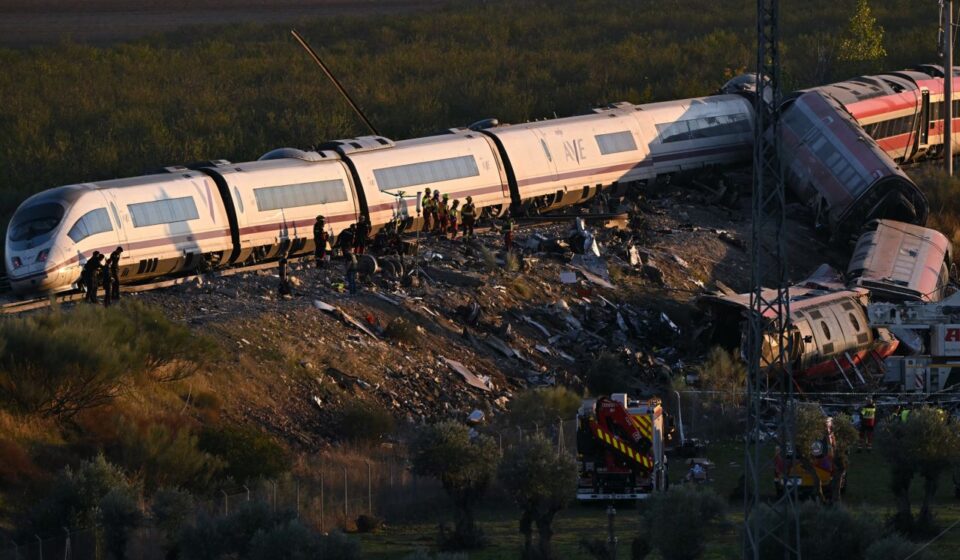
At least 68 people have died and dozens have been injured after two high-speed trains collided in central Spain, prompting a major rescue operation and renewed scrutiny of railway safety.
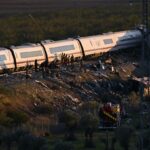
At least 68 people were killed when a high-speed train operated by Spain’s state-owned Renfe collided with a stationary train run by private operator Iryo near Urda, in the province of Toledo, on Wednesday morning, according to regional authorities.
The collision occurred at approximately 8.53am on the Madrid–Seville route. The impact derailed carriages and left emergency services searching the wreckage for victims and survivors. The regional government of Castilla-La Mancha said 58 people were receiving hospital treatment, although casualty figures could change as the emergency response continued.
The two trains were carrying hundreds of passengers. According to the authorities cited by the Associated Press, 397 people were aboard the Renfe train and 147 were travelling on the Iryo service.
Rail services between Madrid, Ciudad Real and Andalusia were suspended following the crash, disrupting travel along a major high-speed corridor.
Investigators examine signalling failure
Spain’s Transport Minister Óscar Puente said an apparent failure in a railway safety system was central to the initial investigation. According to his account, a computer malfunction affected the signalling system along a 63-kilometre stretch of track, causing trains in the area to stop.
Puente said the central control centre subsequently instructed the Renfe train to resume its journey without speed restrictions, despite a stop signal remaining active on the line. The train then struck the stationary Iryo service.
The minister described the decision to authorise the train’s movement as “inexplicable” but cautioned that the investigation must establish the circumstances surrounding the collision. Authorities were also examining the train’s speed at the time of impact.
The account provided by the transport minister represents an initial explanation rather than a final determination of responsibility. Investigators will need to establish how the safety system failed, what information was available to railway controllers and how the decision to resume movement was made.
Government declares national mourning
Prime Minister Pedro Sánchez visited the crash site and announced that the government would declare three days of national mourning.
Sánchez expressed condolences to the victims and their families and called for measures to restore public confidence in the country’s high-speed rail network.
The disaster has renewed concerns about railway safety in Spain, which experienced another deadly high-speed train collision in January. That accident killed 46 people, according to subsequent reporting, and involved trains operated by the same two companies.
The latest collision is also likely to intensify public and political scrutiny of railway infrastructure, operational procedures and the coordination between infrastructure managers and train operators.
Railway disruption continues
Renfe activated its emergency response arrangements and began organising alternative transport for passengers affected by the suspension of high-speed services. The company also established assistance arrangements for victims and their families in coordination with Iryo and emergency authorities.
The duration of the disruption will depend on emergency operations, access to the affected railway section and the work required to investigate the crash.
For Spain, the immediate priority remains the rescue and identification operation, medical care for the injured and support for affected families. The longer-term challenge will be to establish the causes of the collision and determine what measures are necessary to prevent a similar disaster.
