














Climate Finance and the North-South Divide: A Call for Justice and Solidarity
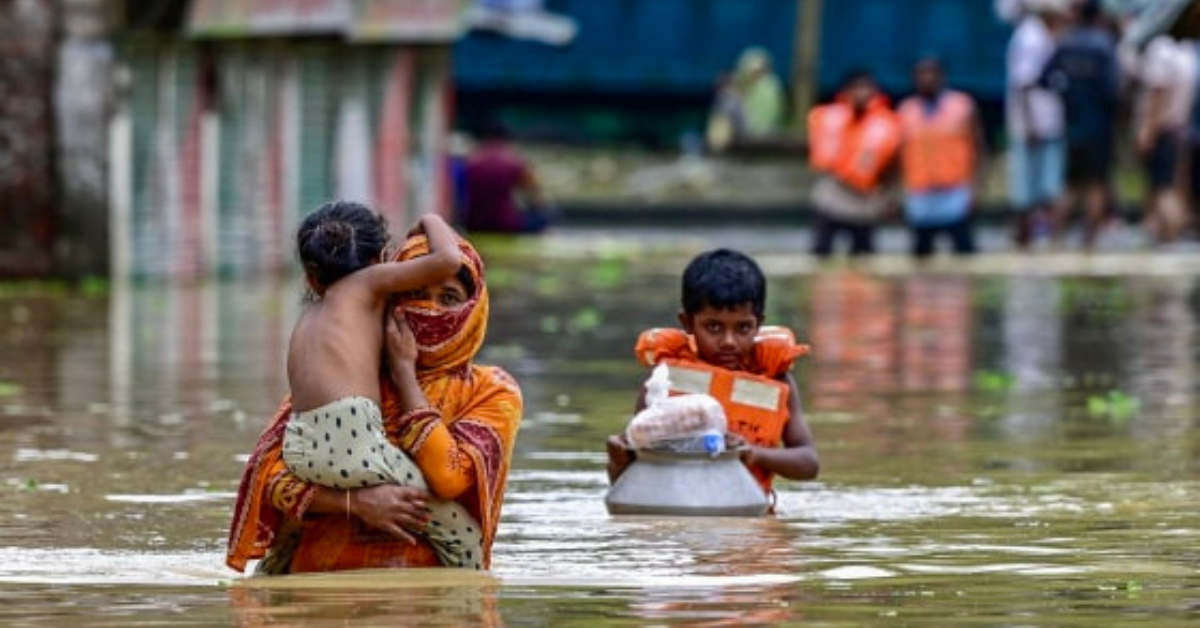
Azizul Hakim Rakib: Often, the world’s poorer populations, who have done the least to warm the planet, are the ones most affected by climate change. The coasts of South Asia are often struck by cyclones. The land in sub-Saharan Africa is dry because of drought. Forests burn, rivers swell, and homes disappear. The global response remains deeply unequal yet amid this crisis. The main cause of this inequality is a lack of attention on climate finance and the unresolved disagreements between the Global North and the Global South.
Climate finance, at its core, refers to the funding needed by countries, particularly developing ones, to mitigate the impacts of climate change and to adapt to its consequences. These efforts involve building sea walls, developing renewable energy technologies, restoring nature and ensuring that at-risk communities can survive. But the debate surrounding climate finance goes far beyond dollars and cents. It is a matter of climate justice.
The Historical Divide: Who Owes Whom?
To understand why climate finance is controversial, we have to go back in history. With help from fossil fuels, the Industrial Revolution pushed the United States, the United Kingdom and Germany to wealth and progress. Their industry’s growth depends on emitting carbon. In contrast, those in the Global South, including Bangladesh, Kenya and Bolivia, have hardly contributed to emissions in the past, but must face the harm now.
Therefore, countries around the world agreed at the 1992 United Nations Framework Convention on Climate Change (UNFCCC) that it was up to the advanced nations to take the primary responsibility for combating climate change. Common But Different Responsibilities (CBDR) was developed which acknowledged that climate change is common to everyone, but tackling it should depend on a country’s resources and historical role in climate degradation.
The Broken Promises of Climate Finance
The results in climate finance are discouraging even though these agreements exist. Developed countries pledged that they would give $100 billion each year to developing countries to manage and reduce climate issues by 2020. However, as of the most recent assessments, achieving that goal has not been fully accomplished. Much of the support given is in the form of loans, so countries facing disaster are left in more debt which they never asked for.
The North-South divide grows wider as richer countries spend billions on their own adaptation measures while offering limited and often inaccessible support to poorer nations. In countries of global south, communities in the coastal belts face rising sea levels and increased salinity that destroys crops and livelihoods. Adaptation is not optional; it’s a matter of survival. Yet, climate finance processes remain heavily bureaucratic and slow, making it difficult for grassroots organizations and local governments to access necessary funds.
Human Stories Behind the Numbers
Behind every figure in climate finance lies a human face. A few years ago, I talked to a farmer in the coastal region of South Asia who had to move away from his family’s land because of river erosion. He along with his children are now living in a slum in in the capital city, struggling to find clean water and basic healthcare. Although he is not an expert, he pointed out a vital concern: “Why are we paying for things that others caused?”
This is not just his story. It is the story of millions living on the frontlines of a changing climate. They are the least responsible, yet they bear the heaviest burden.
The Push for Loss and Damage
Because the situation is so critical, an important new area in climate finance has been brought which is called Loss and Damage.This refers to the irreversible impacts of climate change when adaptation is no longer possible. At the COP27 summit in Egypt, countries confirmed the launch of a Loss and Damage Fund for the first time after decades of resistance from developed countries who feared liability.
But only agreeing on a fund doesn’t mean it can be put into operation. The main issues right now are the source of the funds, who will handle them and how the donations will be distributed to those in need. The Global South is concerned that pledges may, once again, not be achieved.
Reimagining Climate Finance: From Aid to Equity
Climate finance will really change things if we focus on justice as well as charity. It is time for the North to acknowledge its climate debt. Climate finance should be predictable, accessible, and adequate, delivered as grants, not loans, and tailored to the needs of vulnerable communities, not imposed from afar.
Furthermore, the idea is to choose quality over quantity. Funds must be directed to locally-led adaptation initiatives, where communities have a say in how resources are used. Groups of young people have started making floating gardens to resist floods in South Asian countries and women in cooperatives are helping plant trees to reforest the land. Often, small, local innovations are neglected in favor of big government initiatives.
The Road Ahead
The upcoming climate negotiations, including the COPs, must center climate finance as a core priority. Without robust financial support, the ambition of the Paris Agreement, to limit global warming to 1.5°C, will remain out of reach. Climate finance is not a side issue; it is the cornerstone of global climate action.
Since the countries of South Asia faces climate challenges and holds a strong voice, can take a strong role advocating for action on climate. There should be stronger regional solidarity among the Global South and a unified call for equitable climate finance mechanisms.
Final Words
Climate finance is about more than just policies, promises or political summits. The goal is to make sure that millions of people in the global south keep their dignity and that they have a future. It is as much about right and wrong as it is about politics when it comes to the North-South divide in climate finance. Bridging it will require courage, empathy, and above all, solidarity.
Because in the end, climate change does not respect borders. And neither should our compassion.
*Writer: Independent Researcher, and Graduate Student, Department of International Relations, University of Rajshahi, Bangladesh