








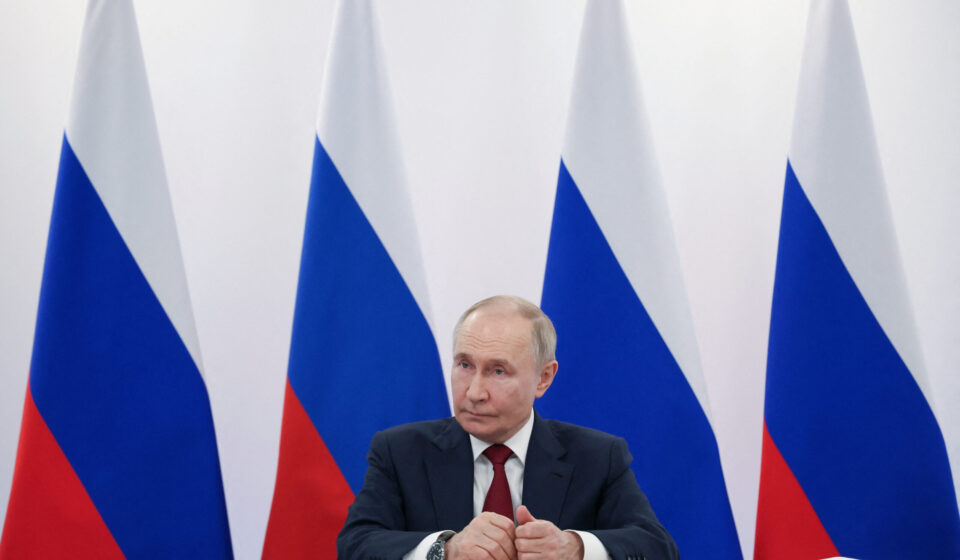
Putin signals possible role for Europe in next peace talks
The prospect of European participation in the next round of negotiations to end the war in Ukraine has emerged as a potentially important development in an increasingly complicated diplomatic process.
Following talks in Moscow on Thursday, US special envoy Steve Witkoff said Russian President Vladimir Putin had agreed that European representatives could join the next meeting. Ukrainian President Volodymyr Zelensky welcomed the announcement. Yet the Kremlin’s response offered little certainty that Moscow had accepted the proposal in the same terms.
The distinction is important. While Washington presented the development as progress towards a broader negotiating format, Kremlin aide Yuri Ushakov did not confirm that European representatives would participate. He instead criticised Europe’s current position on the conflict, describing its approach as contributing to the prospect of prolonged war. The announcement therefore signals a possible opening, rather than a settled diplomatic agreement.
Europe seeks a role in decisions affecting its security
The discussions followed two days of US-mediated negotiations involving Russian and Ukrainian representatives in Abu Dhabi. The meetings were the first direct negotiations between the two countries under US mediation in nine months. Although both sides indicated that some progress had been made, the talks did not resolve the fundamental disagreements over territory and the conditions for ending hostilities.
European governments have repeatedly argued that they cannot be excluded from negotiations whose outcome will directly shape the continent’s security. Their concern extends beyond the immediate question of a ceasefire. Any settlement could influence NATO’s future posture, European defence policy, Ukraine’s long-term security arrangements and the wider relationship between Russia and its neighbours.
The issue became more visible after Witkoff and fellow US envoy Jared Kushner met Putin at the Kremlin. Witkoff subsequently told Russian state television that Europeans would participate in the next meeting. Kushner suggested that Washington had detected a change in the European position and believed their inclusion would not obstruct progress.
However, the question of who would represent Europe remains unresolved. The European Union consists of multiple governments with different political priorities, while the United Kingdom and NATO also have significant interests in the outcome. A common representative would need a clear mandate to negotiate on behalf of the participating states. Without that, European involvement could remain politically significant but operationally limited.
Moscow and Kyiv remain divided over the terms of peace
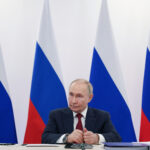
Putin’s comments during the meeting exposed the depth of the disagreement. He said Russia had not opposed dialogue with European countries, but argued that European governments had ended previous engagement with Moscow. He also urged Washington to establish whether its European allies genuinely wanted peace or war.
More significantly, Putin warned that the deployment of Western troops in Ukraine after a peace agreement would be unacceptable to Russia and could lead to a resumption of hostilities. This position places a major obstacle in front of discussions about security guarantees. For Kyiv and several European governments, credible guarantees are central to preventing another Russian attack. For Moscow, a Western military presence in Ukraine is presented as a direct security threat.
The disagreement reflects two competing understandings of what a settlement should achieve. Ukraine and its European partners seek an arrangement that protects Ukrainian sovereignty and reduces the risk of renewed aggression. Russia continues to demand a broader change in the regional security environment and has maintained its territorial claims.
Moscow controls substantial parts of Ukrainian territory, including areas in the east and south, but Kyiv rejects Russia’s claims to sovereignty over the four Ukrainian regions it declared annexed in 2022. Ukraine has also refused to surrender the remaining parts of the Donbas region. These territorial questions remain among the most difficult issues confronting negotiators.
Zelensky, after meeting the US envoys in Dublin, welcomed the prospect of European participation and said he hoped future discussions would include practical steps towards a ceasefire and de-escalation. His position reflects Kyiv’s concern that decisions about Ukraine’s future should not be negotiated without Ukraine and its principal European supporters having a meaningful role.
A diplomatic opening is not yet a peace breakthrough
The latest diplomatic activity has generated movement in the negotiating process, but there is little evidence that the central obstacles have narrowed. The Abu Dhabi meetings produced progress on a prisoner exchange, according to reports from the negotiations, but no breakthrough on a ceasefire or the territorial dispute. The Moscow meeting has raised the prospect of a wider format without establishing the conditions under which such talks would operate.
Putin also proposed a joint Russian-Ukrainian humanitarian mission to Kostiantynivka, a city in eastern Ukraine. He said the initiative could allow humanitarian assistance to reach remaining residents and help establish the situation on the ground. However, his assertion that Russian forces controlled the city has been disputed by Kyiv. Ukraine has also expressed concern that temporary ceasefires for humanitarian operations could be used by Russian forces to regroup. The proposal therefore requires independent verification and agreement on practical safeguards before it can be treated as a workable humanitarian arrangement.
The diplomatic process is also unfolding alongside continued military pressure. Both countries remain engaged in attacks on infrastructure and military targets. The persistence of fighting makes it difficult to separate negotiations from developments on the battlefield, where territorial control and military capacity continue to influence each side’s calculations.
The challenge for Europe
The central question is no longer simply whether Europe will be invited to the next meeting. It is whether European governments can establish a coherent negotiating position and secure meaningful influence over the outcome. Participation without a shared mandate may offer visibility without sufficient leverage. Conversely, a unified European approach could strengthen the role of Ukraine’s supporters in discussions about security guarantees, reconstruction and the future of the continent’s defence architecture.
For Washington, bringing Europe into the process may help distribute political responsibility for a settlement and address Moscow’s objections to the existing format. But it also risks exposing differences between the United States and its European allies over the balance between ending the war quickly and ensuring that any agreement is sustainable.
For Kyiv, the priority remains a settlement that does not legitimise territorial conquest or leave the country vulnerable to another invasion. For Moscow, the negotiations offer an opportunity to pursue demands that extend beyond the battlefield. These positions are not easily reconciled through changes to the format alone.
The reported invitation to European representatives could become an important step towards more inclusive diplomacy. But until the Kremlin confirms the arrangement, the participating governments agree on representation and negotiators begin addressing the substantive disputes, the prospect should be treated with caution. A larger negotiating table may improve the legitimacy of the process; it will not, by itself, bring the war closer to an end.
Sources: This report draws on cross-checked reporting from Reuters – Putin lets Europe join Ukraine peace talks, Zelenskiy welcomes prospect of European participation; Associated Press – US envoys meet Putin in Moscow, then see Zelenskyy in Dublin; Euronews – Russia plays down peace talks with Europe after Witkoff raises hopes of breakthrough; Deutsche Welle – EU leaders tussle over who to send to Ukraine peace talks; and The Washington Post – After meeting Putin, US envoys say Europe to join talks on ending Ukraine war.
