












Trump’s Asia Trip: Deals and diplomatic challenges
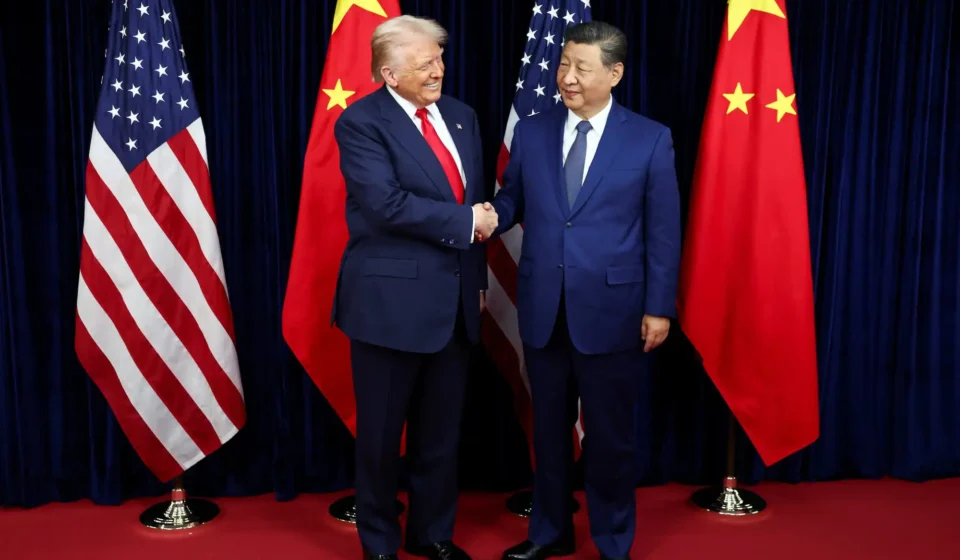
US President Donald Trump has described his recent visit to Asia as one of the most successful presidential trips in American history, highlighting trade agreements, high-level diplomacy and an unprecedented meeting with Chinese President Xi Jinping and Russian President Vladimir Putin.
Speaking at a White House press conference on Friday, 20 November, Trump said the United States was “respected again like never before”. He claimed to have met more than 20 world leaders in four days, secured two new trade agreements and expected around 10 further deals in the near future.
However, questions remain over the practical outcomes of the agreements, the future of the war in Ukraine, the implications of US-China technology competition and the administration’s domestic political challenges.
Meeting with Xi and Putin
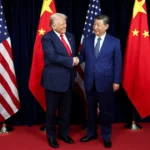
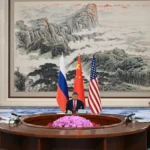
One of the most significant events of Trump’s Asia visit was his meeting with Xi and Putin in China. Trump described the atmosphere between the three leaders as having “great electricity” and called their relationship “fantastic”.
They discussed their responsibilities as leaders of the world’s three largest nuclear powers. A joint declaration addressed nuclear risks, international energy supplies, reform of the United Nations and the role of international institutions. However, it did not establish a concrete settlement for the war in Ukraine or the conflict involving Iran.
Trump claimed that Putin had told him Russia would not have invaded Ukraine if Trump had been president in 2022. This was Trump’s account of a private conversation and was not independently established.
The president expressed confidence in his relationship with Putin, arguing that maintaining communication with the Russian leader gave Washington additional diplomatic strength. His comments came as Russia continued military operations against Ukraine.
Trade agreements and economic ambitions
Trump presented the trip as a major achievement for American trade and investment, pointing to agreements and commercial commitments involving Southeast Asian countries.
The White House said the visit to the Philippines generated more than $17 billion in commercial deals and strategic investments. It highlighted a proposed Boeing and GE Aerospace transaction with Philippine Airlines involving up to 20 Boeing 787 aircraft, alongside other defence and technology-related commitments.
The administration also announced that negotiations on a reciprocal trade agreement with Thailand had reached substantial conclusion. The proposed arrangement would require further domestic processes before formal implementation.
These announcements indicate an effort by Washington to strengthen its economic and strategic presence in Southeast Asia. However, announced commercial commitments, concluded negotiations and legally implemented trade agreements are different stages of the process.
Trump also said he was close to reaching a trade deal with Mexico, while criticising Canada over longstanding trade disagreements.
AI cooperation amid US-China competition
Artificial intelligence and advanced semiconductor technology featured prominently in Trump’s remarks.
The president said he and Xi had agreed to establish “joint guardrails” for artificial intelligence, although he provided few details about the proposed framework.
Treasury Secretary Scott Bessent offered a more specific description of the discussions, saying the two leaders had agreed that humans should remain involved in military decisions using advanced AI systems.
The reported understanding could become significant as Washington and Beijing compete to develop increasingly powerful AI technologies. However, no detailed bilateral regulatory framework was presented at the press conference.
The discussions also took place against a backdrop of tighter US restrictions on access to advanced AI chips. The wider policy challenge for both governments is how to manage national security risks while maintaining technological competitiveness.
Trump backs Jensen Huang’s return to Nvidia
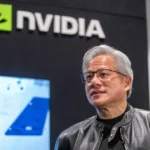
The president also addressed the controversy surrounding Nvidia and its former chief executive, Jensen Huang.
Trump said he would welcome Huang’s return to the company, describing him as one of the world’s most brilliant minds. He suggested that Nvidia’s board should accept an apology and give the former chief executive a second chance.
The comments followed reports concerning Huang’s departure and allegations involving a relationship with an executive described in media reports as a suspected Chinese intelligence operative. These allegations have contributed to scrutiny of semiconductor exports and the administration’s handling of sensitive technology transfers.
Trump also defended Commerce Secretary Howard Lutnick, saying he had not lost confidence in him despite reported disagreements within the administration over the handling of advanced chip exports to China.
Overseas data centres and domestic energy policy
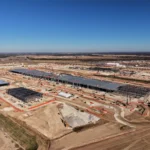
Trump announced that his administration would seek to discourage US companies from building data centres overseas by imposing what he described as a “tremendous tax” on such investment.
He argued that keeping data-centre infrastructure inside the United States was essential to maintaining the country’s technological advantage over China.
The proposal comes amid growing domestic debate about the economic and environmental costs of data-centre expansion, particularly its demand for electricity, water and supporting infrastructure.
Trump also praised the Senate’s passage of a bipartisan permitting reform bill by 62 votes to 33. The legislation aims to accelerate approvals for energy infrastructure and require data centres to pay for the electricity they consume. It has been sent to the House of Representatives for further consideration.
Vice President JD Vance described the legislation as an important step towards expanding construction of homes, factories and power plants.
Trump claimed the measure could return at least $1,300 annually to American households. That figure was presented as a projected benefit, not an established reduction in household electricity bills.
Domestic politics and technology disruptions
The press conference also covered the recent Republican setbacks in the midterm elections.
Trump argued that his absence from the ballot had contributed to the party’s losses. He also acknowledged Vice President JD Vance’s explanation that the Iran war, inflation and cost-of-living pressures had affected Republican electoral performance.
The president said he remained open to cooperation with Democrats on healthcare and other legislation but threatened to veto bills that did not align with his priorities.
He also dismissed concerns about recent technology outages affecting several US organisations, describing them as separate incidents associated with system upgrades. Meanwhile, the White House confirmed that National Cyber Director Sean Cairncross would leave his position. Kirsten Davies was named as his proposed replacement, subject to the required Senate confirmation process.
Diplomatic claims face a test
Trump’s press conference sought to present his Asia visit as evidence of renewed American influence, stronger trade relationships and his personal ability to engage leaders of competing global powers.
The trip produced important diplomatic encounters and several economic announcements. Yet the most consequential questions remain unresolved: whether the US-China understanding on military AI will become a functioning framework, whether the trilateral engagement can contribute to ending the war in Ukraine, and whether the announced trade commitments will translate into lasting economic benefits.
The meeting with Xi and Putin was historically significant, but symbolism alone does not establish diplomatic success. The longer-term test will be whether the agreements lead to measurable cooperation, greater stability and tangible benefits for the countries affected by the decisions of the world’s major powers.
Sources: CBS News, Trump’s White House press conference; Reuters, Trump’s press conference after China trip; Associated Press, Trump’s Asia trip and meeting with Xi and Putin; Council on Foreign Relations, Analysis of the Trump-Xi-Putin meeting; Reuters, Trump’s discussions with Putin on Ukraine; Reuters, AI guardrails discussed by Trump and Xi; The White House, US economic deals and engagement in Asia; The White House, US-Thailand reciprocal trade statement; Associated Press, US Senate passes permitting reform bill.