












Trump, Xi and Putin hold first trilateral meeting
The three leaders have opened an unprecedented diplomatic gathering in Shenzhen, with Trump calling the United States, China and Russia uniquely positioned to reduce nuclear risks. But deep disagreements and the absence of a negotiating framework leave the prospect of concrete commitments uncertain.
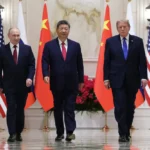
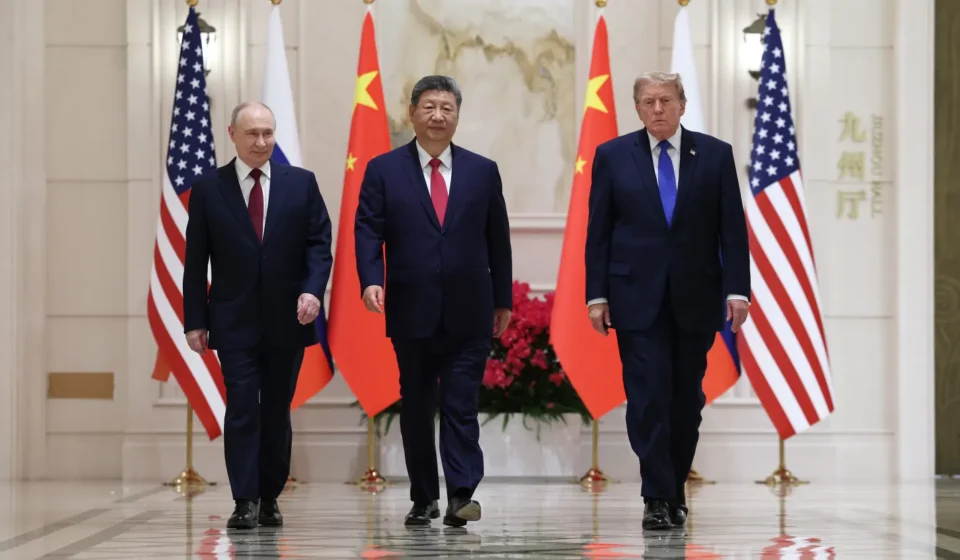
US President Donald Trump, Chinese President Xi Jinping and Russian President Vladimir Putin have held the first trilateral meeting among the leaders of their three countries, bringing the world’s largest nuclear powers together for discussions that include reducing nuclear weapons and addressing international security challenges.
Opening the meeting in Shenzhen, China, on Thursday, Trump said the three countries were “uniquely positioned” to discuss reducing the global nuclear arsenal and lowering the risk of nuclear weapons being used. He described the gathering as historic and said the leaders had an opportunity to address issues that previous administrations had often avoided discussing directly.
“As the world’s three largest nuclear powers by far, the United States, Russia and China are uniquely positioned to discuss how to reduce the number of nuclear weapons on earth and also to lessen the risk that those weapons will ever be used,” Trump said.
According to CNBC’s report from the meeting, Trump also raised Iran’s nuclear programme and said the leaders would discuss the war between Russia and Ukraine. He criticised international institutions including the International Criminal Court, describing them as “rogue globalist organisations”.
The meeting took place on the sidelines of the Asia-Pacific Economic Cooperation (APEC) summit, which China is hosting in Shenzhen. Trump called the gathering an opportunity to make history and said direct engagement with countries holding different positions was preferable to avoiding dialogue.
Xi presented cooperation among major countries as an essential requirement rather than an optional diplomatic choice. According to Chinese state media, he outlined four principles for relations among major powers: mutual respect, peaceful coexistence, win-win cooperation and adherence to dialogue.
He also referred to China’s partnership with Russia and the need to develop constructive strategic stability in relations with the United States. His remarks framed the meeting around broader international cooperation and the management of differences.
Chinese state media reported that Xi would lead the trilateral gathering. Beijing confirmed the meeting on Monday, although the prospect of a three-way summit had already attracted international attention because of its implications for nuclear diplomacy and relations among the three powers.
The opening statements, however, do not establish that the leaders have agreed on a common negotiating position. Their priorities remain different, particularly over the scale of nuclear arsenals, the war in Ukraine and the future of international security arrangements.
The three countries possess the world’s largest nuclear arsenals, but their stockpiles differ substantially. The United States and Russia hold far more nuclear warheads than China, whose arsenal has been expanding.
That imbalance is central to the difficulty of bringing Beijing into a nuclear arms-control framework. China has previously argued that the United States and Russia, as the two countries with the largest arsenals, should take the lead in reducing their stockpiles before China is expected to participate in equivalent negotiations.
The collapse of the existing US-Russia arms-control framework has added urgency to the issue. The New START treaty, which imposed limits on the two countries’ deployed strategic nuclear weapons, expired in February 2026. Its expiration removed the principal remaining bilateral limits on the world’s two largest nuclear arsenals.
Trump has sought a future arrangement that includes China, arguing that a new framework should reflect the changing distribution of nuclear power. Beijing, however, has resisted joining negotiations on equal terms with Washington and Moscow while its arsenal remains considerably smaller.
Before the Shenzhen meeting, US officials had indicated that they did not expect an immediate agreement. The gathering was described as an initial opportunity to begin a discussion rather than a negotiation likely to produce binding commitments.
The war in Ukraine is another potential source of disagreement. Trump said the three leaders would discuss the conflict, although the question of how such discussions could contribute to a settlement remains complicated by the absence of Ukraine from the trilateral format.
Russia has maintained its own conditions for ending the war, while Ukraine has insisted that decisions concerning its territory and security cannot be made without its participation. Any diplomatic initiative involving the conflict therefore faces questions about representation, sovereignty and the terms of a possible settlement.
Iran’s nuclear programme also featured in Trump’s opening remarks. He said preventing Iran from acquiring nuclear weapons would be part of the discussion, placing the issue alongside broader questions of nuclear proliferation and regional security.
These subjects illustrate the wide scope of the meeting, but they also make a comprehensive outcome more difficult. Nuclear arms control, the Ukraine war and Iran’s nuclear programme involve different diplomatic processes, security concerns and negotiating parties.
The trilateral gathering is significant because it brings the leaders of the three largest nuclear powers into a direct format at a time when existing arms-control arrangements are under strain. It also reflects the importance of dialogue among countries whose strategic interests frequently conflict.
However, the significance of the meeting should not be confused with evidence of progress towards disarmament. The leaders’ opening statements establish that nuclear risk reduction is under discussion, but they do not demonstrate agreement on numerical limits, verification arrangements, timelines or enforcement mechanisms.
For the wider international community, the central question is whether the meeting can develop into a sustained diplomatic process. Any meaningful nuclear arms-control framework would require more than political declarations: it would need clearly defined obligations, reliable verification and a mechanism for addressing violations.
The Shenzhen meeting has opened a rare channel for direct discussion among Washington, Beijing and Moscow. Whether that opportunity produces measurable reductions in nuclear risks will depend on the negotiations that follow, rather than the symbolism of the first gathering.
Sources: CNBC, report by Evelyn Cheng on Trump’s remarks at the trilateral meeting, 19 November 2026 (user-provided source); Reuters, Trump, Xi and Putin begin historic meeting with Ukraine war on agenda; Associated Press, APEC serves as a backdrop as big power politics eclipse talk of open trade, AI; Arms Control Association, Media backgrounder: Trump, Putin, Xi trilateral denuclearisation talks at APEC; Deutsche Welle, Trump to meet Xi, Putin for three-way huddle on nuclear arms talks; Yonhap News Agency, Trump, Xi, Putin set to hold historic trilateral summit.