









IEA says reducing dependence on Strait of Hormuz needs $240bn
The proposed shift would require alternative export pipelines and new oil production, while the Iran war is accelerating efforts to diversify energy supplies. Qatar’s LNG exports, however, remain heavily exposed to the strategic waterway.
The International Energy Agency (IEA) has outlined a possible route for global energy markets to reduce their dependence on the Strait of Hormuz, estimating that approximately $240 billion in investment could help develop alternative oil export routes and additional production capacity. The proposal comes after disruptions linked to the Iran war exposed the vulnerability of one of the world’s most important energy corridors.
In an interview with the Financial Times, IEA Executive Director Fatih Birol said the world could “conceivably manage without the strait”, although achieving that would be difficult and require sustained investment. The agency’s assessment suggests that energy markets could rebalance without fully restoring the pre-war volume of oil shipments through Hormuz.
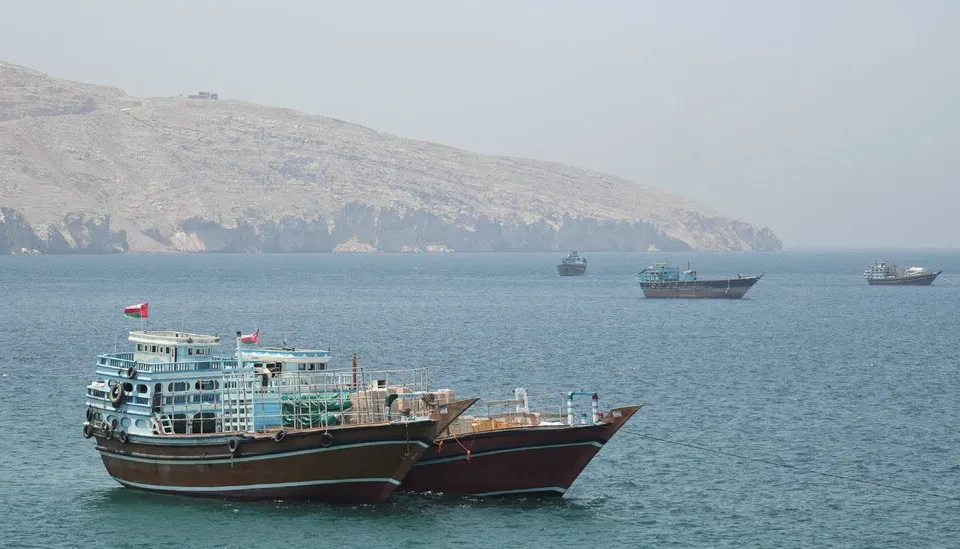
Before the conflict disrupted shipping, approximately 20 million barrels of oil and oil products passed through the strait each day. Around one-fifth of global oil and liquefied natural gas trade also depended on the route, making it a critical connection between Gulf producers and international markets.
The IEA’s proposed investment includes approximately $40 billion for alternative pipelines and a further $200 billion for oilfield development elsewhere. These investments would help Gulf producers bypass the strait while increasing supply from other producing regions.
The IEA estimates that new pipelines in Saudi Arabia, the United Arab Emirates and Iraq could increase the volume of crude oil exported without passing through Hormuz to approximately 15 million barrels per day.
Saudi Arabia has already demonstrated the strategic value of alternative infrastructure through its East-West pipeline, which transports crude from the country’s eastern production areas towards the Red Sea port of Yanbu. The route allowed the kingdom to continue exporting substantial volumes despite restrictions affecting shipments through Hormuz.
According to the Financial Times, the IEA estimated that the pipeline helped Saudi Arabia preserve around $60 billion in revenue during the initial months of the conflict.
The agency’s analysis suggests that, if proposed pipeline projects are completed, non-Gulf producers increase output and oil-importing countries reduce consumption, daily oil flows through Hormuz could fall from their pre-war level of approximately 20 million barrels to around 2 million by 2035.
This is a scenario rather than a guaranteed forecast. The IEA’s assessment depends on several conditions, including investment decisions, additional production capacity and changes in global demand. Its World Energy Outlook also cautions that alternative Gulf export routes could remain vulnerable if instability spreads across the wider Middle East.
The prospects for liquefied natural gas are more complicated because Qatar, one of the world’s leading LNG exporters, has no equivalent alternative export route that bypasses the Strait of Hormuz.
This leaves international gas markets exposed even if oil producers succeed in developing additional pipeline capacity. A prolonged disruption could affect Asian economies in particular, given their reliance on imported LNG for electricity generation, industry and other energy needs.
Birol told the Financial Times that Asian countries were increasingly questioning the security of relying on imported gas after experiencing repeated energy crises. The IEA’s report raises the possibility that up to 260 billion cubic metres of annual LNG capacity could be surplus to requirements by 2035 if Asian governments reduce their dependence on imports.
That possibility creates uncertainty for companies planning major LNG projects. The United States and Qatar are among the countries preparing substantial expansions in export capacity, anticipating stronger demand from international buyers. If importing countries instead accelerate domestic energy production and electrification, some planned capacity could struggle to find sufficient customers.
The issue is therefore not simply whether the world can replace one shipping route. It is whether energy producers and importers can adapt their investment plans to a changing assessment of geopolitical risk.
The Hormuz disruption may also influence the long-term composition of global energy demand. The IEA expects importing countries to consider a wider range of domestic energy sources, including nuclear power, renewables and, in some markets, coal. Greater electrification of transport and heating could further reduce dependence on imported oil and gas.
The agency’s World Energy Outlook presents different possible paths for future oil consumption. Under its Current Policies Scenario, global oil demand rises from approximately 102 million barrels per day in 2026 to 114 million by 2050. Under an alternative response scenario that assumes stronger action to reduce exposure to imported fossil fuels, demand falls to around 85 million barrels per day by the same year.
These scenarios illustrate how energy security decisions can influence markets beyond the immediate crisis. Governments may be willing to invest in domestic energy sources and alternative infrastructure even where those options are more expensive, if they reduce exposure to future supply disruptions.
However, the shift will not be uniform. Countries with substantial domestic coal reserves may increase their reliance on coal, while others may prioritise nuclear power, renewables, storage and electricity-grid expansion. The resulting energy mix will depend on national resources, financing capacity, technology and policy choices.
The proposed $240 billion investment highlights the scale of the challenge facing energy producers. New pipelines require lengthy planning, financing, construction and agreements between countries. Additional oilfield development also takes time and depends on investment conditions and future demand.
Even if these projects reduce the volume of oil passing through Hormuz, the Middle East will remain a major source of global energy supplies. The IEA’s analysis indicates that diversifying away from the strait does not mean eliminating dependence on the region itself.
For energy-importing economies, particularly in Asia, the crisis has exposed the economic risks of relying heavily on a limited number of suppliers and transport corridors. Higher shipping costs, supply uncertainty and fuel-price volatility can affect industrial production, electricity generation, inflation and government spending.
The central implication is that the global energy system may emerge from the crisis with a different infrastructure and investment structure. The Strait of Hormuz could lose some of its importance as an oil export chokepoint if alternative routes and production capacity are developed. But LNG dependence, regional instability and the cost of building replacement infrastructure will continue to constrain how far that transformation can go.
The IEA’s assessment does not suggest that the world can simply abandon Hormuz. It shows that reducing dependence is technically possible, but financially demanding and conditional on long-term changes in supply, demand and energy policy.
Sources: Financial Times, Energy markets can ‘manage without’ the Strait of Hormuz, says IEA, 19 November 2026; International Energy Agency, World Energy Outlook 2026: Executive Summary; IEA, World Energy Outlook 2026: Overview and Key Findings; IEA, Strait of Hormuz: Oil and LNG Trade Facts; Reuters, Energy-security response to Iran war could cut oil demand by 4% by 2035, IEA says.