









Iran expands attacks across Gulf after US strike on Qeshm Island
Iranian drones targeted a Kuwaiti air base hosting US forces, while Bahrain reported further interceptions and a UAE-linked vessel came under attack in the Strait of Hormuz, raising fresh concerns over regional security and global energy supplies.
Iran widened its military operations across the Gulf on Wednesday, targeting a Kuwaiti air base used by US forces and launching further attacks towards Bahrain, following an American strike on an Iranian missile launch site on Qeshm Island. The latest exchanges have increased pressure on an already fragile conflict in which military confrontation, maritime disruption and stalled diplomacy are becoming increasingly difficult to separate.
In a report by CNN, Zachary Cohen said Iran’s army had targeted Ali Al Salem Air Base in Kuwait with drones, according to Iranian state-run Press TV. Kuwait’s General Staff said explosions heard in the area were caused by air defence systems intercepting incoming attacks. It was the first reported Iranian attack on Kuwait since September.
Bahrain, which hosts the US Navy’s Fifth Fleet, also activated air raid sirens early Wednesday. Its military said it had intercepted several Iranian aerial attacks. The developments followed repeated attacks on the kingdom over the preceding week, highlighting the exposure of Gulf states hosting US military facilities to the expanding confrontation.
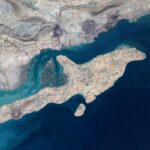
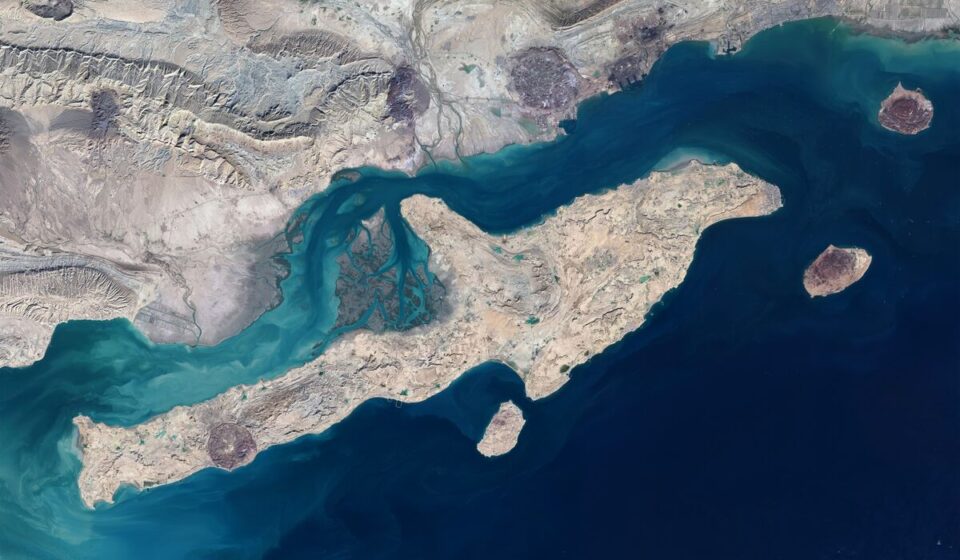
The latest Iranian attacks came hours after US fighter jets struck a missile launch site on Qeshm Island in the Strait of Hormuz. A US military official described the operation as a self-defence action involving precision-guided munitions, saying it was conducted in response to attacks by Iran’s Islamic Revolutionary Guard Corps (IRGC) against American personnel and assets.
Iranian state media confirmed that an area on the outskirts of a city on Qeshm Island had been targeted. Ahmad Nafisi, deputy governor of Hormozgan province for political and security affairs, said the strike had not damaged vital infrastructure, commercial facilities or residential areas.
The United States has characterised similar operations around the Strait of Hormuz in recent weeks as defensive measures rather than a return to a broader bombing campaign. However, the sequence of attacks and counterattacks illustrates how easily limited military actions can trigger further retaliation across the region.
The confrontation is also threatening commercial shipping through the Strait of Hormuz, one of the world’s most important energy routes. Attacks on oil and gas vessels have increased in recent weeks, raising concerns about the safety of crews and the reliability of energy supplies moving through the waterway.
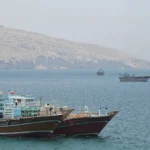
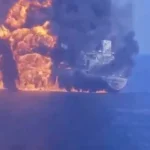
Abu Dhabi National Oil Company’s logistics and services subsidiary, ADNOC L&S, confirmed on 18 November that one of its vessels had been attacked while transiting the strait the previous evening. Eleven crew members were injured and one remained unaccounted for, with search and rescue operations continuing. The company said the remaining crew had been evacuated safely. Reuters reported that maritime security sources described the vessel as a liquefied petroleum gas tanker struck by a projectile. The UK Maritime Trade Operations agency separately reported a tanker attack north of Khasab, Oman, in which a fire broke out and one crew member was missing.
The incidents demonstrate that the risks extend beyond military installations. Commercial vessels, seafarers and energy companies are increasingly exposed to the consequences of the conflict, even when they are not directly involved in military operations.
The United States has maintained a blockade of Iranian ports and conducted escort operations for commercial vessels willing to transit the Strait of Hormuz. A third US aircraft carrier strike group has also entered the area of responsibility of US Central Command, adding to the military presence in the region.
President Donald Trump has signalled a preference for maintaining economic pressure on Tehran rather than immediately resuming full-scale combat operations. Iran, however, has warned that it will not accept an indefinite stalemate and has threatened to expand the conflict further. Trump has also warned that full combat operations could resume if Iran rejects Washington’s demands.
The diplomatic outlook remains uncertain. Hamidreza Azizi, an Iran analyst at the International Crisis Group, argued that the latest developments demonstrate how difficult it will be for Washington to sustain economic pressure and a naval blockade indefinitely without risking a wider war.
The US political calendar adds another dimension. Following the November midterm elections, Democrats are expected to take control of both chambers of Congress in January, narrowing the administration’s political room for manoeuvre. Nevertheless, the decision on whether to resume major combat operations remains with the president.
The Strait of Hormuz is a critical passage for international oil and liquefied natural gas shipments. Prolonged disruption can increase freight and insurance costs, delay deliveries and place additional pressure on energy-importing economies. The latest attacks therefore carry implications well beyond the countries directly involved in the conflict.
For Gulf exporters, the security of maritime infrastructure and shipping routes is central to maintaining export revenue and investor confidence. For major energy importers in Asia, including countries dependent on imported crude and gas, sustained disruption could complicate procurement and increase exposure to price volatility.
The immediate danger is that military retaliation, port restrictions and attacks on commercial vessels become mutually reinforcing. Even without a formal decision to restart a full-scale US military campaign, the current pattern of exchanges risks making the existing stalemate increasingly unstable.
The latest escalation leaves the Gulf facing two interconnected challenges: preventing further attacks on military and civilian infrastructure, and restoring the security of a maritime corridor essential to global trade. Without a credible diplomatic framework addressing the blockade, freedom of navigation and the security concerns of the parties involved, the region’s current cycle of retaliation may prove difficult to contain.
Sources: CNN, Zachary Cohen, “Iran widens Gulf attacks after US strikes missile launch site” (18 November 2026); Reuters — Iran fires at Kuwait after US strike on Iranian island; Reuters — ADNOC vessel attack leaves one crew member missing and 11 injured; ADNOC — Operational update, 18 November 2026; Al Jazeera — Kuwait and Bahrain face new Iran attacks after US strike on Qeshm Island.