












Myanmar Airstrike Kills 17 at Wedding House
The bombing struck a house hosting preparations for a displaced couple’s wedding near the Shan-Karenni border, highlighting the growing danger faced by civilians as military air attacks intensify.
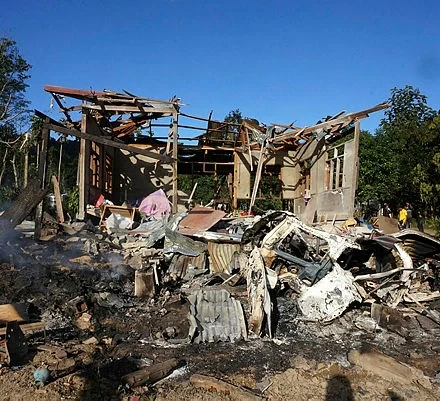
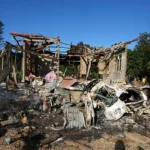
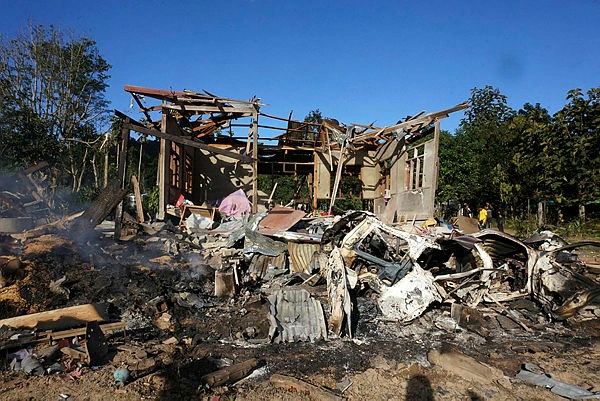
A Myanmar military airstrike struck a house where preparations were under way for a wedding on Saturday, 28 November, killing at least six people, with witnesses reporting that the death toll could be as high as 20.
The attack took place in a village near Moe Bye, along the border between Shan and Karenni states, an area hosting large numbers of people displaced by Myanmar’s ongoing civil war.
The house was being used to prepare for the wedding of two displaced people when the bombing occurred, according to a witness who spoke to Agence France-Presse (AFP). The witness said he heard aircraft flying overhead but initially believed the area would not be targeted.
He later heard an explosion and saw smoke rising from the site. Rushing to help, he said he found 17 bodies and numerous wounded people.
Photographs supplied by other villagers showed at least six separate bodies, including a woman and a child. AFP said it could not independently verify the photographs or videos, leaving the precise casualty figure uncertain. Subsequent local reports put the death toll above 10, while another AFP dispatch cited witnesses reporting around 20 fatalities.
The witness described scenes of confusion as residents attempted to rescue survivors. Most of the injured were women and children, he told AFP. Victims were transported to medical facilities using pickup trucks and motorcycles, while some residents remained missing following the attack.
One video showed the witness carrying an injured young girl who was crying and asking about her parents. She also expressed concern about the cost of medical treatment, underscoring the financial and humanitarian difficulties facing displaced families in conflict-hit communities.
The Myanmar military could not be reached for comment on the incident. There was no independently established explanation for why the wedding venue was targeted or whether the military considered the location a military objective.
The strike comes amid an increasingly dangerous pattern of aerial attacks on civilian-populated areas across Myanmar. Since the military seized power from Aung San Suu Kyi’s elected government in February 2021, fighting between the armed forces and a combination of pro-democracy resistance groups and ethnic armed organisations has spread across much of the country.
Moe Bye occupies a strategically sensitive position near the Shan-Karenni border. Although the military regained control of the town, opposition forces remain active in surrounding villages and rural areas. The continued contest for territory has left local communities exposed to airstrikes, artillery fire and repeated displacement.
A separate report by Myanmar-focused news outlet Narinjara said the wedding-related bombing occurred near the road connecting Moe Bye and Pekon, with local sources reporting more than 10 civilian deaths and around 20 injuries. These figures have not been independently confirmed.
The wider pattern of military air operations has also drawn growing international concern. In its July 2026 annual report, the Independent Investigative Mechanism for Myanmar (IIMM), established by the United Nations Human Rights Council, documented evidence of increasingly frequent and intense aerial attacks by the military and various armed groups.
The mechanism said it had gathered evidence of indiscriminate and intentional attacks against civilians, including strikes on villages, schools, religious buildings, internally displaced people’s camps and medical facilities. Its investigations have also identified military units and command structures potentially responsible for some attacks.
A separate UN human rights assessment covering the period up to May 2026 reported that at least 8,075 civilians had been killed since February 2021, based on credible sources. It identified air attacks as the leading cause of civilian deaths during the reporting period, although restrictions on access and verification mean the actual toll is likely higher.
The humanitarian consequences extend beyond the immediate loss of life. Myanmar’s conflict has displaced millions, disrupted access to healthcare and education, and left vulnerable communities increasingly dependent on limited local assistance. For displaced families, even ordinary social gatherings have become potential sites of danger.
The latest bombing also comes as Myanmar faces renewed international scrutiny over accountability for atrocities committed against the Rohingya. The International Court of Justice recently ruled that Myanmar was responsible for genocide against the predominantly Muslim minority during the 2017 military crackdown. President Min Aung Hlaing subsequently indicated that his government would reject aspects of the ruling it considered inappropriate, according to state media reports cited by The Associated Press.
The wedding attack adds to mounting concerns over civilian protection as Myanmar’s conflict continues without a clear political settlement. With competing armed groups operating across large parts of the country and military air power remaining a significant advantage for the armed forces, civilians in contested territories continue to bear the heaviest consequences.
Sources: AFP report via Malay Mail | AFP updated report via NAMPA | Narinjara – Local casualty reports | UN Independent Investigative Mechanism for Myanmar – Annual Report 2026 | UN Human Rights Council – Myanmar human rights assessment | Associated Press – Myanmar’s response to the ICJ ruling