

















KSA’s silent warning system exposes risks of managing wartime confidence
Saudi Arabia’s decision to stop issuing public alerts about imminent military attacks in the days before deadly strikes on Riyadh airport has raised questions about civilian protection, crisis communication and the kingdom’s ability to safeguard critical infrastructure during its conflict with Iran-aligned Houthi forces.
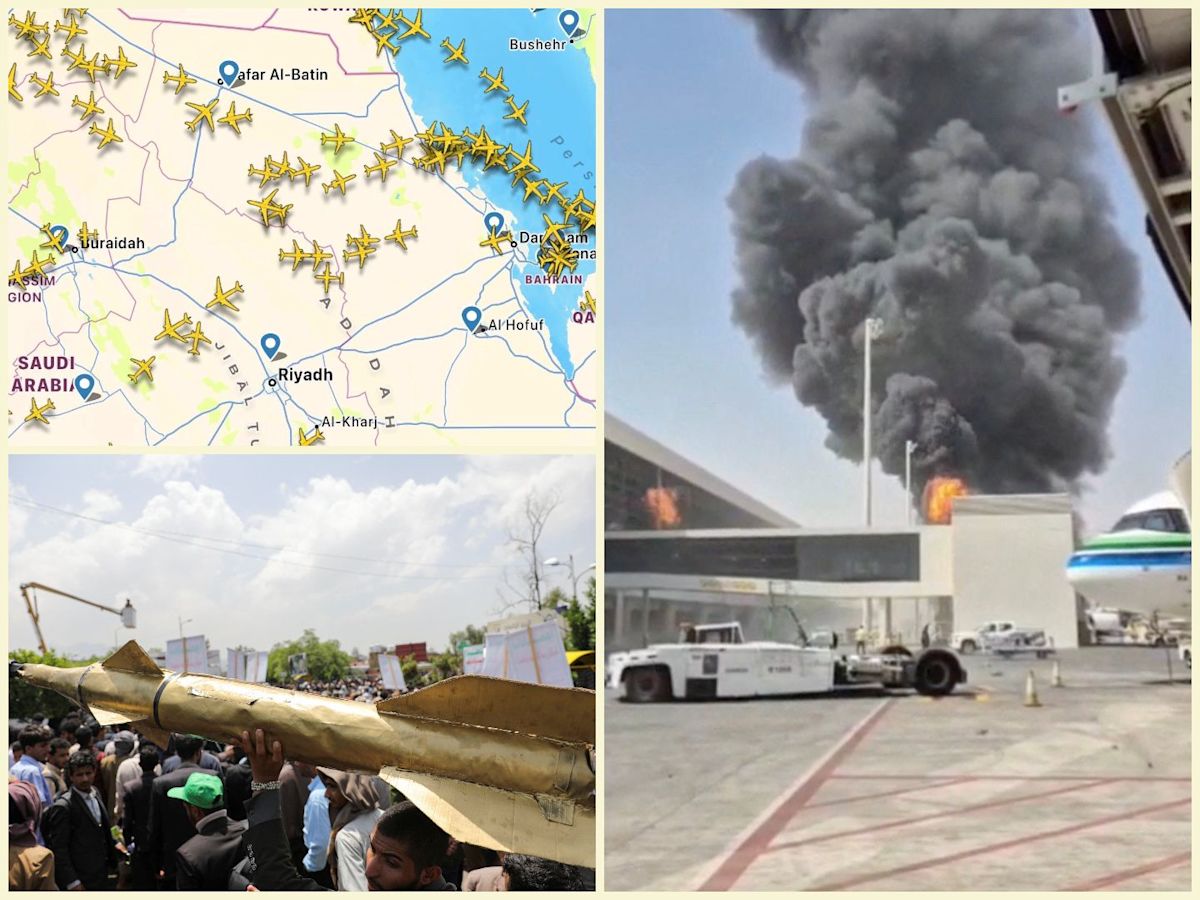
At least 18 people were killed and more than 300 injured in four attacks on Riyadh airport over the past week, according to Reuters. The absence of public warnings before the strikes has intensified concerns about whether residents and travellers were adequately informed of the danger. Saudi authorities have not publicly explained why the alert system fell silent.
The issue extends beyond the performance of air defences. Early-warning systems are a key part of civilian protection: even when a government cannot prevent an attack, timely alerts can give people an opportunity to seek shelter and reduce their exposure to harm.
Reuters reported that Saudi Arabia’s last public alert before the attacks was issued on 29 September for Najran province. The national system, which began sending mobile-phone and social-media warnings in May, remained silent despite growing Houthi attacks. The Civil Defence authority resumed issuing alerts on Monday, 12 October, warning of potential threats in Riyadh and southern cities.
According to Reuters, two officials familiar with the matter said an allied Western government had questioned Saudi authorities about the suspension before the airport attacks. They were reportedly told that alerts were too disruptive and that citizens had complained about being woken during the night. Saudi officials did not respond to Reuters’ requests for comment on that account.
If accurate, this explanation points to a fundamental weakness in crisis management: the inconvenience caused by frequent alerts was weighed against the consequences of leaving the public without timely warnings. Yet the government has not confirmed that this was the reason for the suspension.
Saudi Arabia’s own National Early Warning Platform describes its purpose as warning people of emergencies and informing them of actions needed to protect their safety. That function is particularly important when a threat cannot be intercepted reliably or when the impact area is uncertain.
The comparison with other Gulf states is instructive. Reuters reported that Qatar has used mobile alerts before attacks, while Bahrain and Kuwait have repeatedly sounded sirens directing people to shelter. These systems cannot eliminate the danger, but they provide an additional layer of protection alongside military interception and physical security.
Saudi Arabia’s silence was especially consequential because warnings reportedly continued to reach some Western embassy staff through separate internal channels. Reuters said those alerts drew on Western government intelligence and information from Saudi authorities, although even embassy staff reportedly received no warning before the deadliest airport strike on Saturday. The episode highlights the limits of intelligence-based alerts when attacks are difficult to predict.
The strikes have consequences beyond the immediate loss of life. Airports are essential to passenger travel, logistics, tourism and international business. A perception that travellers cannot reliably receive warnings during an attack could influence airline decisions, corporate travel policies and the willingness of companies to send staff to the kingdom.
The economic stakes are considerable for a government seeking to attract international investment and diversify beyond oil. Reuters’ Breakingviews analysis argued that attacks on Riyadh’s airport and other infrastructure strike at the heart of Saudi Arabia’s economic transformation ambitions, including its Vision 2030 programme.
The tension was visible at the World Petroleum Council Energy Congress in Riyadh, which continued despite the attacks. Saudi Energy Minister Prince Abdulaziz bin Salman sought to reassure attendees that the country remained safe while acknowledging that the risk had not disappeared. Reuters reported that major oil executives had withdrawn from the gathering.
This illustrates the difference between maintaining business continuity and demonstrating that risks are under control. Keeping a conference open may project resilience, but confidence ultimately depends on whether authorities can protect people, communicate threats credibly and explain security decisions transparently.
The attacks have also prompted travel warnings from several governments. Al Jazeera reported that countries including Australia, Canada, Japan, South Korea, New Zealand and the United States had urged heightened caution or advised against travel to parts of Saudi Arabia following the strikes.
Saudi analyst Ali Shihabi told Reuters that the kingdom’s size and the number of valuable targets—including airports, oil facilities and pipelines—make comprehensive defence difficult. He argued that available missile-defence systems and interceptors cannot protect every asset simultaneously.
That is an important distinction. Public alerts cannot prevent missiles or drones from reaching their targets, and they do not resolve gaps in interception capability. But they can help reduce civilian exposure when an attack is detected early enough. Air defence, intelligence, emergency response and public communication are complementary elements of national security, not alternatives to one another.
The Saudi authorities also face a communication challenge during wartime. Reuters reported that Civil Defence warned residents against sharing images, rumours or information about interceptions and impact sites under regulations introduced in March. Restrictions on operationally sensitive information can have a legitimate security rationale, but they should not prevent people from receiving clear, timely instructions about immediate dangers.
The government has not publicly explained why attack alerts stopped or established whether the renewed warnings on 12 October were directly prompted by the airport strikes. Until it does, the precise decision-making process remains unclear.
Saudi Arabia’s early-warning controversy raises a broader question for governments confronting missile and drone threats: can authorities preserve public confidence by suppressing visible signs of danger, or does confidence depend on acknowledging risk and communicating it honestly?
The Reuters reporting suggests that the attempt to maintain normality may have produced the opposite effect. When residents know that attacks are occurring but receive no official warnings, silence can create more uncertainty than frequent alerts. It may also undermine trust in future emergency messages, particularly if people believe that warnings are being withheld to protect the country’s image.
A credible response would require the Saudi government to explain the interruption, clarify the criteria for issuing alerts and publish the safeguards intended to prevent a similar gap. It should also demonstrate how emergency warnings reach residents, visitors and people at major transport facilities, while protecting genuinely sensitive military information.
The central lesson is that a country’s security cannot be measured only by its interception systems or its ability to keep commercial activity running. Effective civilian protection also depends on whether people receive the information they need to make decisions when their lives are at risk. For Saudi Arabia, restoring confidence will require more than restarting the warning system; it will require showing that public safety takes priority when security and the appearance of normality come into conflict.
Sources
- Reuters — Saudi warning system stayed silent before deadly airport attacks
- Reuters Breakingviews — Riyadh attacks hit core of Saudi’s economic pivot
- Saudi Civil Defence — National Early Warning Platform
- Al Jazeera — Countries warn against travel to Saudi Arabia following Houthi attacks
- The Guardian — Saudi Arabia further suspends flights after latest deadly Houthi attack on airport
