

















Historic Limoges Town Hall nearly destroyed, protests turn violent
The fire damaged a landmark dating to 1883 as nationwide demonstrations over living costs and public services escalated into clashes, looting and arrests.
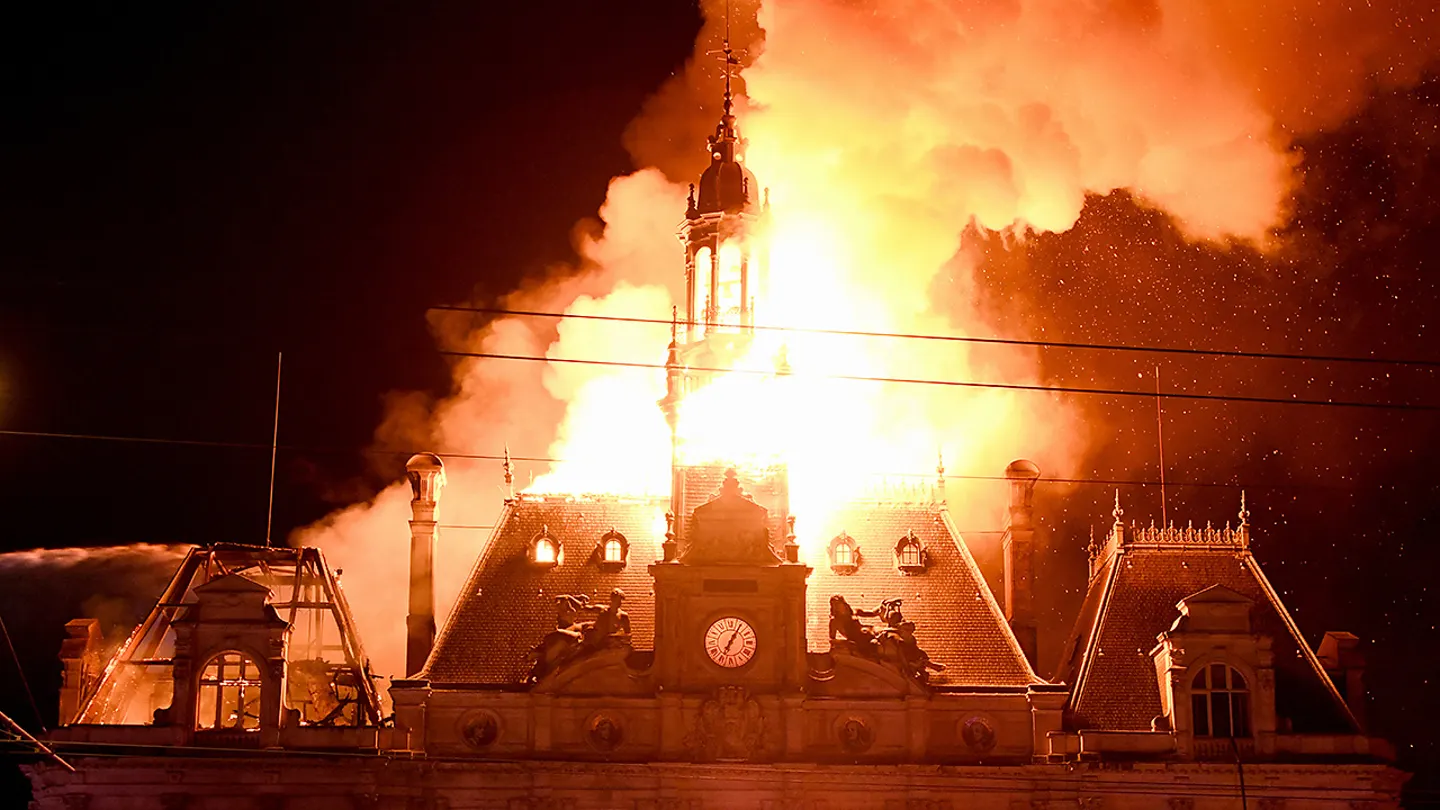
A historic town hall in the French city of Limoges has been left largely destroyed after a fire broke out during violent unrest on Saturday, 17 October, as demonstrations against the rising cost of living spread across the country. The incident has intensified concerns about public safety and the protection of cultural heritage amid growing social discontent.
Maurice Barate, the prefect of Haute-Vienne, told Agence France-Presse (AFP) that the fire had caused extensive damage to the building, with its roof collapsing onto lower floors and around two-thirds of its exterior disappearing. He described the incident as a deliberate act of destruction and a major loss for local heritage. The town hall, inaugurated in 1883, was designated a historic landmark in 1975.
According to eyewitness accounts reported by AFP, masked individuals set fire to a police vehicle outside the building before breaking windows and entering the town hall. Several shops in central Limoges were also looted. Authorities said people were inside the building during the fire, but the prefect reported no injuries among those present.
The destruction occurred during a wider day of mobilisation against the cost of living, with demonstrators also voicing concerns about education, wages, pensions and public services. The protests brought together a range of groups, including students, trade unionists, climate activists, farmers and supporters of the Yellow Vest movement, which emerged in 2018 over fuel costs and broader economic grievances.
France’s Interior Ministry initially estimated that around 550,000 people had joined demonstrations across the country, while the CGT trade union put participation at approximately 800,000. AFP reported that the marches were accompanied by clashes, fires and looting in several locations.
The scale of participation points to discontent extending beyond a single issue. Rising household expenses and concerns about the quality of public services have become rallying points for groups with different political priorities. However, the violence involving a minority of participants should not be taken as representative of everyone who joined the demonstrations.
Limoges was not the only city affected. French media reports documented disturbances and attacks on property in several other urban centres. In Paris, police deployed tear gas and water cannons after clashes with masked groups, while authorities reported attempted incursions into municipal buildings in Lille and Calais and an attack on a police station in Brest.
Interior Minister Laurent Nuñez blamed what he described as radical far-left groups for the violence. President Emmanuel Macron also condemned attacks on public institutions and businesses, saying those responsible would face prosecution.
The political attribution of the unrest remains an important distinction. Officials have blamed radical groups, but the grievances driving the demonstrations involve a broader range of social and economic concerns. Establishing responsibility for specific criminal acts requires evidence about the individuals involved, rather than assumptions based solely on the wider protest movement.
The destruction of Limoges Town Hall carries significance beyond the immediate cost of repairing a building. Municipal institutions are central to local democratic life, public administration and community identity. Damage to a historic civic landmark therefore represents both a material loss and a blow to a shared public asset.
The unrest also presents a challenge for the French authorities as the country approaches its next presidential election, expected in 2027. The government must respond to public frustration over living costs and services while maintaining public order and protecting the right to peaceful assembly.
The central issue is not whether people should be allowed to protest against economic hardship, but how authorities can address legitimate grievances while preventing violence from undermining public institutions and the rights of other citizens. The destruction in Limoges illustrates the danger of allowing violent acts to overshadow the demands of peaceful demonstrators.
Sources: AFP, Clashes, blazes and wide-scale looting grip France on day of protests; Associated Press, Clashes, fires and looting break out as protesters rally across France, joining students; Le Monde, Coverage of France’s 17 October demonstrations; and Euronews, Historic Limoges town hall engulfed in flames amid protests in France.
