


















China’s AI boom fuels rise in powerful greenhouse gas emissions
Beijing’s expanding electricity grid and semiconductor industry are driving emissions of sulfur hexafluoride, exposing a climate cost of the infrastructure powering artificial intelligence.
China’s expanding electricity infrastructure and semiconductor industry are driving a rise in emissions of sulfur hexafluoride (SF₆), an exceptionally potent greenhouse gas increasingly associated with the infrastructure supporting artificial intelligence and advanced electronics. New research on atmospheric concentrations around Beijing highlights a growing challenge for climate policy: reducing conventional air pollution and carbon emissions does not automatically curb every industrial source of global warming.
Research published in Environmental Science & Technology examined greenhouse gas concentrations in the Beijing region between 1993 and 2024. Scientists at the Chinese Academy of Sciences’ Institute of Atmospheric Physics found that concentrations of carbon dioxide had begun to decline, while the growth of methane and nitrous oxide had slowed. SF₆, however, was increasing at an accelerating rate.
The findings point to an emerging tension between technological expansion and climate objectives. As demand for computing power rises, the production of advanced semiconductor chips and the electricity infrastructure needed to operate digital systems create additional pressure to control emissions beyond carbon dioxide.
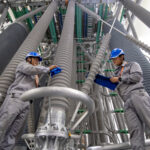
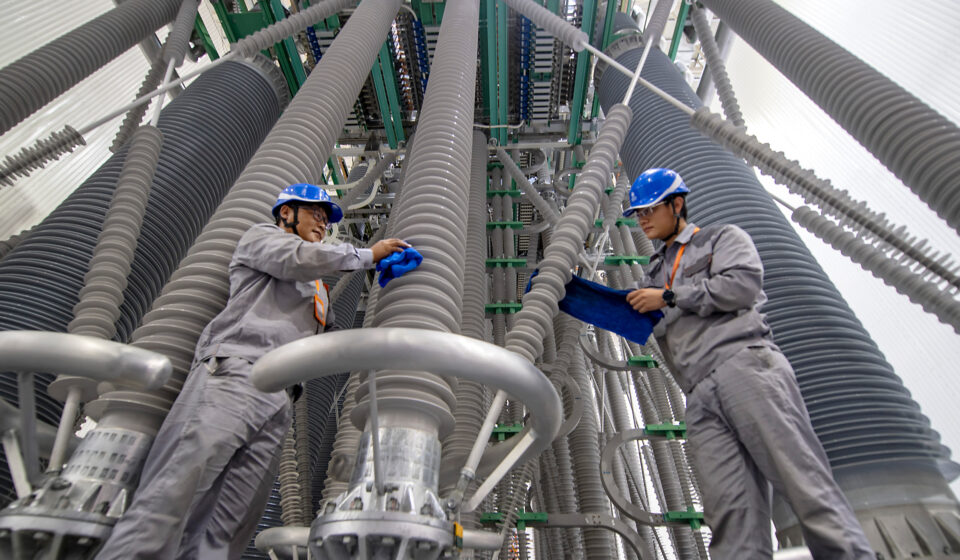
Sulfur hexafluoride is a synthetic gas widely used as an electrical insulator in high-voltage equipment. It is also used in semiconductor manufacturing, including processes that etch circuit patterns and clean production chambers.
According to the research reported by Inside Climate News, SF₆ has approximately 24,300 times the warming potential of carbon dioxide on a pound-for-pound basis. Its use in electrical equipment makes it important to power-system operators, while its application in chip manufacturing connects the gas directly to the supply chain for advanced computing.
The electricity sector remains China’s leading national source of SF₆ emissions, accounting for about 70% of the total, according to the study. In Beijing, however, semiconductor manufacturing has become the leading local source as emissions associated with the industry have increased over more than a decade.
The researchers’ findings indicate that the climate impact of technological growth depends not only on how much electricity data centres and digital industries consume, but also on the industrial processes and equipment used to build and operate the systems behind them.
SF₆ is used during chip production to remove material from silicon and other substrates and to clean deposition chambers. Some of the gas can pass through these processes without reacting and escape into the atmosphere if it is not properly captured or destroyed.
Atmospheric scientist Martin Vojta of the University of Vienna said the expansion of semiconductor manufacturing in Beijing correlated with rising SF₆ emissions. He cautioned, however, that other factors, including changes in production practices, could influence the industry’s emissions.
More detailed atmospheric modelling would help trace emissions back to their sources and establish a stronger link between semiconductor production and the observed increase, Vojta said.
The distinction matters for policymakers. A correlation between industrial expansion and rising emissions identifies a potential source of concern, but does not by itself establish how much of the increase can be attributed to a particular activity. Better measurement and source attribution are needed to design effective controls.
The findings are particularly relevant as artificial intelligence drives demand for advanced chips, data centres and expanded electricity networks. AI is not itself a direct source of SF₆ emissions; rather, the manufacturing and electrical infrastructure supporting the industry can increase demand for equipment and processes that use the gas.
The study also points to improvements in other areas of Beijing’s environmental performance. Policies introduced around the time the city hosted the 2008 Olympic Games promoted natural gas and electricity while discouraging or restricting coal use. The researchers attributed the subsequent decline in atmospheric carbon dioxide concentrations partly to those measures.
Growth in methane concentrations slowed as landfill emissions were captured and gas was reused for power generation or waste was incinerated before decomposition. The researchers also associated slower growth in nitrous oxide with greater electric-vehicle use and stricter controls on emissions from conventional vehicles.
SF₆ presents a different regulatory problem because it is tied to specialised industrial equipment and manufacturing processes. Progress in reducing coal pollution or vehicle emissions does not necessarily reduce leakage from high-voltage switchgear or semiconductor facilities.
A recent Inside Climate News analysis also found that China’s state-owned electric-power companies recycle only about 30% of the SF₆ they discard annually, with the remainder likely released into the atmosphere. That estimate points to potential opportunities for improved recovery and handling, although it does not mean that all unrecycled gas is necessarily emitted in the same reporting period.
The study’s findings were subsequently incorporated into a policy report titled Beware of Sulfur Hexafluoride Emissions Behind AI Industry Development. The report was adopted by the Beijing Municipal Committee of the Chinese People’s Political Consultative Conference, a government advisory body, according to an announcement by the research institute.
The research identifies several possible routes to reducing emissions, including optimising semiconductor production, using alternative fluorine sources where technically feasible, and destroying waste gas before it reaches the atmosphere.
International industry initiatives could also contribute. The World Semiconductor Council, which represents industry associations across China, Taiwan, Europe, Japan, South Korea and the United States, committed in June to continue gradually reducing the emissions intensity of SF₆ and other fluorinated greenhouse gases used in its products.
Avipsa Mahapatra, climate campaign director at the Environmental Investigation Agency US, argued that existing measures had not yet reversed the rise in SF₆ emissions.
The policy challenge is to turn commitments into measurable reductions. That requires reliable emissions inventories, monitoring of equipment leakage, recovery and recycling standards, and controls on industrial waste gas. Semiconductor manufacturers and electricity companies have different operational needs, but both sectors have a role in limiting releases.
For governments, the findings underline the importance of assessing climate impacts across the full technological supply chain. Expanding electricity access and semiconductor capacity can support economic development and digital competitiveness, but the associated infrastructure must also meet environmental standards.
The rise in SF₆ emissions illustrates why the climate footprint of artificial intelligence cannot be measured through electricity consumption or carbon dioxide alone. The equipment that distributes electricity and the factories that manufacture chips can generate additional climate impacts that remain less visible in conventional assessments.
As countries invest in AI infrastructure, emissions accounting will need to cover industrial gases, manufacturing processes and equipment maintenance alongside power generation. Otherwise, improvements in one part of the energy system could obscure worsening emissions elsewhere.
The Beijing research does not establish that AI alone caused the rise in SF₆, nor does it quantify the share attributable specifically to AI-related chip demand. It does, however, identify the power and semiconductor sectors as important targets for emissions control.
The broader lesson is that technological progress and climate action must advance together. The next phase of the AI economy will be judged not only by its computing capacity and productivity gains, but also by whether the infrastructure behind those gains can expand without adding avoidable pressure to the climate.
Sources: Inside Climate News — A Potent Climate Super-Pollutant Is Surging in Beijing.
