

















SS United States sinks off Florida coast to become world’s largest artificial reef
The historic ocean liner, once the fastest passenger ship to cross the Atlantic, has begun a new chapter beneath the Gulf of Mexico as Florida seeks to expand its marine tourism economy.
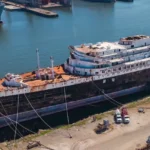
The SS United States, once celebrated as the world’s fastest passenger liner, has been sunk off the coast of Florida to become the centrepiece of what is expected to be the world’s largest artificial reef. The vessel went beneath the water on Wednesday after crews opened plugs in its hull, allowing seawater to fill the ship. The process took around five hours, following several delays.
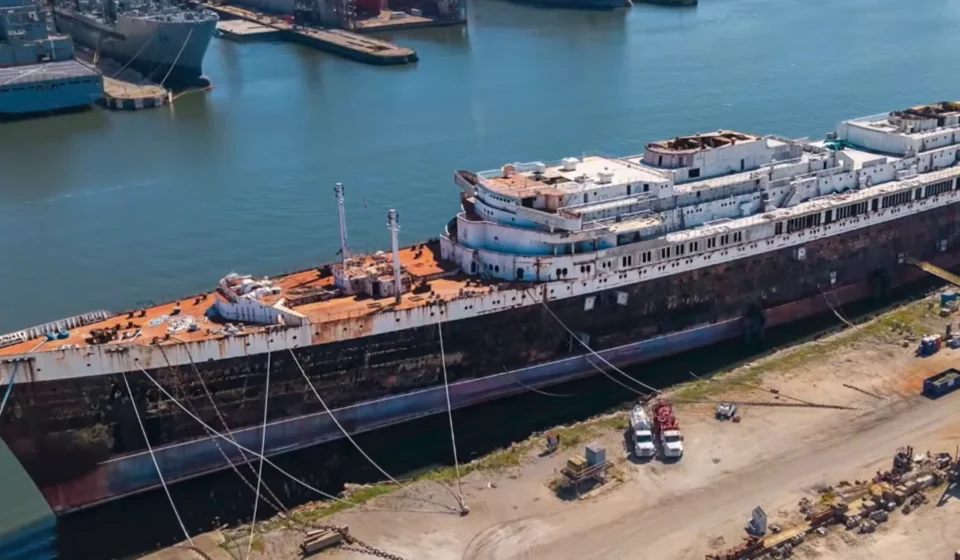
The nearly 1,000-foot ocean liner was launched in 1951 and became a symbol of American maritime engineering during the era before commercial passenger aviation transformed transatlantic travel. It won the prestigious Blue Riband in 1952 after crossing the Atlantic in record time. The ship also carried four US presidents, the Mona Lisa and several prominent film stars.
After decades of deterioration while docked in Philadelphia, the vessel faced the prospect of being dismantled for scrap. Its future changed in 2024, when the SS United States Conservancy sold it to Okaloosa County, Florida, for $1 million. The county invested a further $10 million in preparing the ship for its transformation into an artificial reef.
The sinking is part of a wider strategy by coastal communities in Florida to attract divers, marine enthusiasts and other visitors through purpose-built underwater attractions.
Okaloosa County has already established hundreds of artificial reefs, many created from ships and boats. The SS United States is now expected to become the centrepiece of this network, joining the USS Oriskany, an 888-foot aircraft carrier sunk by the US Navy off Pensacola in 2006.
Jennifer Adams, the county’s tourism director, told NPR that the existing artificial reefs generate an estimated $10 million to $12 million in annual economic benefits. She expects the addition of the SS United States to increase tourism revenue and said the county could recover its $10 million investment within a couple of years.
The vessel was positioned just over 20 nautical miles from Destin’s beaches. Its preparation included removing toxic materials and bulky components to make it suitable for marine life, recreational diving and regulatory requirements.
For the tourism sector, the economic opportunity extends beyond diving fees. Visitors may spend on accommodation, restaurants, equipment, charter boats and other local services. The county hopes the scale and historical significance of the vessel will attract divers who might otherwise travel to established international wreck-diving destinations.
Florida has developed more than 4,000 artificial reefs since 1940, according to the state’s fish and wildlife commission. These structures can provide habitats for marine organisms while creating destinations for recreational divers and anglers.
Research by the National Oceanic and Atmospheric Administration, based on 2017 data, found that visits to a relatively small number of artificial and natural reefs generated nearly $1 billion in annual economic benefits.
Economist Andrew Ropicki of the University of Florida described the concentration of planned shipwreck attractions in the Florida Panhandle as a potential advantage. A cluster of major underwater sites could help the region attract a larger share of diving tourism expenditure than destinations offering fewer attractions.
However, the strategy also carries economic risks. Ropicki warned that continued investment in artificial reefs could eventually produce diminishing returns if visitor demand does not grow at the same pace or tourists become overwhelmed by the number of available sites.
Adams told NPR that plans were already being developed for another five or six artificial reefs. Whether those projects deliver comparable returns will depend on visitor numbers, environmental performance and the region’s ability to maintain the attractions over time.
The sinking also marks the end of a long effort to preserve the SS United States as a historical vessel.
The ship was designed by William Francis Gibbs, whose granddaughter, Susan Gibbs, leads the SS United States Conservancy. She described the sinking as an emotional moment involving sorrow, gratitude, pride and hope.
For a period after the Second World War, the vessel represented the ambition of the American passenger-shipping industry. Its record-breaking Atlantic crossing in 1952 established its place in maritime history. Its speed was so great that some paint was reportedly stripped from the hull during the voyage.
Susan Gibbs acknowledged the emotional difficulty of seeing her grandfather’s creation stripped and sunk. Nevertheless, she said converting it into an artificial reef was a more dignified outcome than sending it to a scrapyard.
Wreck diver Karen Flynn, whose Maryland-based Atlantic Wreck Divers club booked a charter shortly after the sinking date was announced, also viewed the project as an opportunity to preserve the ship’s appeal in a different form. She told NPR that the vessel’s scale and structure would make it an exceptional diving destination.
Artificial reefs can create new habitats and support marine tourism, but their success depends on appropriate preparation and placement. The removal of toxic substances and unsuitable components from the SS United States was therefore an important part of the project.
The long-term environmental effects will need to be assessed alongside the economic returns. Marine ecosystems take time to develop, and the presence of a large artificial structure does not automatically guarantee ecological benefits. Monitoring will be important to establish how marine life uses the wreck and whether the site remains environmentally suitable.
The project also illustrates how coastal economies can turn industrial and maritime assets into tourism infrastructure. Rather than treating an obsolete vessel solely as a disposal problem, Okaloosa County has invested in converting it into a destination intended to generate recurring economic activity.
The SS United States has therefore moved from a record-setting career above the Atlantic to a new role beneath the Gulf of Mexico. Its historical significance remains, but its future value will increasingly be measured through the visitors it attracts, the marine habitat it supports and the economic benefits it generates for Florida’s coastal communities.
Source: NPR — World’s fastest ocean liner is sunk to break another record: largest artificial reef, 11 November 2026. The supplied report is by Henry Larson. The link above is NPR’s date-based page, not a verified article-specific URL.
