













Trump, Xi and Putin hold rare 3-way meeting in China with few concrete outcomes
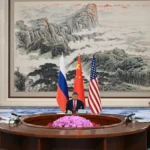
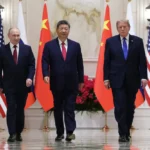
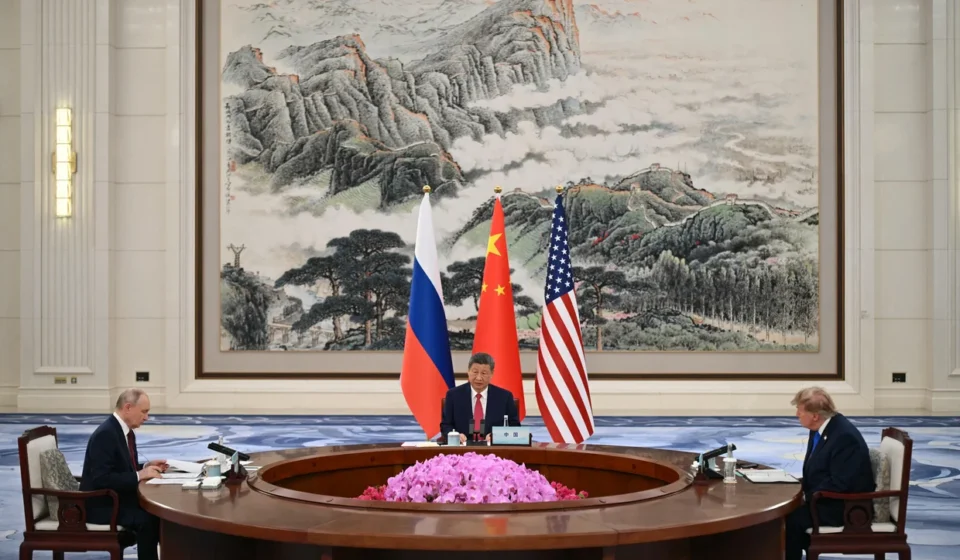
US President Donald Trump, Chinese President Xi Jinping and Russian President Vladimir Putin held a rare three-way meeting in Shenzhen, China, on Thursday, but the talks appeared to produce few concrete steps towards resolving major international conflicts.
The meeting, which lasted around 90 minutes, brought together the leaders of three of the world’s most influential powers on the sidelines of the Asia-Pacific Economic Cooperation (APEC) summit. The discussions covered the war in Ukraine, nuclear security, international stability and global economic issues.
A joint statement issued after the meeting said the three leaders had exchanged views on the international situation and reaffirmed their commitment to strategic stability and international security. They also called for reform of the United Nations to strengthen its ability to respond to global challenges.
The statement further emphasised the importance of state consent and respect for the immunity of state officials, while criticising what it described as potential abuses of authority by the International Criminal Court and similar institutions.
On nuclear weapons, the leaders reiterated that there could be no winners in a nuclear war and that such a conflict must never occur. They also expressed support for continued dialogue on reducing nuclear risks and preventing proliferation.
Despite the broad language of the joint statement, no major agreement on the conflicts discussed was immediately announced.
Ukraine war remains a major point of disagreement
The war in Ukraine featured prominently in the discussions, although no Ukrainian representatives were present at the meeting.
Following the talks, Putin ruled out direct negotiations with Kyiv in the immediate aftermath of a Ukrainian strike on the Kerch Bridge, which connects Russia with occupied Crimea.
“We will not negotiate after the attacks on the Crimean bridge,” Putin said, according to the report.
He also argued that Ukraine and European countries were not prepared to make the compromises necessary to end the conflict. Moscow has repeatedly called for concessions from Kyiv, while Ukraine and its European partners have expressed concern that negotiations could place pressure on Ukraine to surrender territory without firm security guarantees.
The Kremlin described the atmosphere at the meeting as positive. Putin’s senior aide Yuri Ushakov said the discussions had taken place in a constructive environment.
Trump had previously expressed an interest in securing a negotiated end to the war. However, Thursday’s meeting did not produce a publicly announced breakthrough.
Trade and artificial intelligence on the agenda
Economic relations and technology were also important themes during Trump’s visit to China.
Before the three-way meeting, Trump held separate discussions with Xi. Trade and tariffs were among the main subjects, with the US president saying he wanted China to increase purchases from American farmers.
The two countries have been seeking to stabilise their economic relationship following a period of escalating tariffs and trade tensions. Their existing tariff truce is due to expire on 10 January 2027.
Artificial intelligence was another area of discussion. The meeting took place in Shenzhen, a major centre of China’s technology industry, amid growing scrutiny of the international supply chain for advanced AI chips.
Trump has previously raised concerns about the possible diversion of advanced US chips to China. The report also notes that a company linked to the ongoing investigation into alleged chip diversion has denied wrongdoing, while Beijing has rejected allegations of Chinese intelligence involvement as speculation.
Speaking at the APEC forum, Trump opposed what he described as globalist regulation of artificial intelligence, arguing that governments should protect the technology’s potential while managing its risks.
Nuclear security and wider geopolitical tensions
Nuclear security remained another significant issue for the three leaders. The United States and Russia possess the world’s largest nuclear arsenals, while China has been expanding its own capabilities.
Xi had described nuclear weapons as a threat hanging over humanity and called for their complete elimination. However, China has previously resisted joining nuclear disarmament negotiations involving Washington and Moscow.
The joint statement’s commitment to continued dialogue on nuclear risks therefore represents a shared diplomatic position, rather than evidence of a new arms-control agreement.
Other geopolitical issues, including the war in Iran, tensions over Taiwan and US-China trade relations, formed part of the wider international context surrounding the meeting.
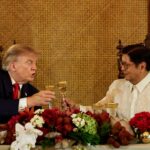
Trump also held separate discussions with Putin and Xi before the trilateral session. His public description of Putin as a friend drew criticism from Democratic Senator Tim Kaine, who questioned the political implications of the US president’s public remarks.
The meeting demonstrated the willingness of Washington, Beijing and Moscow to maintain direct communication at the highest level. However, the absence of concrete agreements on Ukraine, nuclear disarmament and other major disputes underlined the limits of the talks.
Sources: Joe Walsh and Tucker Reals, CBS News, Trump, Xi and Putin sit down for a rare 3-way meeting in China, but appear to achieve little, 19 November 2026.