

















Trump announces ‘landmark’ trade deal with Philippines
The US president says the agreement will benefit American farmers and energy businesses, while Manila describes the outcome as an understanding on economic cooperation without confirming a completed trade pact.
US President Donald Trump has announced what he described as a “landmark” trade deal with the Philippines following talks with President Ferdinand Marcos Jr., but the absence of published terms has left uncertainty over the agreement’s scope, commitments and potential economic impact.
In a report published on 18 November, The Hill said Trump announced the development in a Truth Social post after meeting Marcos to discuss trade, national security and other issues. Trump said the agreement was “completely different” from previous arrangements and would particularly benefit American farmers and businesses involved in energy.
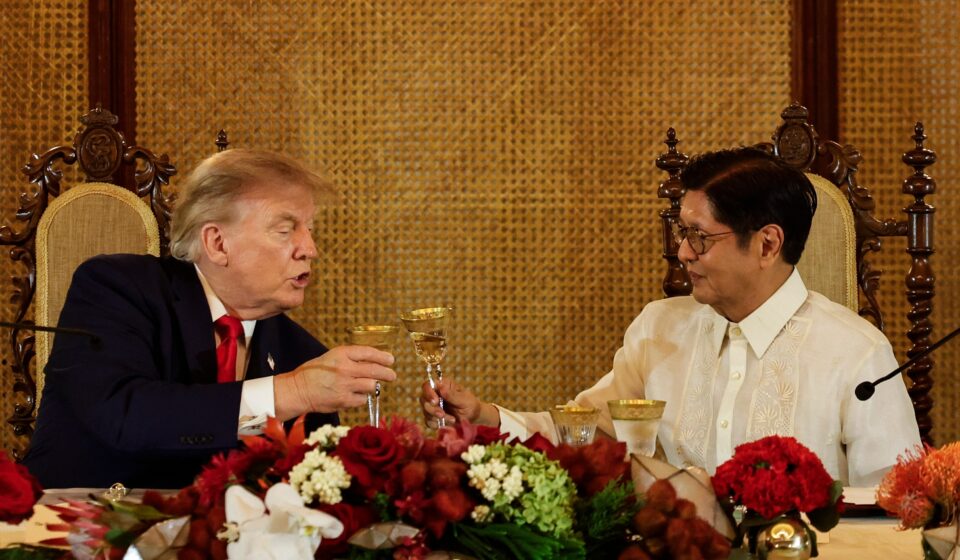
At a state lunch hosted by Marcos, Trump also said the two countries had “consummated a very big trade deal”, describing it as fair to both sides. However, he did not provide details of tariff changes, market-access commitments, investment arrangements or implementation timelines.
The Philippine president’s office subsequently said that the two governments had reached an understanding on areas of economic cooperation, according to Reuters. Its statement did not explicitly confirm that a comprehensive trade agreement had been concluded.
The difference in the two descriptions is significant. While Washington has presented the outcome as a major trade deal, Manila’s public account appears more cautious about the status and scope of the arrangement. Without a published agreement or a detailed joint statement, it remains unclear whether the announcement refers to a concluded pact, an initial understanding or progress towards further negotiations.
The absence of specific terms also makes it difficult to assess the likely benefits for either economy. Any eventual agreement would need to be examined in terms of reciprocal market access, tariff treatment, non-tariff barriers and the sectors covered.
Trump’s announcement followed his statement a day earlier that the United States and Thailand had reached a “substantial conclusion” in their trade negotiations.
The president said Thailand would eliminate tariffs on US exports and remove significant non-tariff barriers affecting a range of American products. He also said Bangkok had agreed to purchase approximately $2.6 billion in additional US agricultural goods, with the agreement expected to be finalised in the following weeks.
These claims were presented by Trump, and the final terms and implementation arrangements remain important to determining their practical effect. The announcements nevertheless indicate that trade negotiations with Southeast Asian economies are an active part of the administration’s regional economic engagement.
For the United States, expanded access to agricultural and energy markets could create opportunities for exporters. For the Philippines and Thailand, the implications will depend on the concessions sought by Washington and the extent to which domestic industries are affected by greater competition.
The Philippines is an important partner for the United States in Southeast Asia, where economic relations increasingly overlap with questions of regional security and strategic competition. The inclusion of national security in the discussions between Trump and Marcos reflects the broader relationship, although the available announcement does not establish that security arrangements formed part of the trade understanding.
The economic significance of the announcement will ultimately depend on details that have not yet been made public. These include the treatment of Philippine exports to the US market, access for American agricultural and energy products, regulatory commitments and any agreed timetable for implementation.
Until the two governments release the terms, the announcement should be treated as a presidential declaration rather than a fully documented assessment of the agreement’s commercial consequences. The next test will be whether the stated understanding is translated into a formal arrangement with measurable commitments and benefits for businesses in both countries.
Sources: The Hill, Mallory Wilson, “Trump touts ‘landmark’ trade deal with Philippines” (18 November 2026); Reuters — coverage of the Trump–Marcos trade discussions; The White House — Presidential statements and trade announcements.