

















OpenAI hits back at Apple in trade secrets battle
The ChatGPT maker accuses Apple of obtaining confidential product plans through a former employee and pressuring shared suppliers, escalating a legal dispute between former partners preparing to compete in AI-powered hardware.
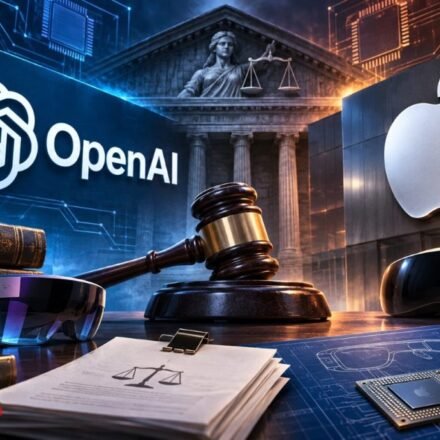
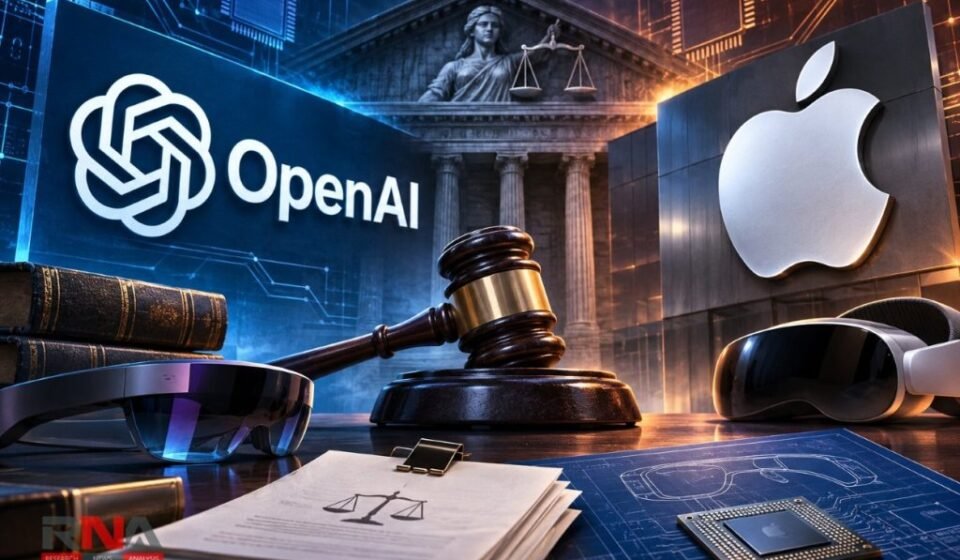
OpenAI has filed counterclaims against Apple, accusing the iPhone maker of stealing its trade secrets, interfering with supplier relationships and using its market influence to obstruct the development of its planned artificial intelligence devices.
The filing, submitted on Friday, 27 November, in the US District Court for the Northern District of California in San Jose, turns a dispute initially brought by Apple into a wider legal confrontation over intellectual property, employee mobility and competition in the emerging AI hardware market.
OpenAI alleges that Apple obtained confidential information about its unreleased devices through a former employee who spent six months at the AI company before returning to Apple in June. According to the counterclaims, the employee sent dozens of internal documents concerning a prototype to personal phone numbers before presenting OpenAI’s product plans to senior Apple executives in July.
The allegations have not been independently established, and the employee’s identity has not been publicly disclosed in the reports reviewed.
OpenAI also claims Apple has used its influence over shared manufacturing suppliers to make it harder for the AI company to develop its hardware business. Its filing alleges that Apple sought information about suppliers’ OpenAI projects and the employees assigned to them, creating concerns that firms could lose business with the technology giant if they continued working with its emerging competitor.
According to OpenAI, one supplier shifted production for its projects to an overnight schedule, while another abandoned planned work following alleged pressure from Apple. Neither supplier was identified, and the claims have yet to be tested in court.
The counterclaims extend beyond the alleged theft of product information. OpenAI is challenging Apple’s employment agreements, including a provision restricting former employees from recruiting their previous colleagues for one year. It also disputes Apple’s alleged practice of encouraging staff to use personal iCloud accounts for work-related files, arguing that this creates opportunities for the company to pursue departing employees over information retained on their personal devices.
The filing contains 12 counterclaims brought by OpenAI, its hardware subsidiary io Products and former Apple employees Chang Liu and Tang Yew Tan. The claims include trade-secret misappropriation, interference with supplier contracts, unfair competition, privacy violations and challenges to employment restrictions.
Apple has rejected the accusations. A company spokesperson described the counterclaims as a transparent attempt to distract from its original lawsuit, insisting that its case concerns the deliberate theft and use of confidential information about unreleased technologies, processes and products. Apple has also denied using the returning employee to obtain OpenAI’s information or attempting to suppress competition in AI hardware manufacturing.
The dispute began in July, when Apple sued OpenAI and two former employees, Liu and Tan, alleging that they had taken confidential engineering and supply-chain information to accelerate OpenAI’s entry into consumer hardware. Apple argued that its former employees had used proprietary knowledge gained during their employment to support the development of competing products.
OpenAI and the former employees have denied Apple’s allegations. In an August response, OpenAI also questioned Apple’s account of how it handled the investigation and the former employees’ access to company information.
The legal confrontation reflects a significant shift in the relationship between the two technology companies. In June 2024, they announced a partnership to integrate ChatGPT into Apple’s operating systems, including Siri and its writing tools. However, their commercial interests have increasingly diverged as OpenAI moves beyond software and towards consumer hardware.
That ambition gained momentum in May 2025, when OpenAI announced its acquisition of io Products, the hardware startup founded by former Apple design chief Jony Ive and Sam Altman, in a deal valued at $6.5 billion. Ive and his design team are expected to play a central role in developing AI-powered devices that could eventually compete with Apple’s established hardware ecosystem.
The supplier allegations are particularly significant because they raise questions about how dominant technology companies can influence manufacturers that serve multiple clients. If OpenAI’s claims are substantiated, the dispute could extend beyond conventional intellectual property protection into concerns about market access and the use of commercial relationships to restrict emerging competitors. For manufacturers dependent on large technology clients, balancing existing contracts against opportunities with new entrants could become increasingly difficult.
The case is still at an early stage, and neither company’s accusations have been established as fact. In October, the court granted Apple limited expedited discovery to obtain evidence relevant to its original claims, while OpenAI agreed not to use information Apple identifies as trade secrets. The court’s earlier procedural decisions do not amount to a finding that either side misappropriated confidential information.
OpenAI also withdrew its pending motion to dismiss Apple’s lawsuit on Friday without publicly explaining the decision. The addition of counterclaims is likely to broaden the evidence and legal issues examined as the proceedings continue. Ultimately, the case could test the boundaries between protecting legitimate trade secrets, allowing employees to change jobs and ensuring that competition in the rapidly developing AI hardware market remains fair.
Sources: Reuters – OpenAI countersues Apple for stealing trade secrets; Financial Times – OpenAI countersues Apple for stealing trade secrets; Los Angeles Times – OpenAI accuses Apple of pressuring suppliers to block its new devices; Associated Press – Apple and OpenAI partnership and AI integration; US District Court, Northern District of California – Order granting limited expedited discovery, 13 October 2026; Apple’s original complaint, filed 10 July 2026; OpenAI – Partnership announcement with Apple, 10 June 2024; OpenAI – A letter from Sam Altman and Jony Ive, 21 May 2025.