

















France protests expose cost-of-living anger, looting and fires across cities
More than half a million people reportedly joined nationwide demonstrations, as disputes over living costs and education funding were overshadowed by violence, mass arrests and damage to businesses
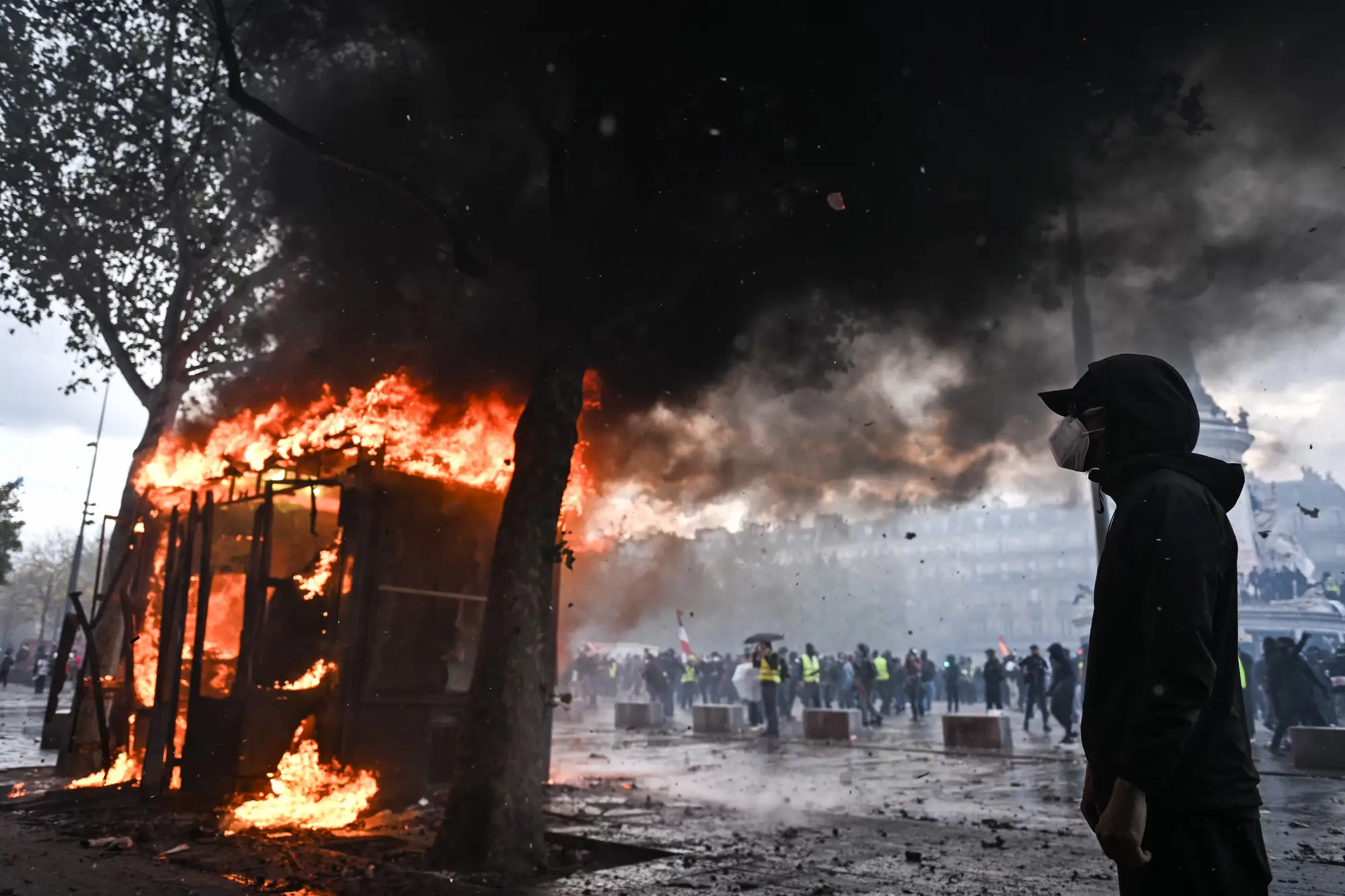
France’s nationwide protests against rising living costs and pressure on public services escalated into widespread unrest on Saturday, 17 October, with shops looted, vehicles set on fire and public buildings damaged in Paris and several other cities. What began as demonstrations involving students, workers and trade unionists developed into a broader confrontation over economic pressures, inequality and the condition of public services.
The scale of the mobilisation remains disputed. Interior Minister Laurent Nuñez said approximately 550,000 people took part nationwide, including 110,000 in Paris. The General Confederation of Labour (CGT), a major French trade union that supported the demonstrations, put the nationwide turnout at around 800,000. The figures represent competing estimates from the authorities and organisers rather than an independently verified total.
The demonstrations followed weeks of student protests over education funding and school conditions. Yellow Vest activists, workers and trade unionists joined the mobilisation, bringing together groups concerned about fuel prices, groceries, household expenses and purchasing power.
Violence broke out on the sidelines of demonstrations in Paris, particularly around Place de la République, where groups smashed shop windows and looted retail outlets. According to Agence France-Presse (AFP), stores selling mobile phones, clothing and luxury goods were targeted, alongside grocery retailers including Franprix, Monoprix, Picard and Carrefour City.
Reports also described looting and damage in Marseille, Nice, Nantes, Bordeaux, Limoges, Lille, Toulouse and Strasbourg. The affected businesses included supermarkets, pharmacies, electronics shops and luxury boutiques, highlighting the direct economic cost of the unrest for retailers and local business owners.
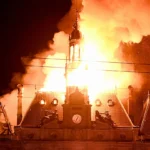
In Limoges, the city hall was set on fire after the building was attacked. Footage circulated on social media appeared to show part of its bell tower collapsing. The damage to public buildings added to concerns about the security of municipal institutions during large demonstrations.
The unrest also prompted warnings from business leaders. Thierry Guibert, chief executive of Lacoste, said the destruction of retail stores threatened jobs, years of work and the livelihoods of people employed across affected businesses. His comments reflected concerns that the consequences would extend beyond damaged property to workers, retailers and local economic activity.
French authorities reported a substantial number of arrests during and after the demonstrations. In an initial briefing, the Interior Ministry cited approximately 400 arrests. Prime Minister Sébastien Lecornu later said that 1,200 people had been arrested nationwide and that at least 150 police officers had been injured.
The figures reflect different stages of reporting during the day and should not be treated as directly equivalent without further clarification from the authorities.
Lecornu condemned arson, looting and attacks while distinguishing such acts from the right to demonstrate peacefully. President Emmanuel Macron also said those responsible for attacks on public buildings and businesses would face prosecution.
Government representatives blamed radical groups and individuals involved in looting for the violence. Those characterisations are the government’s assessment; the reported incidents occurred alongside a wider mobilisation involving diverse social and political groups.
The protests brought together several sources of public dissatisfaction. Students had been raising concerns about education conditions, while workers and Yellow Vest activists focused on the rising cost of everyday necessities, including fuel and food.
The convergence of these grievances gives the demonstrations significance beyond the immediate security crisis. When education concerns intersect with pressure on household budgets and purchasing power, protests can draw participants from groups with different priorities but overlapping dissatisfaction with public policy.
However, the violence should not be taken as evidence that all demonstrators participated in or supported looting and arson. The available reporting distinguishes between large-scale demonstrations and violent incidents involving particular groups. Keeping that distinction clear is essential to understanding both the scale of the mobilisation and the responsibility for the damage.
France now faces the parallel tasks of responding to the reported offences and addressing the economic and public-service concerns raised by protesters. The longer-term political implications will depend on how the government responds to those demands and whether the demonstrations lead to sustained pressure for policy changes.
Sources: This report cross-checks coverage from Agence France-Presse on the clashes, fires and looting, Reuters on the nationwide demonstrations and unrest, DW’s report drawing on AFP, Reuters and AP, and Business Insider’s account of looting and arrests. The turnout figures and arrest totals are attributed to the respective sources and officials because they changed during the day and differ across reports.
