














Fiji’s Serua Island resists relocation as rising seas threaten ancestral homes
Residents are strengthening homes and coastal defences instead of leaving their island, highlighting the tension between climate adaptation, physical safety and the preservation of community ties.
Residents of Serua Island in Fiji are resisting calls to relocate despite mounting risks from rising sea levels, coastal flooding and powerful cyclones, choosing instead to reinforce their homes and protect their ancestral land. Their decision highlights a central challenge for climate-vulnerable communities: how to reduce exposure to environmental hazards without sacrificing cultural identity, livelihoods and a longstanding connection to place.
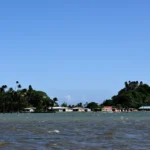
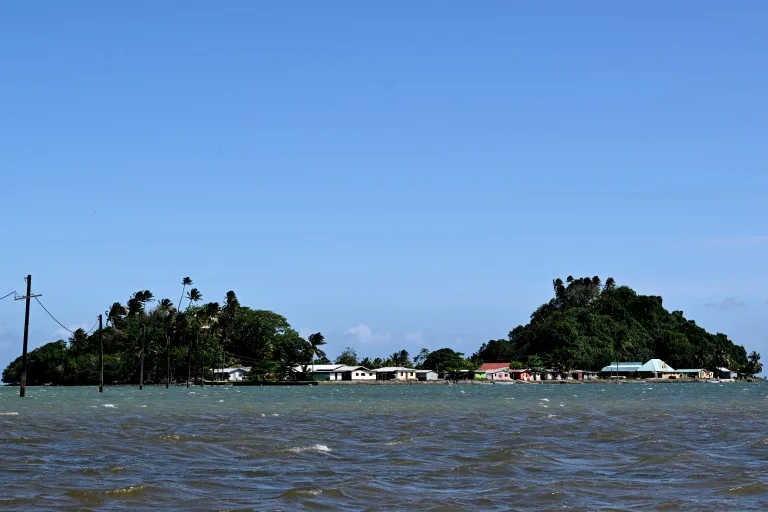
The low-lying settlement, situated off Fiji’s Coral Coast, is surrounded by coral reefs and fishing grounds. Yet the coastline is increasingly exposed to waves that overtop its concrete sea wall, while saltwater intrusion threatens agricultural land. Water has reached the foundations of buildings that previously stood on the island’s eastern side, and erosion has already forced some households to move their homes.
In an interview with Agence France-Presse published on 27 October, resident Avenai Ranuku described how villagers organise collective evacuations during severe storms. Recalling the experience of Cyclone Winston, which struck Fiji in 2016, Ranuku said residents moved to higher ground together, carrying food and belongings and ensuring that nobody was left behind. Despite the danger, residents say the island’s environment, fishing opportunities and community ties remain central to their decision to stay.
Serua Village worked with Habitat for Humanity in 2025 to develop a disaster-risk reduction plan. The assessment identified substantial weaknesses in the housing stock: nearly one-fifth of homes were reportedly in critical condition, while only three houses were considered strong enough to withstand a cyclone. More than half of the houses had combinations of unstable foundations, weak roofs or inadequate structural connections.
The assessment also identified recurring seawall overtopping during high and exceptionally high tides, saltwater intrusion affecting soil fertility and standing water after rainfall that can increase health risks. The lack of natural wave-breaking features leaves parts of the island exposed to coastal hazards.
Residents have begun improving vulnerable buildings. During AFP’s visit in October, workers were renovating homes along the northern coastline, removing fragile walls and corrugated iron roofing. Some houses had already been raised to reduce flood exposure, with further work planned.
The proposed measures extend beyond individual homes. The village’s plan also calls for better access infrastructure and safer docking arrangements. At low tide, the island can be reached on foot across a roughly 750-metre stretch, but boats become the only practical means of access at high tide.
These measures represent an attempt to adapt in place. Their long-term effectiveness, however, will depend on the scale and durability of the improvements, the availability of funding and whether coastal hazards continue to intensify.
Fiji has already developed a formal framework for planned relocation as part of its response to climate-related displacement. The government’s relocation guidelines and operating procedures provide a structure for assessing and managing the movement of communities exposed to climate risks. The national climate policy also emphasises evidence-based action, inclusion and social cohesion.
The existence of these frameworks does not mean relocation is appropriate for every vulnerable settlement. Moving a community can reduce exposure to specific hazards, but it can also disrupt livelihoods, social networks and cultural relationships with ancestral land. For island communities dependent on fishing and collective traditions, the costs of relocation extend well beyond the physical transfer of houses.
Conversely, remaining in place can leave residents exposed if protective infrastructure proves insufficient or extreme weather overwhelms local defences. Adaptation therefore requires more than a choice between staying and leaving. It involves assessing risks, improving construction standards, strengthening evacuation arrangements and ensuring that communities have access to reliable information and adequate resources.
Fiji’s experience illustrates why local participation matters. Serua’s residents have expressed a preference for strengthening their island rather than abandoning it. Any long-term strategy must take that preference seriously while making clear the risks that remain and the conditions under which relocation might eventually become necessary.
The Serua case also raises questions about how climate finance reaches small and remote communities. Housing repairs, safer access routes, stronger coastal protection and improved water and sanitation systems require investment that may exceed the resources available to residents themselves.
Support focused only on rebuilding damaged houses may deliver limited protection if it does not address foundations, drainage, coastal exposure and other underlying vulnerabilities. The locally led disaster-risk plan offers a broader approach by connecting housing improvements with community infrastructure and livelihoods.
For policymakers and development partners, the challenge is to provide assistance that is technically sound, financially sustainable and shaped by the people who will live with the consequences. That includes assessing whether defensive infrastructure can remain effective over time and ensuring that evacuation and emergency support are practical during severe weather.
Serua Island’s residents are not denying the climate threat. Their position is that protecting their home remains preferable to leaving it. The task for authorities and development partners is to help them make that choice as safely and sustainably as possible, while preparing transparent alternatives if the risks eventually become unmanageable.
Sources: Habitat for Humanity Fiji — Serua Island Disaster Risk Reduction Masterplan 2026–2036; Habitat for Humanity Fiji — Resources and community resilience plans; Fiji Ministry of Environment and Climate Change — Climate relocation efforts and community preferences; Fiji Ministry of Environment and Climate Change — Standard Operating Procedures for Planned Relocation; Fiji National Climate Change Policy 2018–2030; Fiji Climate Change Portal — Planned Relocation Guidelines.
