




















Why one 55-year-old chose a different career
After three decades in television and digital media, Marc Pascarelli traded the editing suite for a $25-an-hour job servicing electric hydrofoil boards in Florida. His experience highlights the financial and personal trade-offs of changing careers later in life.
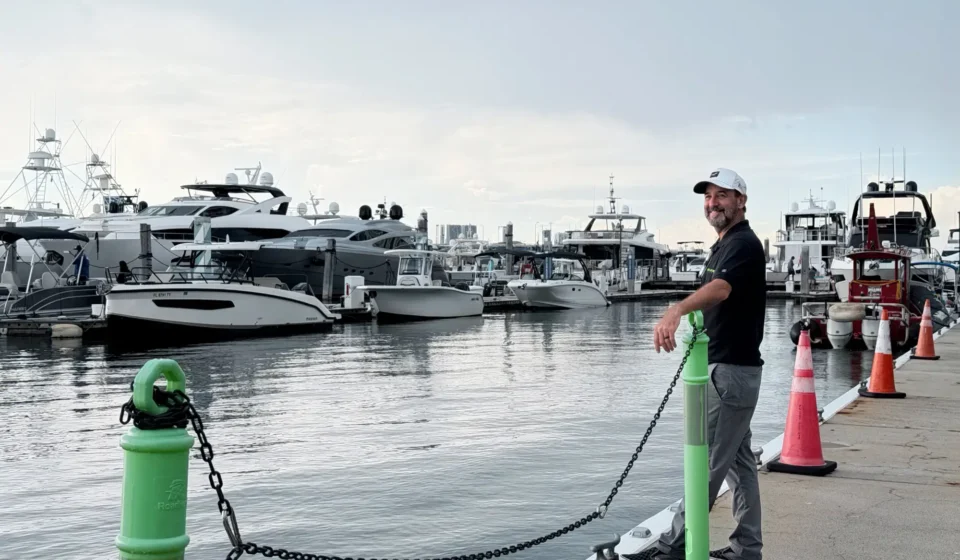
After more than 30 years working in television production, digital media and animation, Marc Pascarelli decided that his career had become too confined to a computer screen. At 55, he left the media industry, enrolled in a technical college programme and retrained as a marine mechanic in South Florida. He now works at a marina servicing electric hydrofoil boards and teaching customers how to use them.
His career change involved a financial setback, a return to the classroom and a move into an industry where he had little formal experience. Yet Pascarelli says he is happier with his new working life, which gives him more time outdoors and a clearer separation between professional responsibilities and personal time.
In an account published by Business Insider on 7 November, Pascarelli described how the transition developed and why he chose practical technical work over another attempt to rebuild his career in media.
Pascarelli began working in media during the 1990s after completing a master’s degree at New York University’s Interactive Telecommunications Program. His early jobs included duplicating tapes for executives at Miramax and producing promotional material for AMC. He also worked on film production sets, where he enjoyed the practical aspects of shooting and handling equipment.
In the mid-2000s, he opened a post-production business in Manhattan. However, the financial pressure of maintaining a physical office became difficult to manage after the 2008 financial crisis. Around 2010, following his father’s illness, he closed the business and moved to South Florida.
His subsequent career included digital cinema, field production and editing for a Univision-Disney venture, cable news and remote animation work. Over time, however, he felt increasingly disconnected from the creative work that had originally attracted him to the industry.
After the Covid-19 pandemic, a restructuring eliminated the English-language division of the network where he worked. His lack of fluency in Spanish also limited his prospects in South Florida’s bilingual media market.
Later, while working remotely on 3D animation and digital graphics for major cable networks, he found himself spending as many as 10 hours a day in front of a screen, often waiting for approvals. Physical discomfort, declining freelance rates and increasingly demanding job descriptions added to his dissatisfaction.
At 55, he began questioning whether another media employer would offer a sustainable career path.
Instead of seeking another desk-based position, Pascarelli looked at the boatyards operating along South Florida’s US-1 corridor. He had always been interested in mechanical work and wanted a profession that involved practical tasks and physical activity.
He researched marine repair work and enrolled in the Marine Service Technologies programme at McFatter Technical College. Around 90% of his classmates were between 18 and 24 years old, making him considerably older than most of the students.
The experience required him to adjust to a different learning environment. Some classmates initially joked about his age and recording equipment, but his decision to use an iPad and professional microphone to record lectures eventually made him a useful resource for the group. Students began asking him to share study guides, which he also provided to their instructor.
Alongside his studies, he worked at the counter of West Marine, a retailer of boating supplies, where he became familiar with the terminology and practical requirements of the industry.
The year-long programme provided him with technical training and an opportunity to build relationships within the marine services sector. Near graduation, an instructor introduced him to a former student who operated a business at Miami Beach Marina.
The business sells, services and provides lessons on luxury yacht accessories and recreational equipment, including eFoils. These electric hydrofoil boards use underwater propulsion and lifting surfaces to raise riders above the water.
Pascarelli’s current responsibilities combine mechanical servicing with customer instruction. He works on eFoil motors, replaces gaskets, greases components and takes customers out on Biscayne Bay for lessons.
His employer valued more than his newly acquired technical skills. Pascarelli’s experience in professional production, teaching snowboarding and working with equipment also helped him secure the position.
The transition has not restored his previous earnings or professional status. He said he spent much of his savings during the year of retraining, although Florida vocational assistance covered most of his tuition. His current pay is approximately $25 an hour, close to what he earned as a freelance video editor.
Nevertheless, he considers the change worthwhile. His commute is now a short scooter journey, and he says the end of his shift brings a clearer end to the working day. He occasionally accepts freelance editing assignments, but they no longer define his routine.
Pascarelli’s experience illustrates a trade-off that can confront workers considering a career change in their 50s: the possibility of improved job satisfaction may come with lower immediate earnings, retraining expenses and a period of financial uncertainty.
His transition was supported by several circumstances, including previous mechanical interests, access to vocational education, assistance with tuition and an introduction to a potential employer. These factors matter because a career change is not equally accessible to every worker. Savings, family responsibilities, health, local job opportunities and the availability of affordable training can all influence whether retraining is feasible.
His story also demonstrates that professional experience can retain value outside the industry in which it was accumulated. Although Pascarelli needed formal training to enter marine services, his earlier experience with technical equipment, production work and teaching helped him adapt to the new role.
For employers, the example offers a reminder that older applicants may bring transferable skills that are not immediately apparent from their recent job titles. Reliability, technical confidence, communication and the ability to teach can complement newly acquired vocational qualifications.
Pascarelli’s decision does not establish that trade work is financially preferable to media employment, or that changing careers later in life will produce similar results for everyone. His current hourly pay is modest compared with the potential earnings of some senior media professionals, and his retraining required a substantial use of personal savings.
What changed most clearly was his relationship with work. He moved from a screen-based routine characterised by remote approvals and continuous digital communication to a job involving mechanical tasks, direct customer interaction and outdoor activity.
His experience challenges the assumption that a career must follow a single professional trajectory until retirement. It also highlights the importance of evaluating work through more than salary and job title.
For Pascarelli, the decision at 55 was ultimately about changing the conditions under which he worked. Rather than continuing to pursue a shrinking set of opportunities in media, he chose to acquire a new skill and build a different working life.
Source
