














Trump’s Asia tour offers stage to project authority
The US president is seeking to showcase American influence through trade agreements and high-level diplomacy in Manila and Shenzhen, while an unprecedented meeting with Xi Jinping and Vladimir Putin places nuclear security at the centre of his regional agenda.
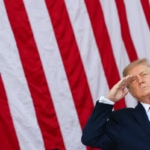
US President Donald Trump is heading to Asia this week, facing a political challenge at home and a demanding diplomatic agenda abroad. His visits to the Philippines and China offer an opportunity to demonstrate continued American influence, pursue commercial agreements and present himself as an active global leader following Republican setbacks in the November midterm elections.
The trip comes at a sensitive moment for the administration. Domestic political losses have raised questions about Trump’s influence in Washington, while controversies surrounding advanced semiconductor technology and the administration’s handling of international conflicts have added pressure. Against this backdrop, the president is seeking to use two major regional gatherings to redirect attention towards diplomacy and economic engagement.
In an analysis published on 15 November, CNN’s Kevin Liptak described the journey as an attempt by Trump to reassert presidential authority through the traditional political value of overseas diplomacy. The approach has historical precedents: US presidents Ronald Reagan, Bill Clinton, George W. Bush and Barack Obama all undertook prominent international visits following domestic electoral setbacks.
Trump is scheduled to travel first to Manila for the Association of Southeast Asian Nations (ASEAN) Summit and related meetings before continuing to Shenzhen, China, for the Asia-Pacific Economic Cooperation (APEC) summit.
The Philippine leg provides an opportunity to strengthen Washington’s engagement with Southeast Asian governments, particularly on trade, investment and regional security. The White House has indicated that Trump intends to pursue commercial agreements, including a planned trade agreement with Thailand.
For Southeast Asian countries, relations with Washington remain important amid continuing strategic competition with Beijing. Governments across the region have sought to maintain economic relationships with both major powers while managing disputes involving maritime security, trade and technology.
Trump’s participation in the ASEAN meetings also carries symbolic importance. His administration has faced criticism over the consistency of American engagement with the region, while China’s economic presence and diplomatic influence have continued to expand.
The challenge for Washington will be to translate high-level meetings and commercial announcements into sustained economic and strategic cooperation.
The most closely watched event of the trip is scheduled for Thursday, 19 November, when Trump is expected to meet Chinese President Xi Jinping and Russian President Vladimir Putin in an unprecedented three-way gathering on the sidelines of the APEC summit.
The White House and the Kremlin have confirmed plans for the meeting. It brings together the leaders of three countries with major nuclear arsenals at a time of heightened international tensions and uncertainty over the future of arms-control arrangements.
According to CNN’s reporting, Trump wants to open discussions on nuclear weapons with Xi and Putin. The last nuclear arms-control treaty between Washington and Moscow expired in February 2026, while China has been expanding its nuclear capabilities. Beijing, however, has shown limited interest in joining a trilateral arms-control framework.
A senior US official described expectations of a breakthrough as limited, suggesting the meeting should be viewed as an opening for discussion rather than a forum likely to produce immediate agreements.
The planned gathering has also prompted comparisons with the 1945 Yalta Conference, when US President Franklin D. Roosevelt, British Prime Minister Winston Churchill and Soviet leader Joseph Stalin met to discuss the post-war international order. The historical comparison reflects concerns about major powers negotiating over global security without the participation of countries directly affected by their decisions.
However, the administration has said that the Ukraine war will not be on the agenda for Thursday’s meeting. Putin had initially proposed the gathering as a venue for discussing the conflict, but US officials have indicated that nuclear security will be the principal focus.
China’s Foreign Ministry has described the planned meeting as having “groundbreaking significance”. Spokesperson Mao Ning said greater communication among the three countries could help stabilise the international situation.
Trump’s visit to Shenzhen, a major Chinese technology and manufacturing centre, is also taking place amid controversy surrounding Nvidia and its former chief executive Jensen Huang.
The allegations involving Huang and an individual suspected of having links to Chinese intelligence have raised questions in Washington about technology security and the protection of advanced semiconductor capabilities. The controversy has intensified scrutiny of US-China technology relations, particularly restrictions on the transfer of high-performance chips.
CNN reported that Trump was not expected to raise the alleged spying matter directly with Xi. US officials also indicated that the administration did not intend to discuss the latest internal debate over further restrictions on advanced chip exports during the visit.
Reuters reported on 16 November that the controversy and the Republican midterm defeat were adding pressure to Trump’s Asia trip. The issue also exposes a wider policy dilemma for Washington: maintaining commercial and diplomatic engagement with China while restricting access to technologies considered strategically sensitive.
For China, semiconductor controls remain a major point of contention. Beijing has criticised restrictions on technology transfers, while US policymakers have argued that advanced computing capabilities have implications for national security.
The possibility that the dispute could complicate broader trade and diplomatic negotiations remains an important consideration during Trump’s meetings with Xi.
Beyond the immediate summit agenda, Trump faces challenges involving the war in Iran, the conflict in Ukraine and the wider competition for influence across the Indo-Pacific.
The administration’s efforts to manage the Iran conflict and pursue an end to the war in Ukraine have complicated its stated intention to redirect US attention towards Asia. Rising fuel prices associated with international conflicts have also created economic and political pressures at home.
Trump’s trade policy has become another source of domestic contention. His administration’s tariffs have contributed to concerns over higher prices, while Democrats have indicated that they intend to challenge aspects of his foreign-policy authority following their electoral gains.
The political significance of the Asia tour therefore extends beyond the diplomatic meetings themselves. Commercial agreements, statements on nuclear security and engagement with regional leaders may help the president demonstrate that he remains central to international decision-making. Yet the ability to convert those announcements into durable agreements will depend on negotiations, congressional constraints and the positions of other governments.
For Asian countries, the visit presents both an opportunity and a test. Washington’s renewed engagement could support trade and security cooperation, but regional governments will be watching whether American commitments remain consistent after the president returns home.
Trump’s Asia tour is thus unfolding at the intersection of domestic political pressure and international strategic competition. The meetings in Manila and Shenzhen may provide a platform for projecting American leadership, but their longer-term significance will depend on whether diplomatic visibility produces concrete outcomes in trade, technology and nuclear security.
Sources: CNN — How Trump is hoping to use an Asia trip to reassert his authority, Reuters — Spy scandal and midterm defeat heat up Trump’s Asia visit, Associated Press — Trump, Xi and Putin plan unprecedented joint meeting on APEC sidelines, The Washington Post — Trump’s Asia reset: Deals in Manila and Shenzhen, then a rare nuclear summit with Xi and Putin, Philippine Presidential Communications Office — Palace confirms Trump’s attendance at ASEAN Summit in Manila, and Reuters — China says Xi-Putin-Trump meeting has ‘groundbreaking significance’.
