

















Week of US tech outages raises questions, infrastructure security
Disruptions affecting aviation, banking, email and a classified government network have fuelled fears of coordinated attacks. But officials have reported no evidence linking the incidents, while experts warn that ageing systems and weak resilience remain serious vulnerabilities.
A series of technology disruptions across the United States has renewed scrutiny of the security and reliability of critical infrastructure, raising questions about whether the country is adequately prepared for cyber threats and technical failures. Incidents affecting air travel, financial services, email systems and a classified National Security Agency network occurred within a short period, prompting public speculation about possible foreign interference.
However, the timing of the incidents does not establish that they were coordinated. US officials have said they have found no evidence that the disruptions were connected or resulted from a common cyberattack. The distinction is important: a cluster of outages can expose weaknesses in essential systems without demonstrating that a hostile actor orchestrated them.
In an article published on 18 November, The Free Press brought together views from experts in cybersecurity, geopolitics and national defence to examine the possibility of foreign interference. Mark Montgomery, a former executive director of the US Cyberspace Solarium Commission, argued that the incidents appeared to be coincidental, although their concentration deserved attention. He said network and software outages were common in the United States and that several failures occurring together had amplified public concern.
One of the most consequential incidents involved the Federal Aviation Administration (FAA), which issued a nationwide ground stop on 13 November after instability in its telecommunications network disrupted air traffic communications and radar feeds.
The FAA’s subsequent explanation pointed to excessive data traffic affecting its legacy telecommunications system. According to the agency, the network experienced approximately 1,000 connection attempts every four to five seconds. Investigators identified two possible locations associated with the traffic: a radar site in Amarillo, Texas, and a radio communications site in El Dorado, Arkansas, where a network service provider had been carrying out router replacement work.
The agency said it did not indicate that the incident was a cyberattack or the work of an external malicious actor. It also reported that the disruption affected 17 of its 22 Air Route Traffic Control Centres and spread to several terminal radar approach facilities.
The ground stop was lifted after the system stabilised. The FAA said approximately 12,462 flights were cancelled on 13 November, including cancellations by major airlines, although not all were directly attributable to the ground stop. It reported that aircraft landed safely and that established safety procedures remained in operation throughout the disruption.
The incident illustrates how legacy infrastructure can become a source of operational risk even without evidence of hostile intervention. A failure in a network supporting aviation can have consequences across the transport system, affecting airlines, passengers, airports and businesses dependent on timely travel.
Financial services also experienced disruption during the same period, with customers reporting difficulties accessing accounts at major banks. The incidents heightened concerns about the dependence of everyday financial activity on interconnected digital systems.
A separate disruption affected Microsoft’s Outlook service, interrupting email access for users in different parts of the world. The temporary loss of communication tools can affect business operations, customer services and internal coordination, particularly where organisations rely heavily on cloud-based platforms.
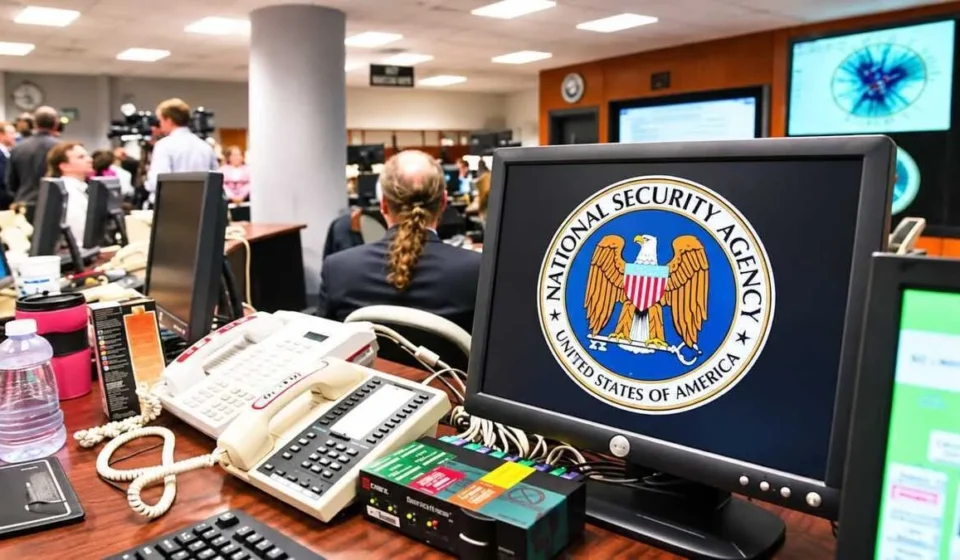
On 17 November, the National Security Agency’s classified internal communications network, known as NSANet, also experienced a temporary disruption during scheduled maintenance. The NSA described the incident as a temporary degradation, while a defence official confirmed that the network had gone offline.
The Associated Press reported that some internal systems were affected, but mission-critical capabilities remained operational because of redundant infrastructure. The agency did not disclose the full cause or scope of the disruption.
These incidents involve different organisations, systems and technical circumstances. Treating them as a single coordinated attack without supporting evidence risks confusing coincidence with causation and could undermine an accurate assessment of the actual vulnerabilities.
The US government’s position has been that the incidents should not be assumed to be connected. In testimony and public statements reported on 18 November, national security officials said there was no indication that the recent outages across government and private-sector systems formed part of a coordinated cyber campaign.
The FAA’s own assessment similarly found no evidence of an external malicious actor behind the aviation disruption. Officials have pointed to technical problems, maintenance activity and difficulties associated with system upgrades as possible explanations for several of the incidents.
That assessment does not mean the broader threat of cyberattacks has disappeared. Foreign governments and criminal groups continue to pose risks to networks, infrastructure and sensitive information. But evidence of a general threat is not proof that a particular outage was deliberately caused by a foreign actor.
The Free Press article also presented a more cautious geopolitical assessment from former US national security adviser H.R. McMaster, who argued that American adversaries could be probing weaknesses in critical infrastructure. That interpretation represents a strategic warning, rather than a confirmed explanation for the outages described.
The immediate debate is about whether the disruptions were connected. The longer-term issue is whether essential services can continue operating when individual networks, software systems or communications providers fail.
Modern economies depend on digital infrastructure across banking, transport, energy, healthcare, communications and public administration. Many services rely on interconnected systems, meaning a technical failure at one provider can disrupt organisations and customers far beyond the original point of failure.
The FAA incident demonstrates the importance of modernising legacy networks and testing how new equipment interacts with older systems. The NSA disruption, meanwhile, highlights the need for maintenance procedures that preserve continuity even when internal systems temporarily become unavailable.
For financial institutions and technology providers, resilience requires more than preventing unauthorised access. It also involves reliable backup systems, recovery plans, secure software updates, redundancy and the ability to maintain essential services during technical disruptions.
The recent events do not establish that the United States has come under a coordinated infrastructure attack. They do, however, reveal how much economic and institutional activity depends on systems that can be disrupted by technical failures, maintenance problems or malicious interference.
The central security question is therefore broader than identifying an attacker. It is whether the country’s critical infrastructure can withstand disruption, recover quickly and maintain essential services when failures occur.
Sources: The Free Press, Is America’s Infrastructure Under Attack?, 18 November 2026; Federal Aviation Administration, Nationwide Ground Stop: Questions and Answers, 15 November 2026; Associated Press, Classified communications network at the National Security Agency goes down, 17 November 2026; CBS News, “No indication” recent outages are related to coordinated cyberattacks, officials say, 18 November 2026; Hudson Institute, America’s Adversaries Are Probing for Weakness, 17 November 2026.