














Attack on European delegation in West Bank highlights wider security crisis
A French mayor and European diplomats were reportedly assaulted during an olive-harvesting visit, as fresh maritime incidents and uncertainty over the Iran war deepen regional concerns.
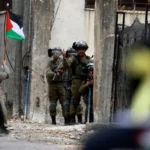
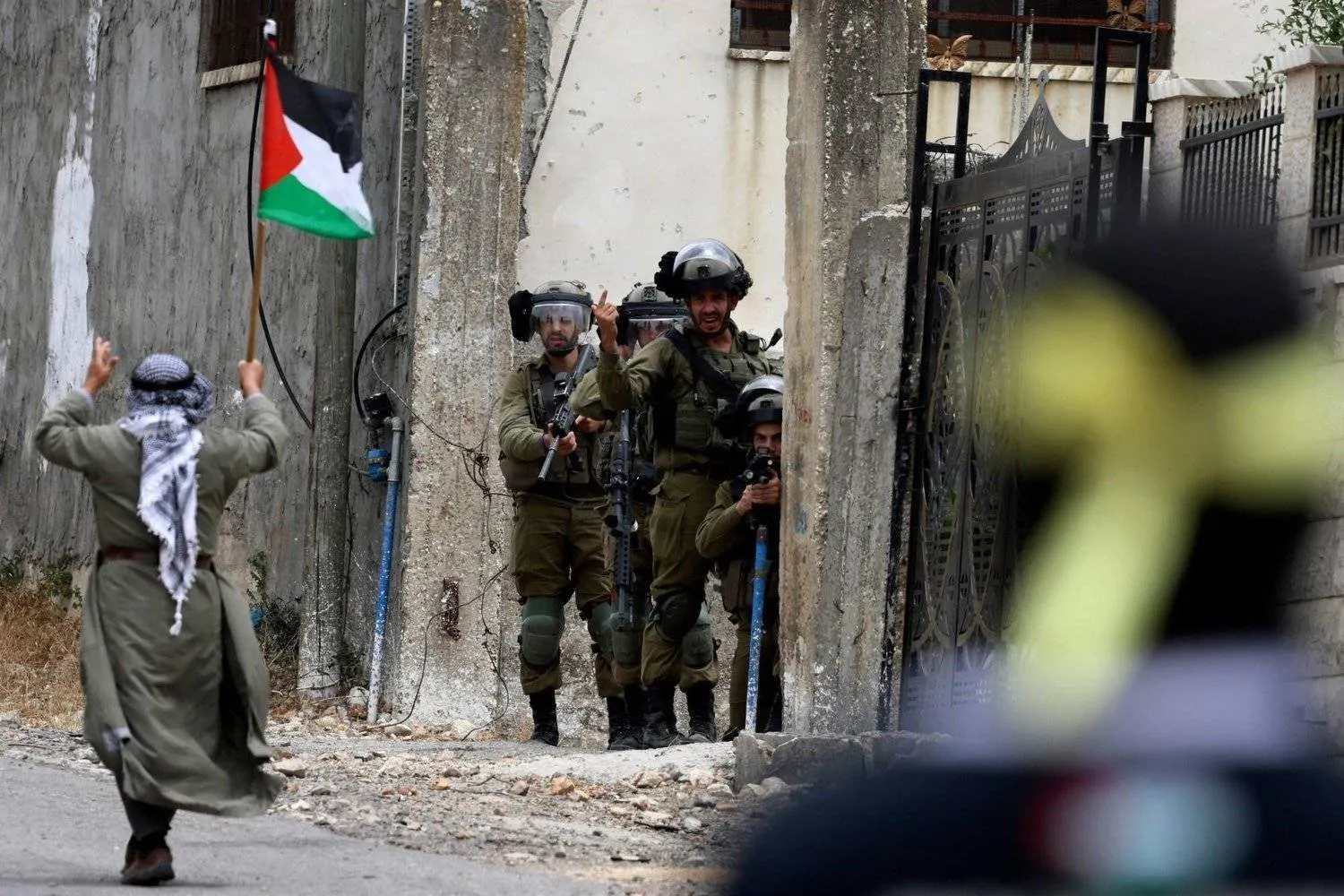
An attack on European diplomats, Catholic representatives and a French mayor in the occupied West Bank has drawn international condemnation, underscoring growing security concerns as violence against Palestinians and foreign visitors coincides with renewed threats to commercial shipping across the Middle East.
Belgium’s Foreign Minister Maxime Prévot said masked Israeli settlers attacked a delegation in the Palestinian Christian village of Taybeh on Saturday, 17 October. The group included Belgium’s consul general, French and Polish diplomats, Catholic representatives and Bernard Baudoux, mayor of the French commune of Aulnoye-Aymeries. A Belgian diplomatic vehicle was also damaged, according to Reuters reporting.
Baudoux told Reuters that he was thrown to the ground during the assault while visiting the area to participate in an olive harvest as a gesture of solidarity with Palestinians. The French mayor said he had hoped the visit, connected to a friendship agreement between communities, would be peaceful.
The Israeli government and military condemned the reported assault and said an investigation was under way. The incident nevertheless raises questions about the protection of diplomats and civilians in the occupied territory, where violence during the annual olive harvest has repeatedly disrupted Palestinian farmers’ access to their land.
The attack came a day after American photojournalist Heidi Levine was seriously injured in a separate assault attributed to Israeli settlers. According to reporting by The Associated Press, Levine suffered multiple injuries, including fractures, while covering events in the West Bank.
The incidents have renewed attention to the risks faced by journalists, local communities and international visitors documenting or participating in activities connected to Palestinian land and livelihoods.
Prévot condemned the violence and called on Israeli authorities to protect Palestinians, diplomats and journalists and ensure accountability. France and Belgium also criticised the attack, while other international representatives voiced concern over the deteriorating security situation.
The diplomatic implications extend beyond the immediate victims. Attacks involving officials from several European countries can intensify pressure on Israel to demonstrate that investigations lead to meaningful accountability. However, the outcome of the current investigation remains unknown, and responsibility must be established through evidence and due process.
The West Bank incident unfolded alongside further threats to commercial shipping in waters critical to global energy supplies.
The United Kingdom Maritime Trade Operations (UKMTO) agency reported that a small boat carrying seven people approached a liquefied natural gas tanker about 140 nautical miles south-east of Yemen’s Al Mukalla on 17 October. The boat fired two shots towards the vessel, according to the agency. The tanker’s armed security team returned two warning shots, after which the small craft changed course. Authorities were investigating, and UKMTO advised vessels to remain alert.
Separately, Iran’s Islamic Revolutionary Guard Corps Navy said two oil tankers had caught fire after striking naval mines in the Strait of Hormuz. Iranian state media claimed that the vessels were carrying about two million barrels of crude oil each and had attempted to use a route not authorised by Tehran. Reuters reported that the claims had not been independently confirmed.
The distinction is important: the reported incidents add to concerns about maritime safety, but the available information does not independently establish all the circumstances or responsibility for the tanker fires.
The Strait of Hormuz is a critical route for international oil shipments. Disruptions there can affect supply expectations, transport costs and energy prices far beyond the Gulf. Continued attacks or restrictions could therefore compound the economic consequences of the wider conflict, particularly for import-dependent economies already exposed to elevated fuel costs.
The wider regional picture remains unsettled. US Vice President JD Vance said Washington wanted a long-term, verifiable commitment from Iran not to rebuild its nuclear programme. Iran has consistently denied seeking nuclear weapons and maintains that it has a right to a civilian nuclear programme.
Meanwhile, Russian Deputy Prime Minister Alexander Novak warned that global oil markets could face a shortfall of four million to six million barrels per day unless Gulf supplies recover. His estimate reflects the potential scale of disruption, although the eventual effect on prices will depend on shipping access, production, inventories and the duration of the conflict.
In Yemen, the International Committee of the Red Cross said the Houthis had released 159 people detained in connection with the fighting. The Saudi-led coalition also reported that two crew members died when a reconnaissance helicopter crashed in the Najran region of Saudi Arabia, attributing the incident to a technical malfunction. These developments illustrate how diplomatic, humanitarian and military issues continue to overlap across the region.
The assault reported in Taybeh and the renewed maritime incidents are distinct events, and there is no evidence that they form part of a single coordinated operation. Yet together they demonstrate the breadth of the region’s security challenges: protecting civilians and international personnel, maintaining safe commercial passage and preventing local confrontations from intensifying wider diplomatic tensions.
For European governments, the West Bank incident presents a direct test of diplomatic engagement and pressure for accountability. For energy-importing countries, insecurity around Hormuz and the waters near Yemen carries an immediate economic dimension, with possible consequences for fuel costs, inflation and supply-chain resilience.
The immediate priorities are to establish the facts behind each incident, protect those at risk and ensure credible investigations. Without stronger safeguards and effective diplomatic channels, repeated violence on land and at sea could deepen instability and make an already costly regional conflict more difficult to contain.
Sources: Reuters, Israeli settlers attack Palestinians and European diplomats in the West Bank; Associated Press, Masked settlers attack European diplomats in the occupied West Bank; UK Maritime Trade Operations, official maritime incident advisories; Reuters, Iran’s Revolutionary Guards say two tankers hit mines in the Strait of Hormuz; and Al Jazeera, Middle East live updates, 18 October 2026.
