
















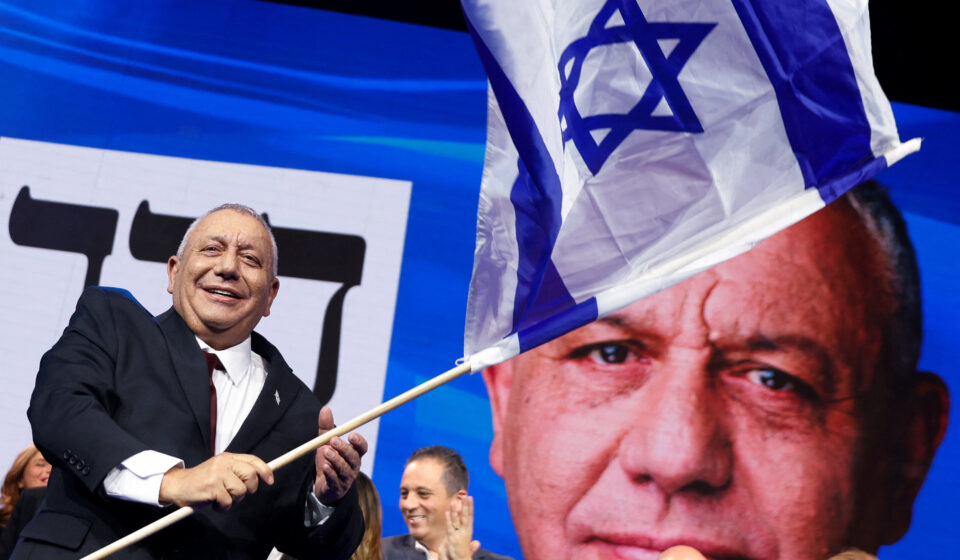
Herzog selects Eisenkot to form Israeli govt, Netanyahu faces political setback
The opposition leader secured recommendations from 67 lawmakers, but forming a governing majority will require difficult negotiations over Arab-party support and potential partners from Netanyahu’s former coalition.
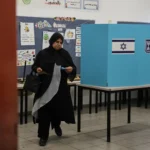
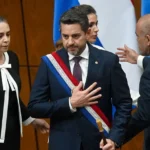
Israeli President Isaac Herzog has selected former military chief Gadi Eisenkot to attempt to form the country’s next government, giving the opposition leader an opportunity to replace Benjamin Netanyahu after the October 27 election left parliament without a clear majority.
Herzog informed Eisenkot of his decision on Saturday evening, according to the president’s spokesperson. The formal handover of the mandate was scheduled for Sunday at a ceremony at the President’s Residence. Eisenkot will have 28 days to assemble a coalition, with a possible extension of up to 14 days.
The decision followed consultations with political parties represented in the 120-member Knesset. Factions representing 67 lawmakers recommended Eisenkot, while 46 backed Netanyahu. One seven-member faction, United Torah Judaism, did not recommend either candidate. The figures gave Eisenkot the strongest parliamentary endorsement, although Herzog had cautioned that mutual political vetoes made it difficult to determine who could actually form a stable government.
The October election produced three distinct parliamentary groupings. Netanyahu’s right-wing and religious bloc secured 53 seats, while Eisenkot’s four-party alliance won 48. Arab-led parties, representing Palestinian citizens of Israel, gained a record 19 seats.
Neither of the two principal blocs reached the 61 seats required for a parliamentary majority. The Arab-led parties therefore hold a potentially decisive position in negotiations over the next government.
Eisenkot’s Yashar party won 21 seats and leads an alliance that includes Together, The Democrats and Yisrael Beiteinu. The Arab-led Joint List holds 11 seats, while the Islamist Ra’am party has eight.
The distribution means that Eisenkot cannot reach a majority through his existing alliance alone. Support from the Arab-led parties would raise the combined number of seats to 67, but Eisenkot has ruled out forming a government with them as formal coalition partners.
The role of Arab-led parties has become central to the government-formation process. Their recommendations helped Eisenkot secure the mandate, despite his position against including them in the governing coalition.
Ahmad Tibi, a senior member of the Joint List, told Al Jazeera that the decision was expected and described the Arab parties’ support as providing Eisenkot with a considerable margin. He suggested that Eisenkot could lead a minority government relying on external parliamentary support from Arab parties.
Such an arrangement would allow the parties to support confidence votes or other parliamentary decisions without formally joining the government. It would nevertheless leave the administration dependent on cooperation with political groups that Netanyahu and his allies have repeatedly criticised.
Tibi said that, for the Joint List, removing Netanyahu’s government was a priority, even if the resulting administration did not represent all of the alliance’s political preferences.
The distinction between external support and formal coalition membership is important. It could provide Eisenkot with a route to office while allowing Arab-led parties to retain some distance from government policy, particularly on the war in Gaza and the treatment of Palestinians in the occupied territories.
Eisenkot has several possible routes to a parliamentary majority, but each presents political difficulties.
One option is to seek support from the ultra-Orthodox parties United Torah Judaism and Shas. Together, they hold 13 seats, which would theoretically lift Eisenkot’s 48-seat alliance to 61. However, Shas has backed Netanyahu, while United Torah Judaism withheld its recommendation during consultations with Herzog. Negotiations would also have to address disagreements over military service requirements for ultra-Orthodox men.
Another possibility is a minority government supported from outside by Arab-led parties. That arrangement would avoid bringing them formally into the cabinet but could face sustained opposition from Netanyahu’s bloc and criticism from political figures opposed to Arab-party influence.
A national unity government involving Netanyahu has also been discussed in the wider political debate. However, Eisenkot has ruled out serving under Netanyahu, making such an arrangement difficult to reconcile with his campaign commitments.
Al Jazeera’s reporting from Ramallah noted that Eisenkot would need to build a coalition capable of surviving a confidence vote while avoiding major departures from the promises made during the election campaign.
Netanyahu has warned against an administration that depends on Arab-led parties for parliamentary support. In a prerecorded video statement issued before Herzog’s decision, he argued that such a government would undermine Israel.
His remarks echoed a broader political dispute over the role of Palestinian citizens of Israel and their elected representatives in national politics. Ahmad Tibi rejected Netanyahu’s characterisation of Arab lawmakers as supporters of terrorism, responding with accusations against the incumbent government.
These exchanges illustrate the polarisation surrounding the election and the political significance of the Arab-led parties’ increased parliamentary representation. Their influence now extends beyond the number of seats they hold: their decisions could determine whether Netanyahu remains in office or an alternative government takes shape.
If Eisenkot cannot form a government within the allotted period, Herzog may nominate another candidate. Under the process described by Al Jazeera, a second nominee would receive 28 days. If that attempt also fails, a parliamentary majority could support a third candidate, who would receive a final 14-day period.
If no government emerges, another election would be called within 90 days, with Netanyahu continuing as caretaker prime minister in the meantime.
The immediate challenge for Eisenkot is therefore not simply to secure the mandate but to translate parliamentary recommendations into a workable governing arrangement. The 67 endorsements that supported his nomination do not automatically constitute a coalition, particularly because the Arab-led parties have not been accepted as formal partners.
Herzog’s decision marks a significant political setback for Netanyahu, whose bloc lost its parliamentary majority. But it does not yet establish that the incumbent will leave office. The outcome will depend on negotiations among parties whose positions on religion, military service, Palestinian representation and the conduct of the war in Gaza remain sharply divided.
Israel’s government-formation process has entered a decisive stage. Whether Eisenkot can convert opposition unity and Arab-party support into a stable administration will determine if the election produces a change of government or leads the country towards another vote.
Sources
- Al Jazeera — Israel’s president picks Eisenkot over Netanyahu to form next government, 7 November 2026.
- Reuters — Israeli president picks Gadi Eisenkot, Netanyahu rival, to try to form government, 7 November 2026.
- Associated Press — Israel’s president taps opposition candidate Eisenkot to form a government, in setback for Netanyahu, 7 November 2026.
- Israel President’s Office — President Herzog concludes round of consultations with Knesset factions, 5 November 2026.
- The Times of Israel — Herzog announces he will task Eisenkot with forming new government, 7 November 2026.
- Anadolu Agency — Israel’s president says he will task Eisenkot with forming next government, 7 November 2026.
