



















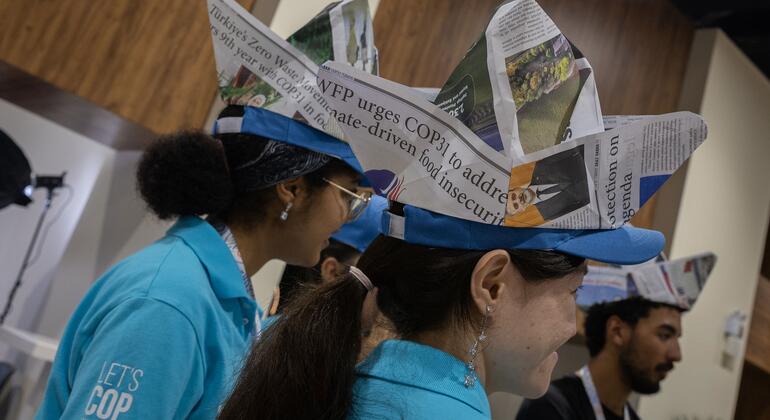
COP31 faces deep divisions, climate negotiations enter final stretch
Disputes over fossil fuels, the 1.5°C target, climate finance and scientific assessments are complicating efforts to reach an agreement in Antalya, while the rapid expansion of AI data centres adds pressure to global energy systems.
Negotiations at the 31st United Nations Climate Change Conference (COP31) in Antalya, Türkiye, have entered their final stage with major disagreements unresolved over fossil fuel transition, climate finance and the global response to rising temperatures. With the summit scheduled to conclude on Friday, 20 November, negotiators are under pressure to agree on a final text while several central issues remain unsettled.
In its live coverage on Thursday, The Guardian reported that the conference presidency had urged countries to intensify negotiations and bridge remaining differences. A new draft of the summit’s overarching decision, known as the cover decision, was expected to be published as delegates approached the final two official days.
The presidency said 21 mandated agenda items remained unresolved. These include adaptation, climate finance, emissions reduction, a just transition and measures to respond to climate impacts. Although some proposals were considered ready for adoption, substantial disagreements continued over the overall direction of the negotiations.
One of the central disputes concerns how countries should respond to the risk of global temperatures exceeding the 1.5°C threshold established under the Paris Agreement. Negotiators are also divided over proposals for an electrification pledge and the language governing the transition away from fossil fuels.
The disagreements reflect different national priorities, including energy security, development needs, access to finance and the pace at which economies can replace coal, oil and gas. Countries with significant fossil fuel production have different interests from those seeking stronger commitments to accelerate the transition.
The challenge is to produce an agreement that combines stronger climate action with credible financial and technological support, particularly for developing economies. Without that support, countries facing infrastructure constraints may struggle to meet ambitious targets while maintaining affordable and reliable energy supplies.
The expansion of artificial intelligence is emerging as another major concern for the global energy transition. According to the International Energy Agency (IEA), data centres could consume twice as much electricity in 2030 as they do today, with AI-related growth accounting for approximately three-quarters of the increase.
The IEA estimates that AI data centres could require an additional 350 terawatt-hours of electricity annually by 2030, exceeding the current annual electricity consumption of Great Britain. The Guardian reported that data centres could also generate 70% more carbon emissions within four years as the United States and China rely partly on fossil fuels to meet growing electricity demand.
IEA Executive Director Fatih Birol said the global energy system was unlikely to return to its previous condition following the disruption caused by the Middle East conflict. The agency argues that decisions made by governments in response to energy insecurity will shape how future demand from AI, population growth and cooling requirements is met.
The issue creates a policy dilemma for climate negotiators. Digital infrastructure is becoming increasingly important to economic growth and technological competitiveness, but its expanding electricity requirements could undermine emissions reduction efforts if new demand is met primarily through fossil fuel generation. Renewable energy, storage and grid investment will therefore be important to determining the climate impact of AI expansion.
The timing of the next comprehensive assessment by the Intergovernmental Panel on Climate Change (IPCC) has also become a point of contention.
The IPCC’s seventh assessment cycle, known as AR7, is under way, with completion in 2028 previously anticipated. Its findings are expected to inform the second global stocktake under the Paris Agreement, which will assess progress towards limiting global warming to 1.5°C above pre-industrial levels.
However, some countries are seeking to delay publication until 2029, after the stocktake. The Guardian reported that Russia, India and the Arab Group of countries, including Saudi Arabia, are among those advocating a later timetable. They have raised concerns about the IPCC’s role and the representation of developing countries in its scientific assessment process.
Climate scientist Johan Rockström, director of the Potsdam Institute for Climate Impact Research, warned that delaying the reports could weaken international cooperation. He described the IPCC’s work as an evidence-based foundation for climate policymaking and argued that its assessments should proceed as quickly as possible.
The dispute highlights a broader question about how scientific evidence is represented in international negotiations. Developing countries have legitimate concerns about participation, research capacity and equitable representation. At the same time, delays in synthesising scientific findings could leave governments with less timely evidence as they assess progress and revise climate commitments.
Climate policy is also facing political resistance in the United States. The Guardian reported that hundreds of elected officials and climate organisations had urged congressional Democratic leaders to oppose legislation that could shield fossil fuel companies from climate-related lawsuits and accountability measures.
Republican lawmakers introduced the Stop Climate Shakedowns bill in April. Supporters argue that climate litigation threatens energy producers, jobs and affordable fuel, while opponents say the proposal would restrict efforts to hold companies accountable for climate-related damage.
The political dispute has acquired greater urgency following the recent US midterm elections. Republican lawmakers are seeking to advance priority legislation before newly elected Democratic members take office in January. The outcome could influence the legal and regulatory environment for fossil fuel companies and climate-related litigation.
The final days of COP31 will test whether governments can translate broad commitments into an agreed framework covering emissions reduction, adaptation, finance and energy transition. The unresolved agenda items suggest that the negotiations remain difficult, even as the presidency moves towards closing plenary sessions.
For developing countries, the outcome will be especially important in determining whether climate finance and adaptation support are matched by practical commitments. For energy-producing economies, the negotiations will test how far governments are prepared to move towards reducing dependence on fossil fuels. Meanwhile, the growth of AI infrastructure adds a new dimension to the challenge of meeting rising electricity demand without increasing emissions.
The summit’s central task is therefore not simply to agree on stronger climate language. It is to establish a credible framework that connects climate targets with financing, energy infrastructure, scientific evidence and the economic realities facing different countries.
Sources: Ajit Niranjan, Gabrielle Canon, Jillian Ambrose and Hilary Beaumont, The Guardian, “COP31 live: ‘Lean in and move faster,’ climate summit told as deal remains elusive” (19 November 2026); International Energy Agency — Energy and AI; IPCC — Seventh Assessment Report (AR7); UN Framework Convention on Climate Change — COP31.