












Arab-led parties secured record 19 seats in Israeli Knesset
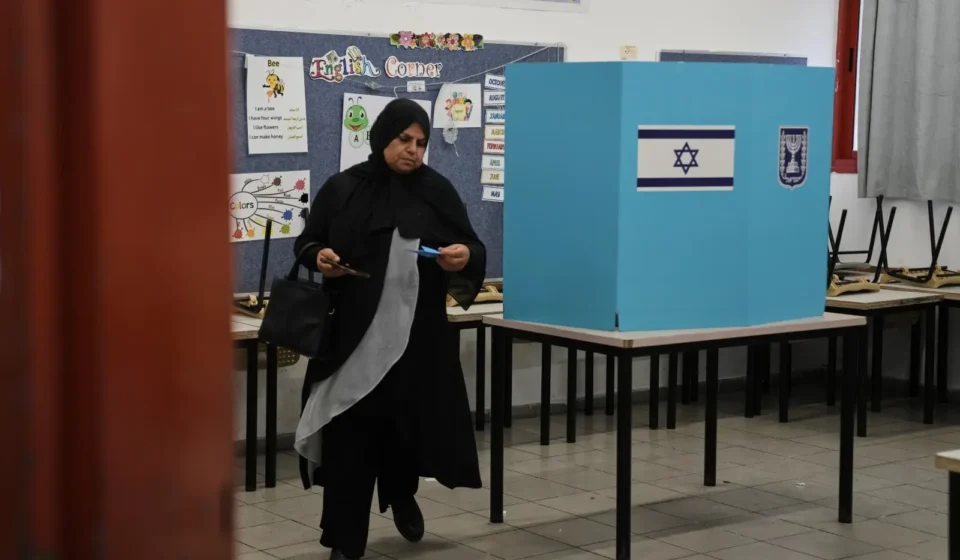
Palestinian citizens of Israel turned out in greater numbers in the 2026 election, helping Arab-led parties secure 19 Knesset seats. Their political influence could prove decisive in coalition negotiations, despite divisions over cooperation with rival blocs.
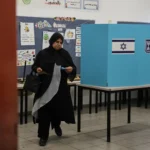
Israel’s Arab-led political parties have emerged as a pivotal force following the country’s inconclusive general election, securing a record 19 seats in the 120-member Knesset after a significant increase in participation among Palestinian citizens of Israel. Their gains have complicated efforts by both Prime Minister Benjamin Netanyahu’s political bloc and the opposition to assemble a governing majority.
The final election results gave Netanyahu’s bloc 53 seats, while the opposition grouping led by former military chief Gadi Eisenkot secured 48. Arab-led parties won the remaining 19 seats, leaving every political grouping short of the 61 required to form a majority government. The results were confirmed by Israel’s Central Elections Committee on 4 November. <Cite refs={[“turn389141search3″,”turn389141news24″,”turn389141search10”]}/>
The outcome has placed Arab representatives at the centre of negotiations over Israel’s political future. It also reflects a notable change in electoral participation among Palestinian citizens, many of whom had previously avoided national elections because they felt excluded from political decision-making and believed participation offered limited prospects for improving their communities’ position.
According to NPR’s reporting by Ruth Sherlock, Arab-led parties received 64% more votes than in the previous election. Palestinian citizens of Israel account for approximately 20% of the country’s population, making their participation an important factor in the national electoral balance.
In Kufr Qasim, a Palestinian-majority town, residents told NPR that worsening discrimination and the political climate under Netanyahu’s far-right government had encouraged more people to vote. Some described participation as a way to defend basic rights and challenge policies they considered discriminatory.
The election took place against the background of the Hamas-led attacks of 7 October 2023 and Israel’s subsequent war in Gaza. Palestinian citizens of Israel have also expressed concern about discrimination within the country and developments in the occupied West Bank.
The electoral mobilisation therefore had significance beyond party competition. For many voters interviewed by NPR, participation represented an attempt to influence decisions affecting their civil rights, political representation and relationship with the state.
Netanyahu’s Likud party and its allies failed to secure the parliamentary numbers needed to form a government independently. The opposition, meanwhile, also fell short of a majority.
The 19 Arab-led seats are divided between the Joint List, which secured 11, and Mansour Abbas’s Ra’am party, which won eight. Their combined representation gives them substantial parliamentary weight, but their political strategies differ.
Ra’am campaigned on the possibility of joining a governing coalition and has previously pursued cooperation with Jewish-led parties to secure policy concessions. The Joint List, however, has indicated that it will not formally join an Eisenkot-led government, citing Israel’s continuing war in Gaza and its occupation of the West Bank. Its leaders have left open the possibility of supporting an alternative government from outside the coalition.
This distinction is important. The 19 seats do not automatically translate into a unified Arab parliamentary position or a ready-made governing alliance. The parties must weigh the potential benefits of political influence against the risks of cooperation with leaders whose policies they oppose.
Netanyahu and his allies have sought to make Arab electoral participation a central issue in the political debate. On election day, Netanyahu described the turnout as an emergency, while far-right National Security Minister Itamar Ben-Gvir urged voters to protect Israel’s Jewish and Zionist character.
After the results emerged, Likud alleged that Arab parties had benefited from bribery, threats and electoral forgery. The party did not publicly provide evidence for those claims. Police reportedly found no basis for allegations of widespread fraud, while election officials maintained that the vote had been conducted properly.
The allegations have added tension to an already difficult coalition process. A partnership between Eisenkot’s opposition grouping and Arab-led parties could potentially create a parliamentary majority, but cooperation remains politically contentious among several Jewish-led opposition factions.
Eisenkot is also not a natural political ally for Arab parties. A former chief of staff of the Israeli military, he served as an observer in Netanyahu’s war cabinet during the Gaza conflict. His military background and positions on security issues have created additional obstacles to cooperation.
The increased participation comes amid longstanding tensions surrounding the position of Palestinian citizens within Israel. They are largely descendants of Palestinians who remained within the state after its establishment in 1948, when many others fled or were forcibly displaced during the war.
NPR’s report from Kufr Qasim also connected the current political moment with the town’s history. Residents gathered to commemorate the 1956 killing of local civilians by Israeli border police, an event remembered by Palestinian citizens as a defining episode of state violence against their community.
The commemoration took place 70 years after the killings and provided a backdrop to conversations about discrimination, political representation and the possibility of coexistence.
For some voters, the election offered an opportunity to challenge the direction of government policy through democratic participation. Others remained sceptical that electoral gains alone could produce substantial changes in the treatment of Palestinian citizens or the wider conflict involving Palestinians in Gaza and the West Bank.
President Isaac Herzog is responsible for consulting political parties before assigning a candidate the task of forming a government. The nominee will initially have 28 days, with the possibility of a further two-week extension, to assemble a coalition. If the process fails, another candidate may be given an opportunity, and failure to form a government could lead to another election.
The immediate question is whether Arab-led parties can convert their parliamentary representation into policy influence. Their priorities may include action against discrimination, improved public services, stronger protections for Arab communities and changes to government policy towards Palestinians.
However, their ability to shape the next administration will depend on the willingness of other parties to negotiate and on whether the Joint List and Ra’am can agree on a common approach.
The election has demonstrated that Palestinian citizens of Israel can play a consequential role in determining the composition of the Knesset when participation increases. It has not yet established whether that representation will translate into a durable governing partnership or substantial policy change.
For Israel, the challenge is now both parliamentary and societal: forming a government from a fragmented legislature while addressing the political exclusion and communal tensions that have shaped the country’s electoral debate. The record gains made by Arab-led parties have changed the arithmetic of coalition-building. Whether they also change the terms of political participation remains unresolved.
Sources: NPR — Ruth Sherlock, “Israel’s Arab-led parties in spotlight after inconclusive election” (6 November 2026); Associated Press — “Difficult negotiations lie ahead in Israel after Netanyahu’s bloc lost its parliamentary majority”; The Times of Israel — “With close to all votes counted, Netanyahu bloc has 53 seats, Eisenkot’s 48; Arab parties surge to 19”; Al Jazeera — “Israel’s election commission rejects Likud’s fraud claims, confirms results” (4 November 2026); Al Jazeera — “Israel election: When will government be formed, who will lead it?”; Anadolu Agency — “With all votes counted, how Israel’s legislative election results compare with previous vote” (30 October 2026); Central Elections Committee of Israel — official election results.
