













ICJ delivers judgment in Rohingya genocide case against Myanmar
The Gambia’s seven-year legal challenge brings the 2017 military crackdown before the UN’s highest court, with implications for more than a million Rohingya refugees in Bangladesh and the future interpretation of international genocide law.
The International Court of Justice (ICJ) is delivering its judgment in a landmark case brought by The Gambia accusing Myanmar of committing genocide against the Rohingya Muslim minority. The decision marks a major stage in a seven-year legal process and could shape how international law addresses state responsibility for mass atrocities.
The judgment is being delivered at the Peace Palace in The Hague on Thursday. The case concerns Myanmar’s military operations in Rakhine State, particularly the 2017 crackdown that forced hundreds of thousands of Rohingya to flee across the border into Bangladesh. The Gambia argues that Myanmar violated the 1948 Convention on the Prevention and Punishment of the Crime of Genocide.
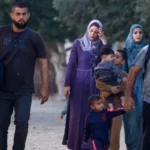
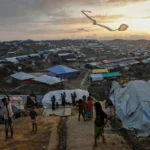
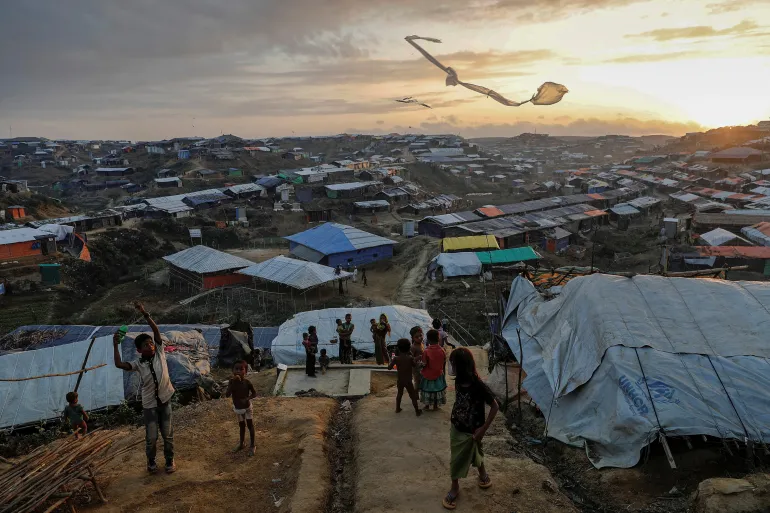
The proceedings carry particular significance for Bangladesh, which continues to host approximately 1.2 million Rohingya refugees, most of them in camps in Cox’s Bazar. For displaced families, the court’s decision represents an important international test of accountability, although it cannot by itself guarantee safe repatriation or restore the rights and property lost during the violence.
Myanmar’s military launched what it described as clearance operations in Rakhine State in October 2016, followed by a much larger campaign in August 2017 after attacks on security posts by fighters from the Arakan Rohingya Salvation Army (ARSA).
The United Nations estimated that around 10,000 Rohingya were killed and approximately 740,000 fled to Bangladesh during the 2017 campaign. UN investigators documented mass killings, the destruction of hundreds of villages and widespread sexual violence, including rape and gang rape. Investigators said the pattern of abuses indicated possible genocidal intent.
The Rohingya had faced decades of discrimination before the military crackdown. Myanmar’s 1982 citizenship law effectively excluded most of the community from citizenship, while the authorities did not recognise the Rohingya among the country’s officially recognised ethnic groups. Many families had lived in Rakhine for generations but were treated as foreigners, leaving the population largely stateless.
The crisis has continued beyond the events of 2017. Fighting resumed on a wider scale in 2023, and the Arakan Army has taken control of much of Rakhine State. The UN human rights office has reported widespread abuses against Rohingya by both the Myanmar military and the Arakan Army. More than 155,000 additional Rohingya reportedly entered Bangladesh from early 2024, further increasing pressure on refugee camps and humanitarian services.
The Gambia filed its case against Myanmar in November 2019 with the backing of the Organisation of Islamic Cooperation (OIC), representing a wider international concern over the treatment of the Rohingya.
The case alleges that Myanmar violated the Genocide Convention through acts intended to destroy the Rohingya, in whole or in part, as a protected ethnic and religious group. The Gambia argues that the scale and pattern of violence, together with the circumstances surrounding the military campaign, demonstrate genocidal intent.
Myanmar has rejected the accusation. Its authorities have maintained that the military operation was a legitimate counterterrorism response to attacks by armed groups and have disputed the claim that the state intended to destroy the Rohingya population.
In January 2020, the ICJ ordered Myanmar to take provisional measures to prevent acts prohibited under the Genocide Convention and preserve evidence relating to the allegations. Myanmar subsequently challenged the court’s jurisdiction and the admissibility of the case. In July 2022, the judges rejected those preliminary objections, allowing the proceedings to continue.
Hearings on the merits took place in January 2026. Eleven countries intervened in the proceedings, reflecting the wider international interest in how the Genocide Convention is interpreted and applied.
The ICJ is the principal judicial organ of the United Nations. It settles legal disputes between states and determines whether governments have breached international obligations. It does not prosecute individual soldiers, commanders or political leaders.
Under the 1948 Genocide Convention, genocide requires certain prohibited acts, including killing members of a protected group or causing serious bodily or mental harm, together with the specific intent to destroy that group, in whole or in part.
Establishing atrocities alone is therefore insufficient to establish genocide. The court must also determine whether the evidence demonstrates the required intent. Such intent may be established through direct statements or orders, or inferred from a pattern of conduct when no other reasonable explanation fits the evidence.
The Gambia argues that genocidal intent is the only reasonable inference from Myanmar’s conduct. Myanmar maintains that its forces were responding to an armed insurgency and that the allegations do not establish an intention to destroy the Rohingya as a group.
The distinction is legally important because the court is being asked to determine the responsibility of the Myanmar state under an international treaty, not the criminal guilt of particular individuals.
The Gambia has asked the court to require Myanmar to ensure that displaced Rohingya can return safely, provide compensation and restore or rebuild destroyed homes and property. It has also sought measures to prevent similar violations from occurring again.
A finding of genocide could provide formal international recognition of the Rohingya’s suffering and strengthen diplomatic pressure on Myanmar. However, legal experts have cautioned that even a far-reaching judgment may have limited immediate effects if the political and security conditions inside Myanmar remain unsuitable for safe return.
International law professor Michael Becker of Trinity College Dublin, a former ICJ legal officer, told Al Jazeera that the court’s remedies might be framed in general terms, leaving Myanmar to determine how to implement them. He also warned that the conditions on the ground were not currently conducive to realising extensive relief for displaced people.
William Schabas, an international law professor at Middlesex University, said the measures sought by The Gambia could significantly improve the security, dignity and livelihoods of the Rohingya if Myanmar implemented them.
The practical challenge remains substantial. Rakhine State is affected by continuing armed conflict, and the Rohingya face restrictions on movement, healthcare, livelihoods and legal status. A judgment cannot independently resolve those conditions or guarantee that refugees can return voluntarily and safely.
The ruling is also being closely examined by international lawyers because it could clarify the evidentiary standards used to establish genocidal intent. In particular, the court’s interpretation of the “only reasonable inference” test may influence how future cases assess patterns of violence during armed conflict.
The case is the first of five genocide proceedings pending before the ICJ to reach a final judgment on the merits. Legal experts have highlighted its potential relevance to South Africa’s separate case accusing Israel of genocide in Gaza, which Israel contests.
The two proceedings concern different conflicts, evidence and legal arguments. Any precedent established in the Myanmar case may inform the interpretation of the Genocide Convention, but it does not predetermine the outcome of another case.
The judgment also raises questions about enforcement. ICJ decisions are binding on the parties, but the court has no independent enforcement mechanism. If Myanmar fails to comply, The Gambia may seek action through the UN Security Council, where political disagreements and the veto powers of permanent members could limit the prospects for enforcement.
For Bangladesh, the judgment matters beyond its legal significance. The country has hosted a large refugee population for nearly a decade, while repeated repatriation efforts have failed to establish conditions that would allow safe and voluntary return.
The continued pressure on Cox’s Bazar has affected local communities, public services and humanitarian operations. International aid reductions have further complicated food distribution, healthcare, education and other essential support for refugees.
A finding against Myanmar could strengthen international pressure for accountability and create a stronger legal basis for demands concerning compensation, protection and safe return. Nevertheless, any durable solution will require political and security changes inside Myanmar, cooperation from relevant authorities and sustained international engagement.
The ICJ judgment is therefore a landmark moment in the legal struggle over the Rohingya crisis, but it is not a complete solution to the humanitarian emergency. Its lasting significance will depend not only on what the judges determine, but also on whether governments and international institutions translate the ruling into meaningful protection, accountability and a credible path towards the voluntary and dignified return of the Rohingya.
Sources: Al Jazeera, ICJ to rule on Rohingya genocide case against Myanmar: What’s at stake?, 19 November 2026; Reuters, World Court finds Myanmar forces killed thousands of Rohingya as ruling continues, 19 November 2026; International Court of Justice, The Gambia v. Myanmar — case information and proceedings; UN Independent Investigative Mechanism for Myanmar, The Gambia v. Myanmar; The Daily Star, ICJ verdict on genocide today: Rohingyas hope for justice, return, 19 November 2026.